I
INDISTINGUISHABLE FROM MAGIC
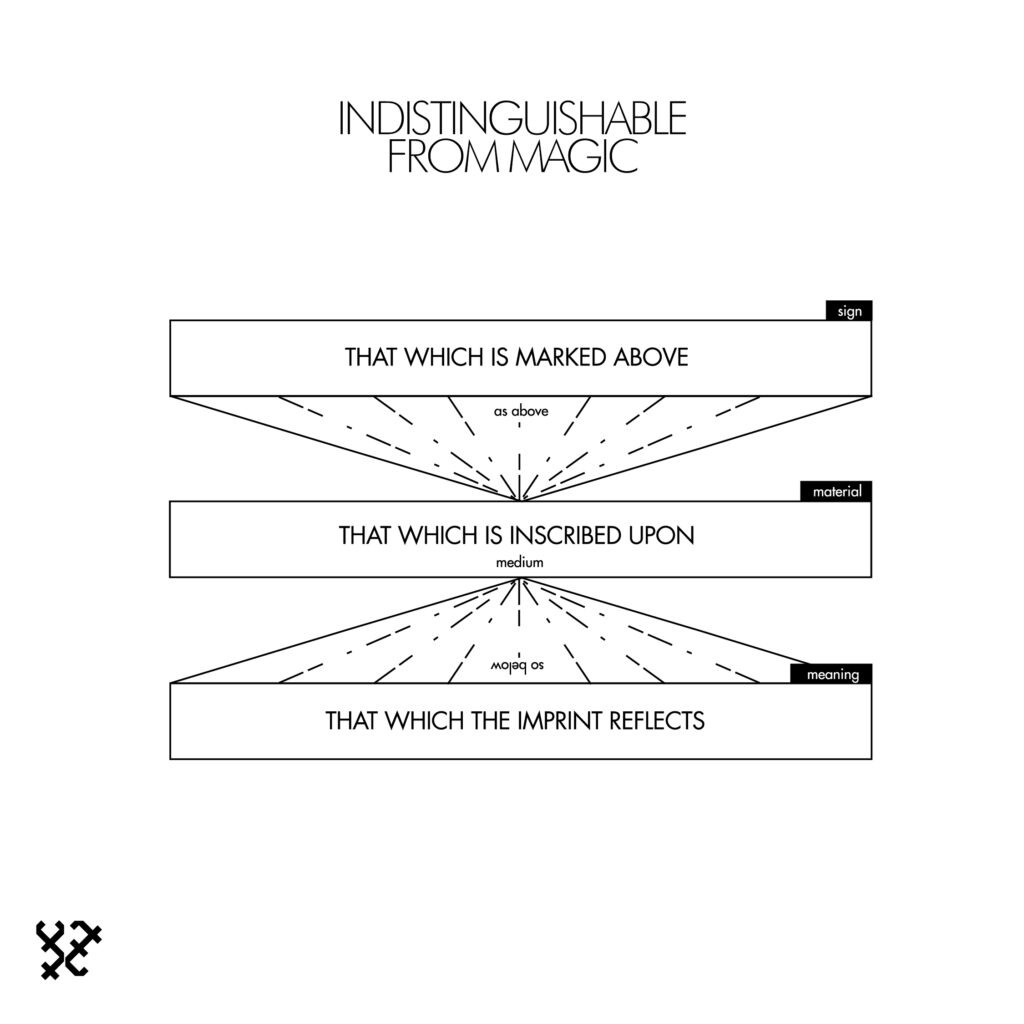
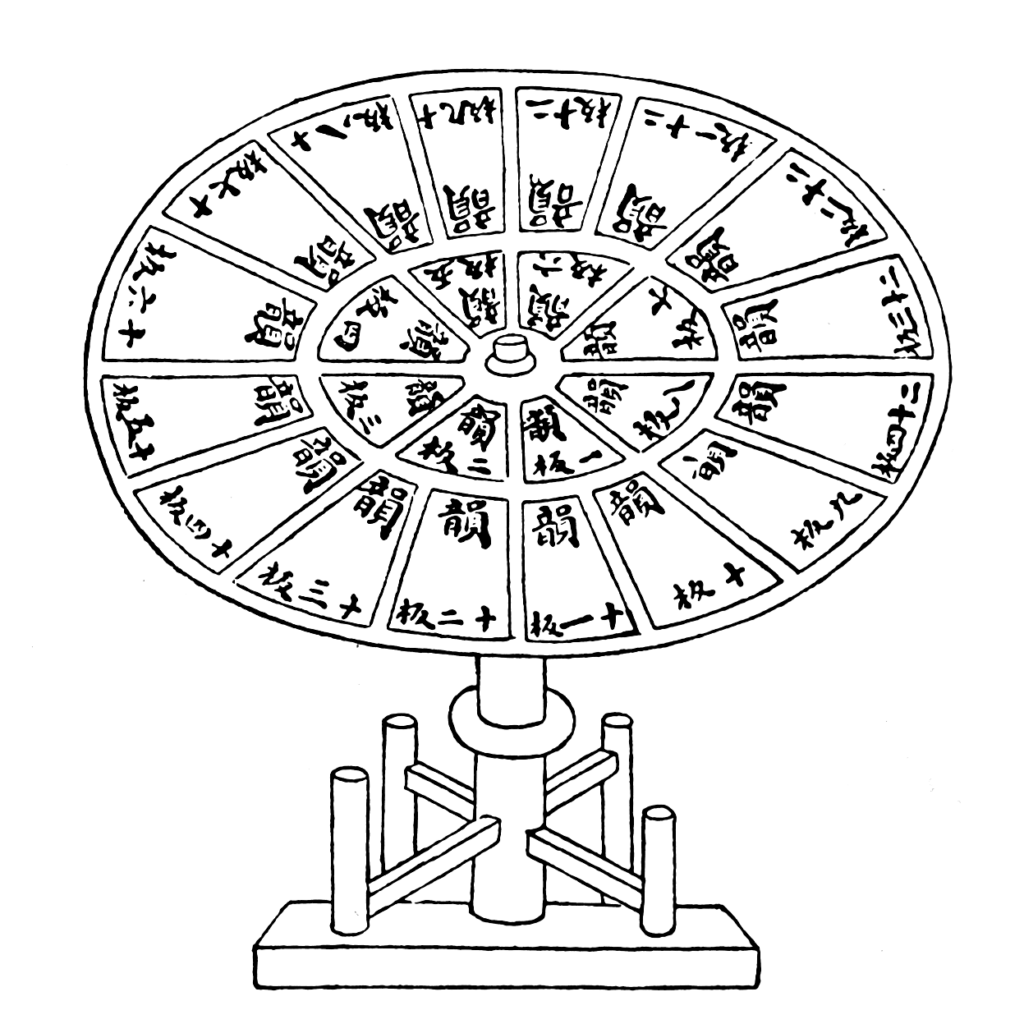
The notion of the printing press being from otherworldly realms is far from new. Cylinder seal printing can be traced back to Mesopotamia as early as 3000 BCE. Although paper was invented in China in the first century, woodblock printing on paper arose only in the 7th century, followed by alchemist Bi Sheng’s movable type technology in the 11th century. According to the Book of Southern Qi, a 5th-century sage Gong Xuanyi claimed that a supernatural being had gifted him a magical “jade seal block” that allowed him to form letters on paper without a brush. This seal has been interpreted by historians as a printing device.
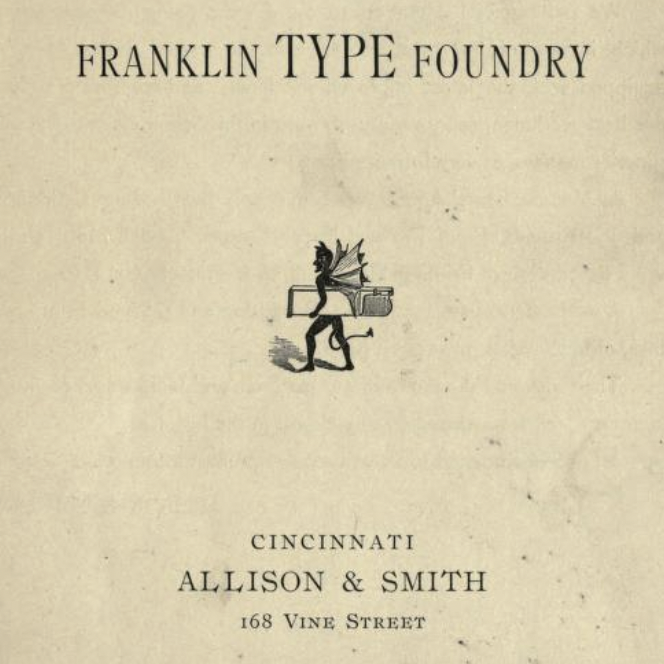
Despite advancements like the codex format, mass publication remained elusive until Gutenberg’s movable-type printing press in the late 15th century in Europe. As a new technology in religious times, the printing press was condemned as evil. Theories of the denouncement ranged from scribes fearing obsolescence (manuscripts were hand-copied) to the threat it posed to religious dogmas. By the 17th century, “printer’s devil” was a term for print apprentices; discarded metal type sorts to be recast were dumped into receptacles aptly named “hellboxes”, (a reference to being bound for the furnace) the fiery pit of (typographic) hell.
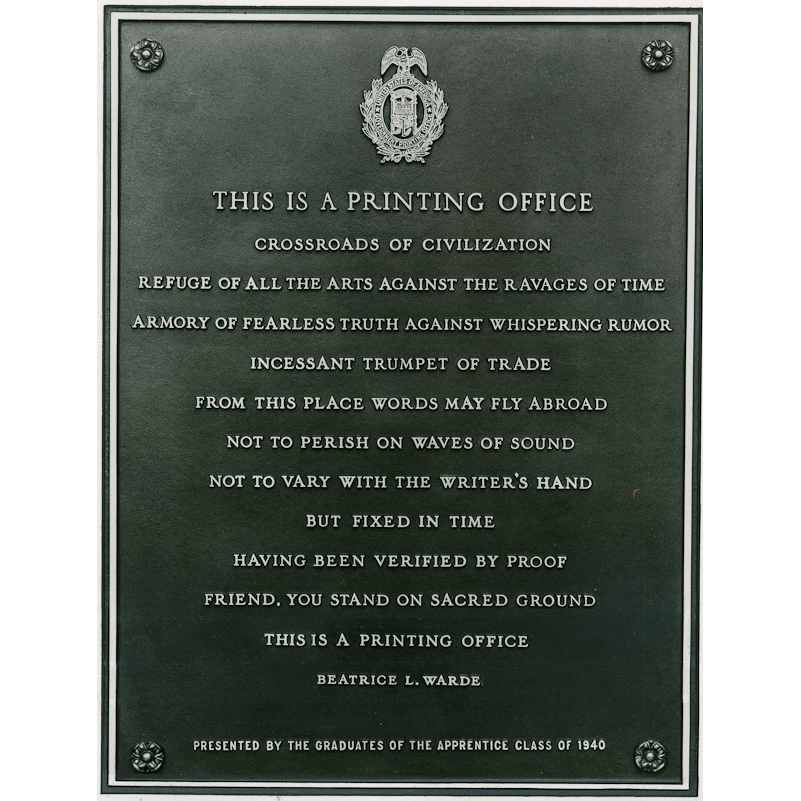
Amidst the press secularising in the next few centuries, the 20th century saw the press displaced between realms once more, referenced more subtly. Esteemed typographer Beatrice L. Warde, in her 1932 manifesto, consecrated the press as “sacred ground”:
“Crossroads of civilization
Refuge of all the arts
Against the ravages of time
Armory of the fearless truth
Against whispering rumor
Incessant trumpet of tradeFrom this place words may fly abroad
Not to perish on waves of sound
Not to vary with the writer’s hand
But fixed in time having been verified in proofFriend, you stand on sacred ground:
This is a Printing Office.”
The term press went on to be co-opted by the news media industry, persisting long after the separation of news and print. The separation would also be attributed/contributed to the ‘death of print’ in the 21st century.
II
DISPLACEMENT OF THE PRESS VECTOR
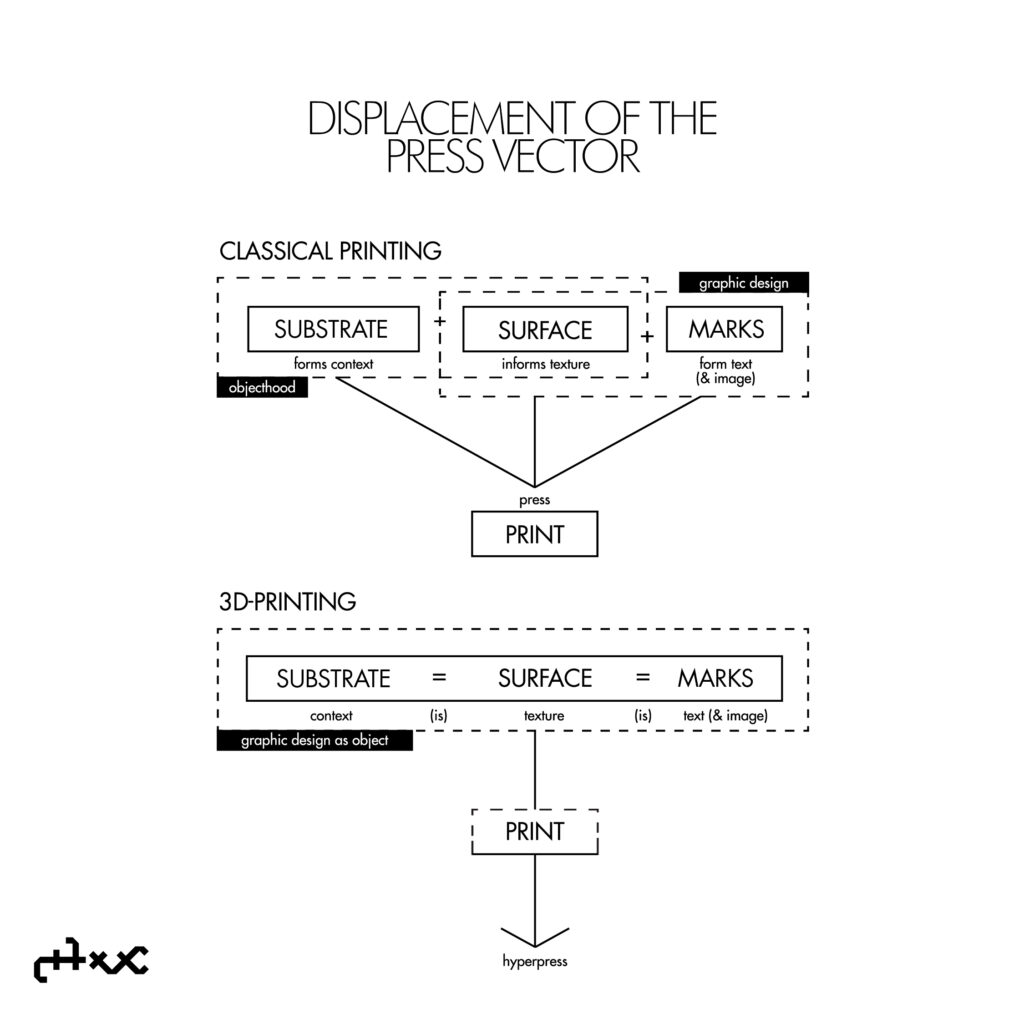
The distinction between surface and volume is fundamental to conventional printing. Marks reside on the surfaces of objects, achieved through the transfer of ink onto substrates. These elements remain discrete, brought together through pressure in a mechanical process aptly named the press.
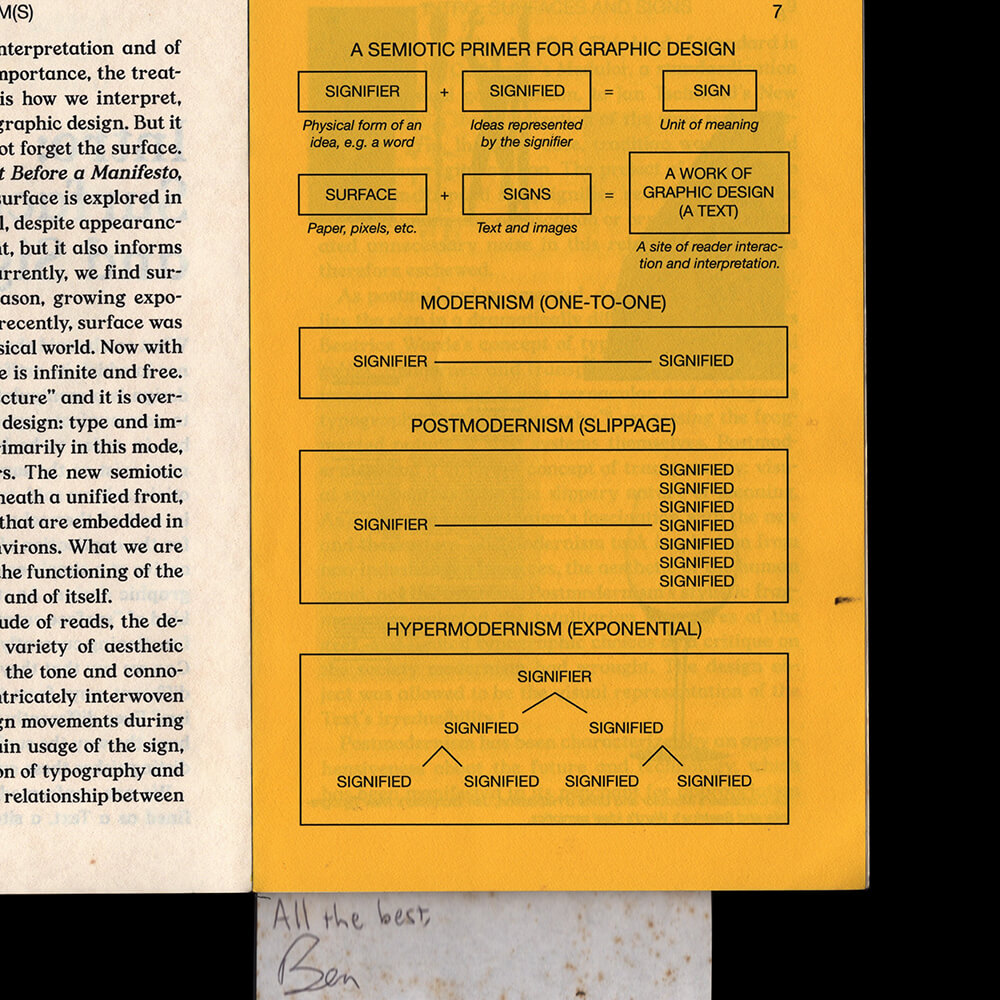
DuVall, Ben "A Semiotic Primer for graphic design" New Modernism(𝘴), 2014.The 3D printer, however, does not maintain this separation. If considered in relation to conventional printing, the substrate is not procured but materialised as printed layers. Marks are not transferred onto surfaces as ink, but produced as relief through subsequent layers. They could be printed within the same sequence as the substrate, even from the same material.
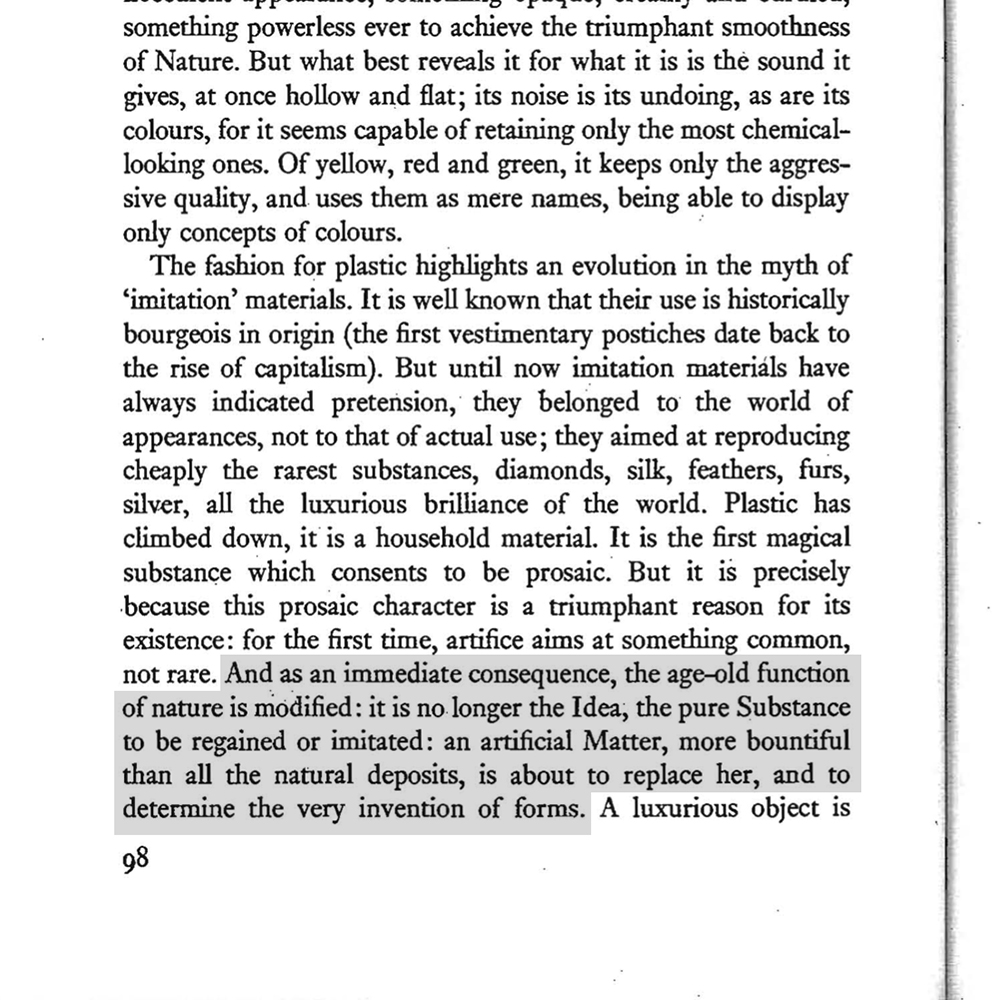
Roland Barthes contends in “Plastics”, Mythologies (1957) that plasticity fundamentally removes the distinction between form and matter. Classically, form (objecthood) is imposed upon content (material) through design (concept of an object). With plastics and processes like injection moulding, the form is inherently created along with the content itself.
Printed matter in 3D printing is materially singular. Print becomes a process of layering in which substrate, surface, and mark are fused by heat, collapsing their distinctions. This is not merely another technological advancement, but a fundamental destabilisation of the press as a mechanism. Displaced, print stands at a crossroads between definitions and dimensions, its trajectory yet to be determined
The press emerges displaced as a vector beyond print—the hyperpress.
III
GOTHIC FLATLINE IN PRINT
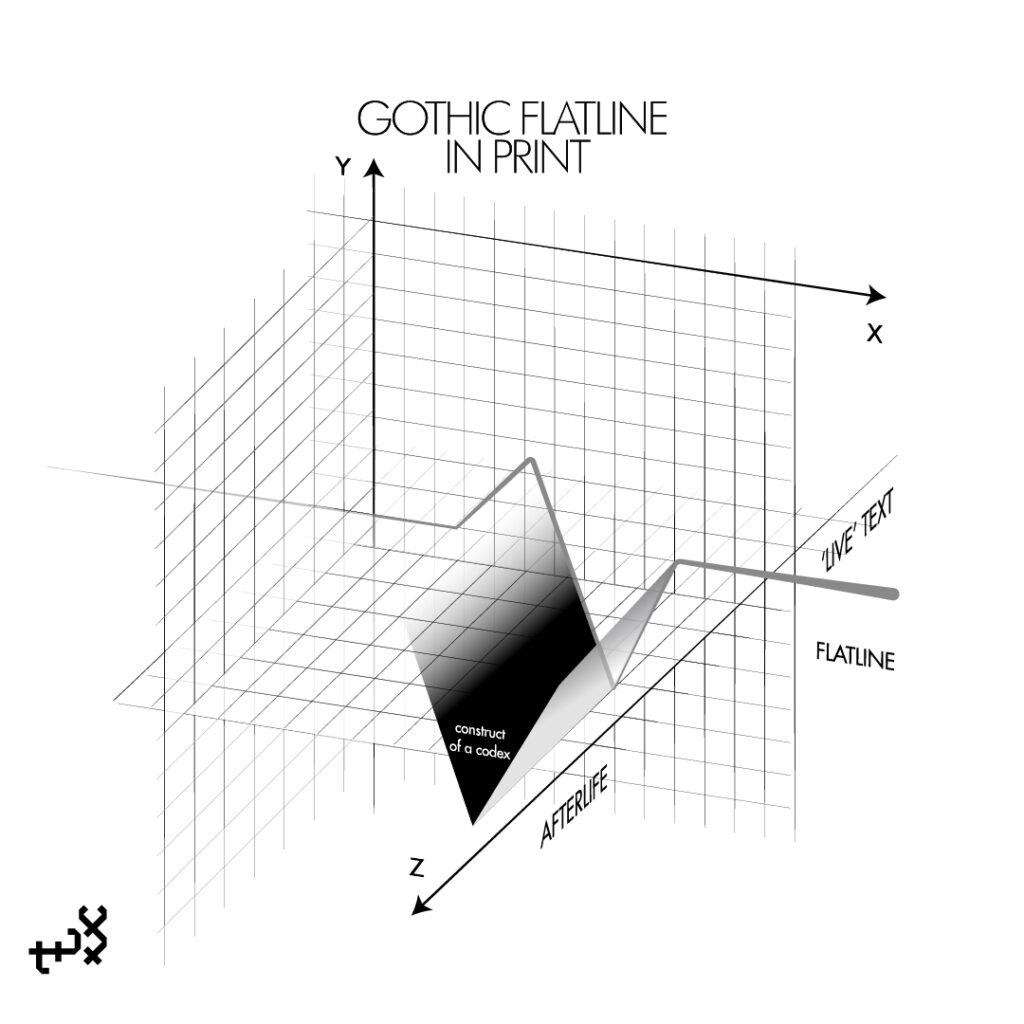
In Flatline Constructs: Gothic Materialism and Cybernetic Theory-Fiction, cultural theorist Mark Fisher describes the Gothic flatline as “a plane on which the distinction between the animate and the inanimate collapses, and where agency no longer depends on being alive.”
Fisher’s invocation of the flatline as a “plane” positions death within a dimensional register. This resonates with graphic design’s long-standing orientation toward two-dimensionality, having been a discipline historically bound to two-dimensional surfaces. This condition carries semantic and cultural weight. “Flat” does not merely describe dimensionality, but often connotes inadequacy, such as “lacking in animation, zest, or vigour” (Merriam-Webster). If flatness is associated with lifelessness, then the printed page (historically confined to the surface) risks being read as inert and inadequate in contrast to the responsive, animated interfaces of digital screens. The rhetoric of the “death of print” emerges precisely within this semantic field.
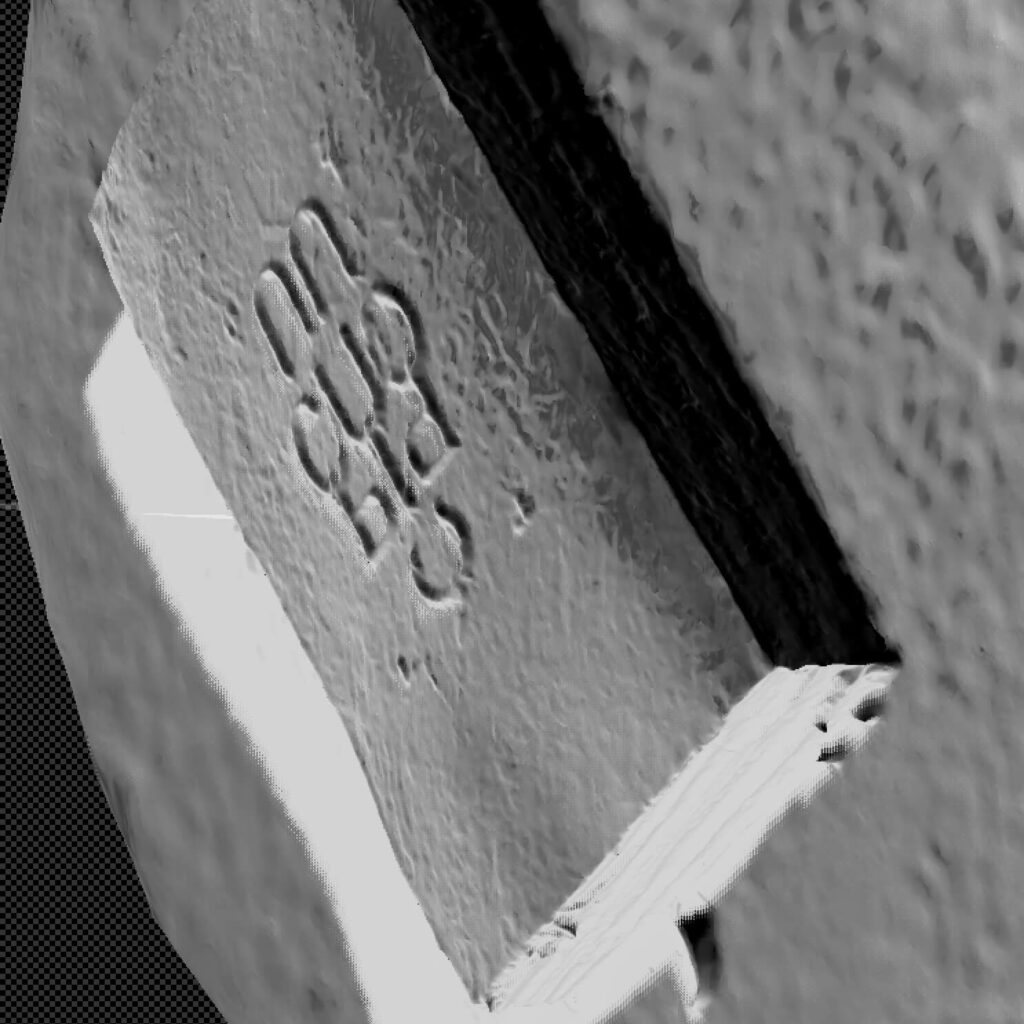
Against this backdrop, the question is not how print might regain agency by approximating life, but how flatness itself might be reconfigured as an operative condition rather than a deficit. Within this framing, 3D printing introduces a critical inflection. By thinking about books volumetrically and 3D printing “flat” page-objects, the surface-bound ontology of print is destabilised. The printed page is neither flat like pulp paper nor fully volumetric like a vessel. Might a 3D printed page contain more than the sum of its parts?
Most 3D printed books merely simulate codices, mistaking the constraints of conventional printing for intrinsic properties of the book form. What emerges is a book without offset, a body without organs: conceptually unchanged, yet structurally displaced. Ironically, these plastic artefacts, slower to decay than paper, outlast what they imitate.
For all the promise of the technology and its potential conferred by an “extra” dimension in print, 3D printed books fail to reimagine the book form. Faltering against the digital screen, they bind themselves stubbornly, devotedly to the codex, as pages once bound themselves to spines. In this sense, they are hauntological artefacts suspended between persistence and obsolescence, bound to a form that has passed, and a futurity that never arrived.
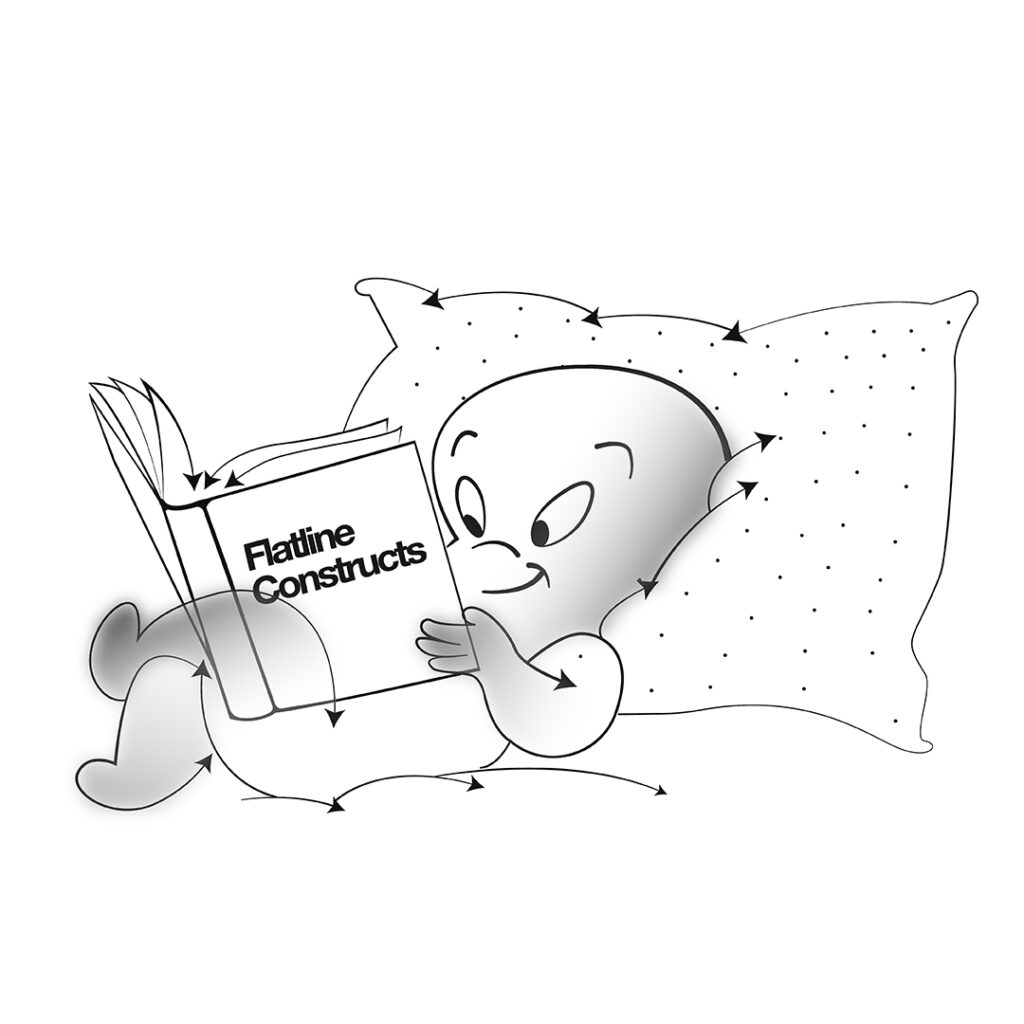
Fisher’s title invokes Dixie Flatline (from William Gibson’s Neuromancer), a consciousness revived as a data construct after the character’s biological death. Flatline’s afterlife is a continuation of life in a counterfactual trajectory, agency beyond death. Similarly, 3D printed books project an “afterlife of print” beyond the confines of the X–Y plane. More like projections than transformations, they remain constructs of the book, merely materialised along the Z-axis—the additional dimension conferred by “3D” printing.
The Z-axis is the Gothic flatline of print. It is along this axis that print persists after its supposed “death”, with its agency displaced into 3D printing. A blip after death.