2026
Thermoplastic polyurethane
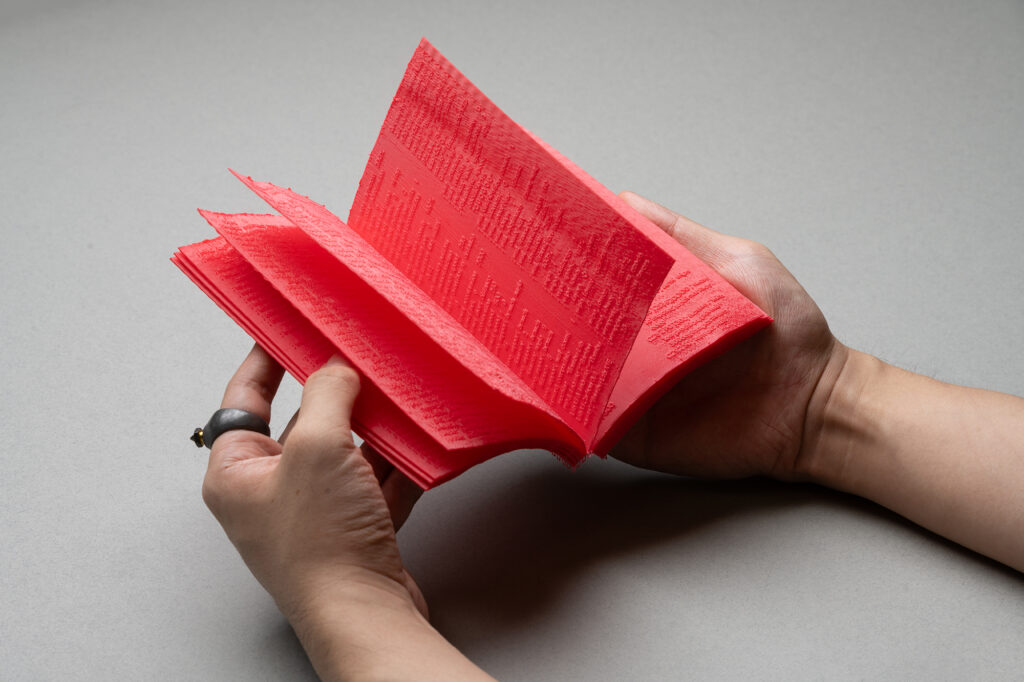
16 × 10 × 2.5 cm
Research and development with Benson Chong
Launched at New Systems (Toronto). Special thanks to Final Research and Devansh Shah.
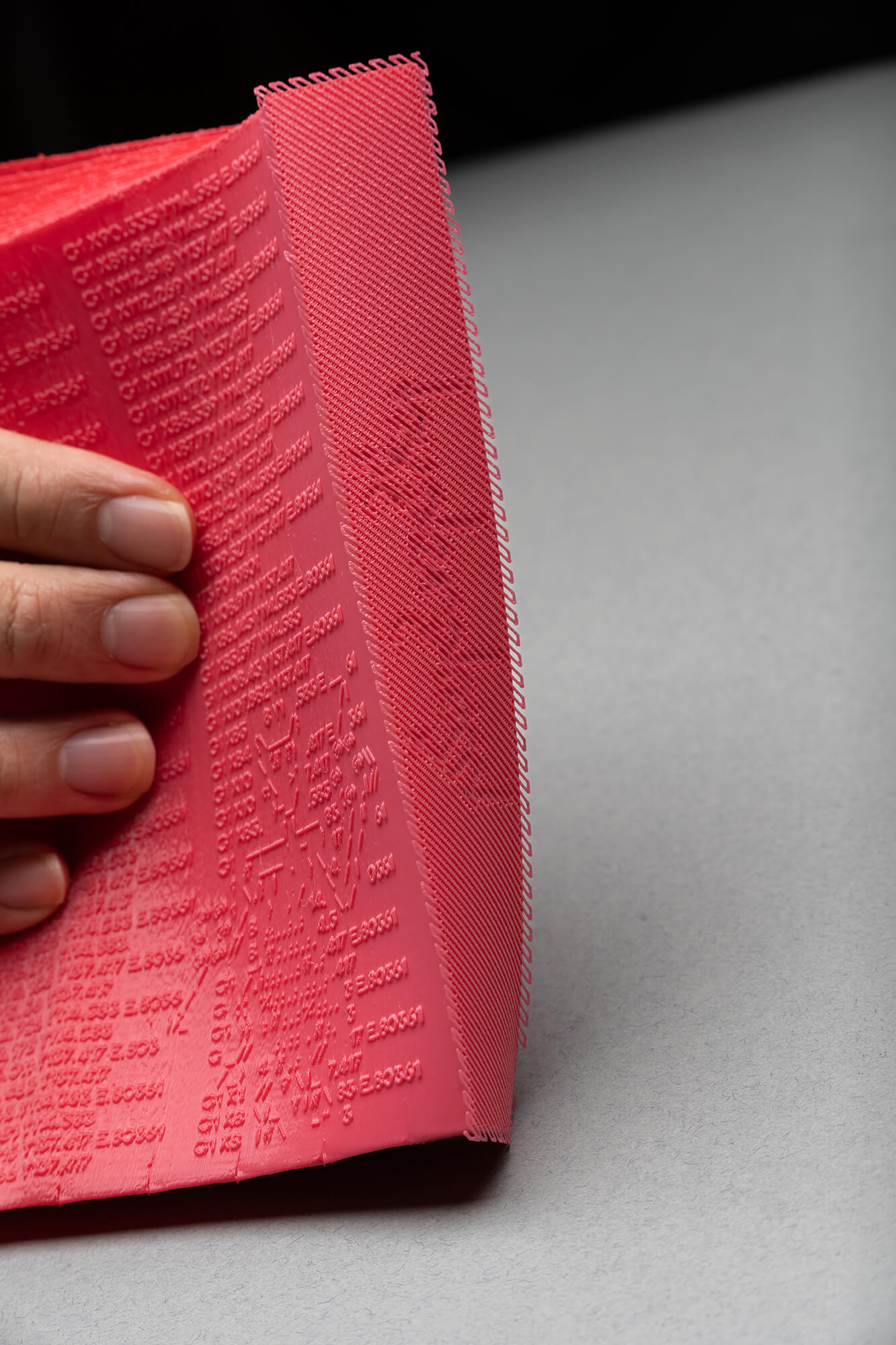
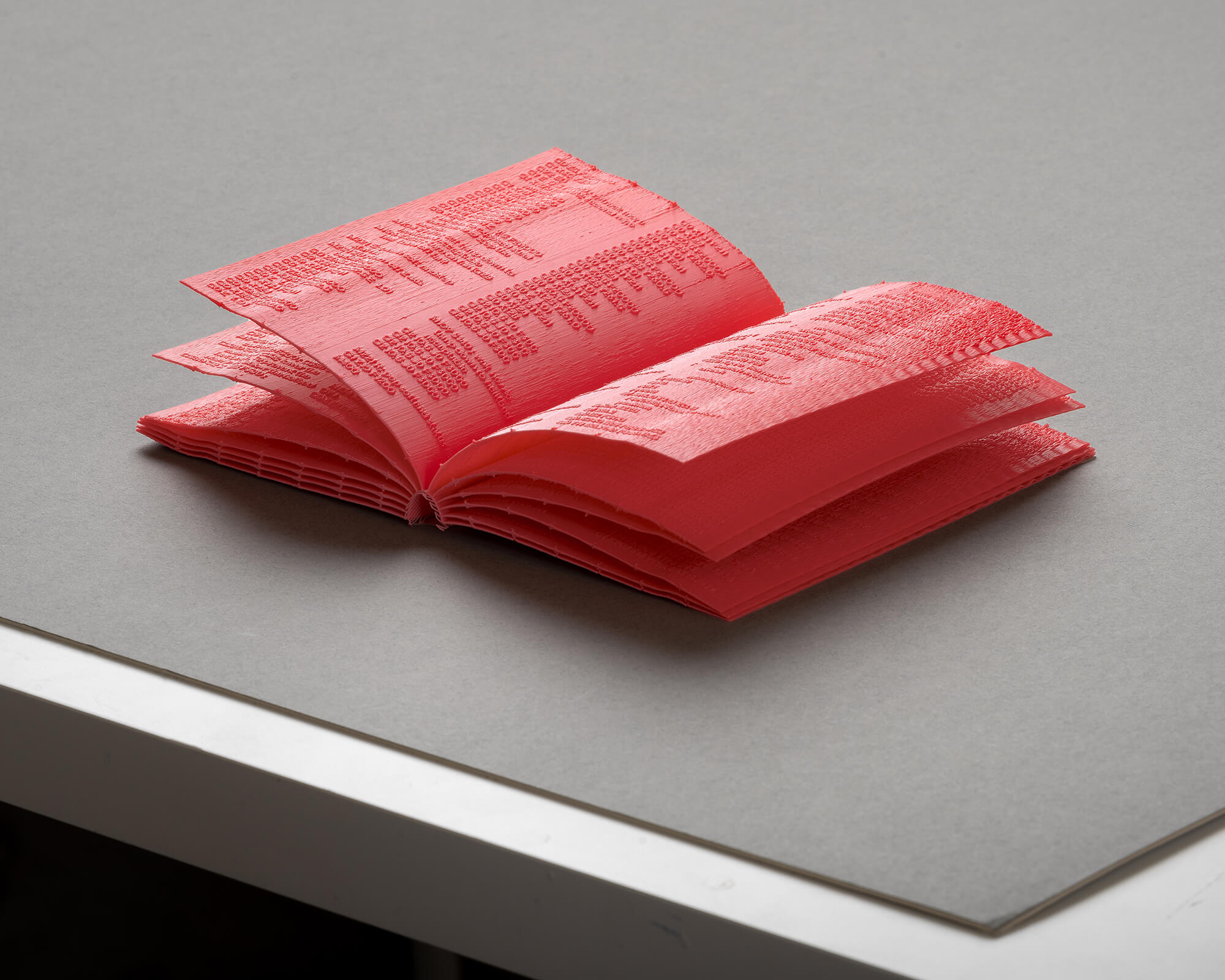
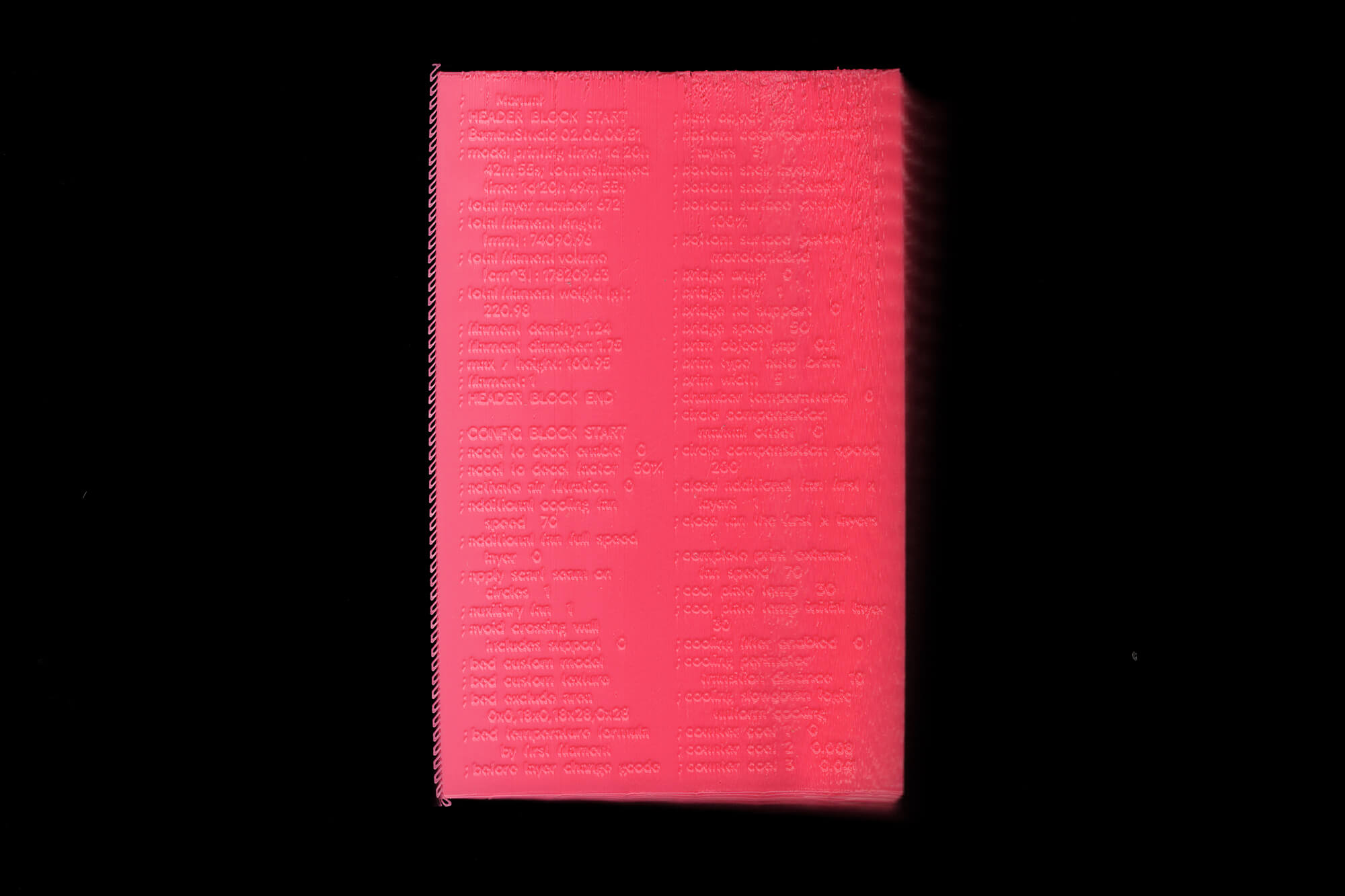
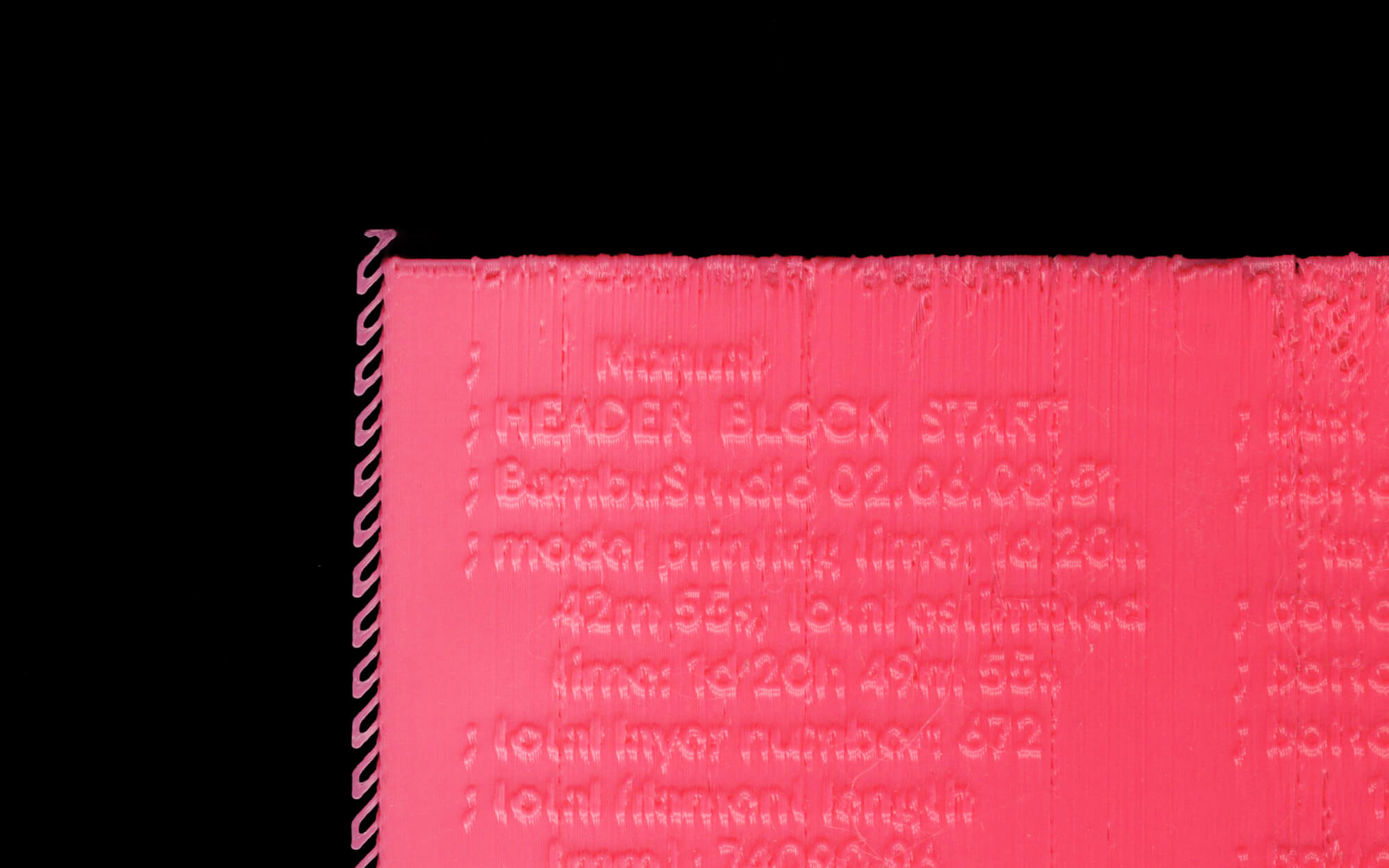
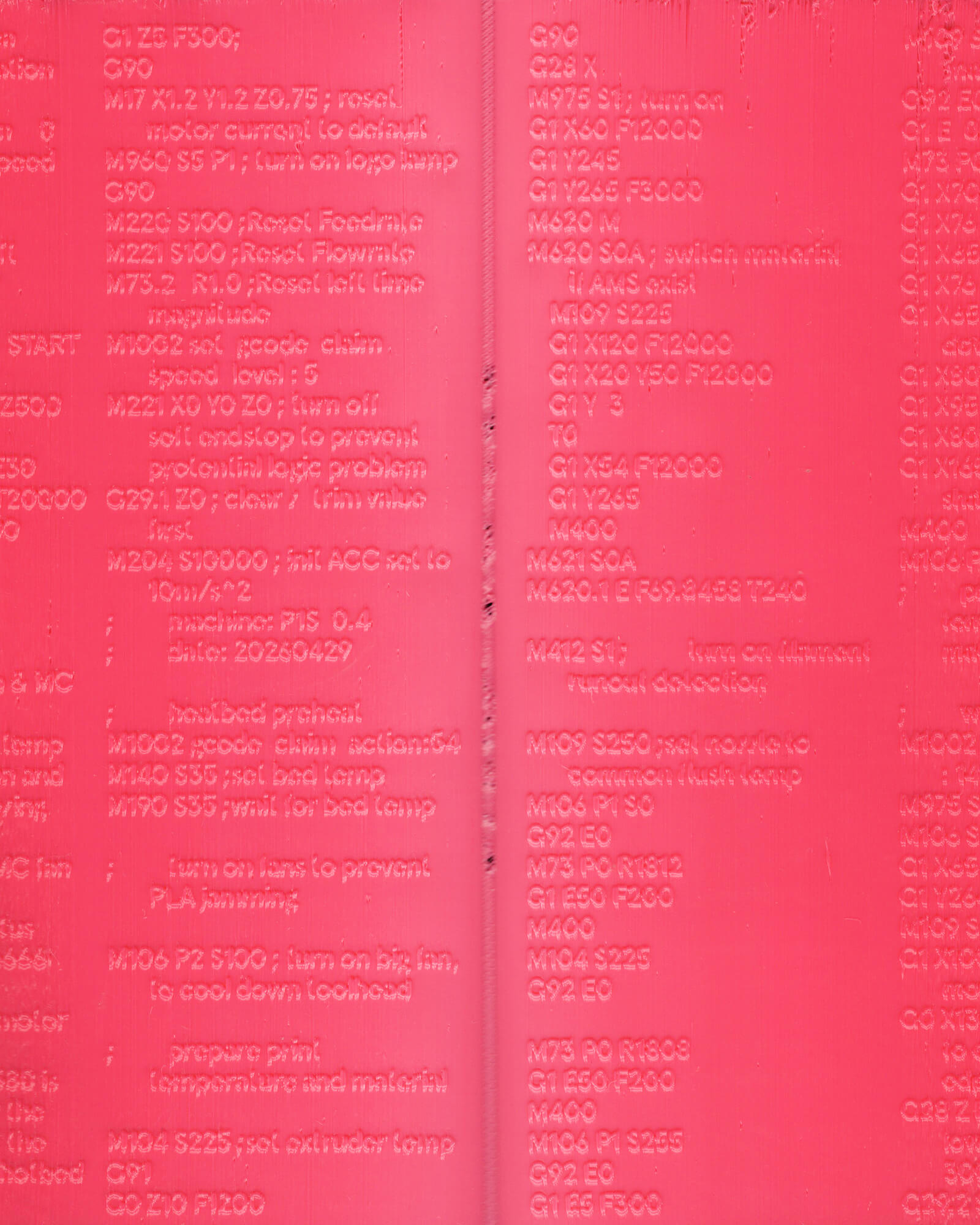
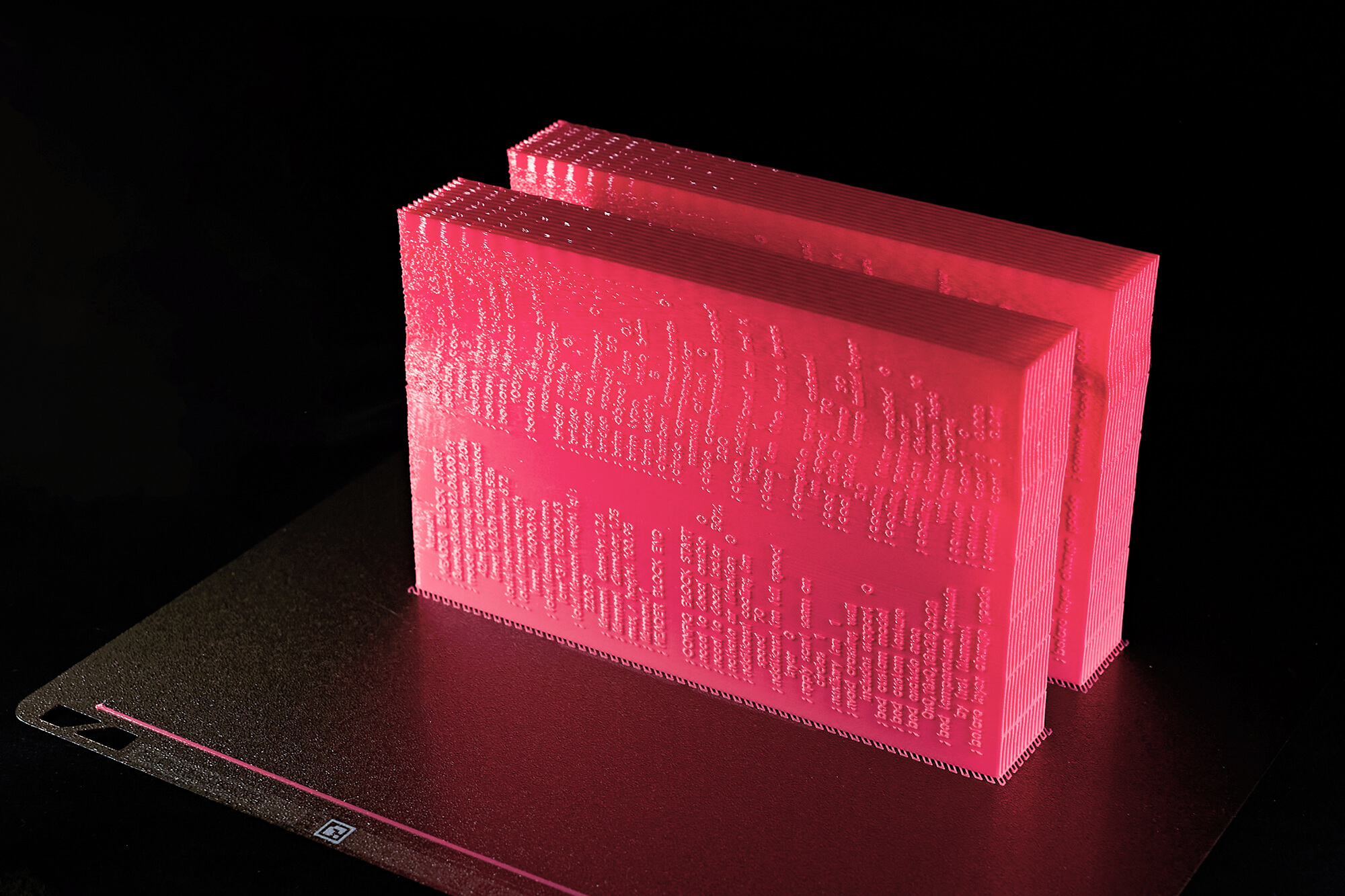
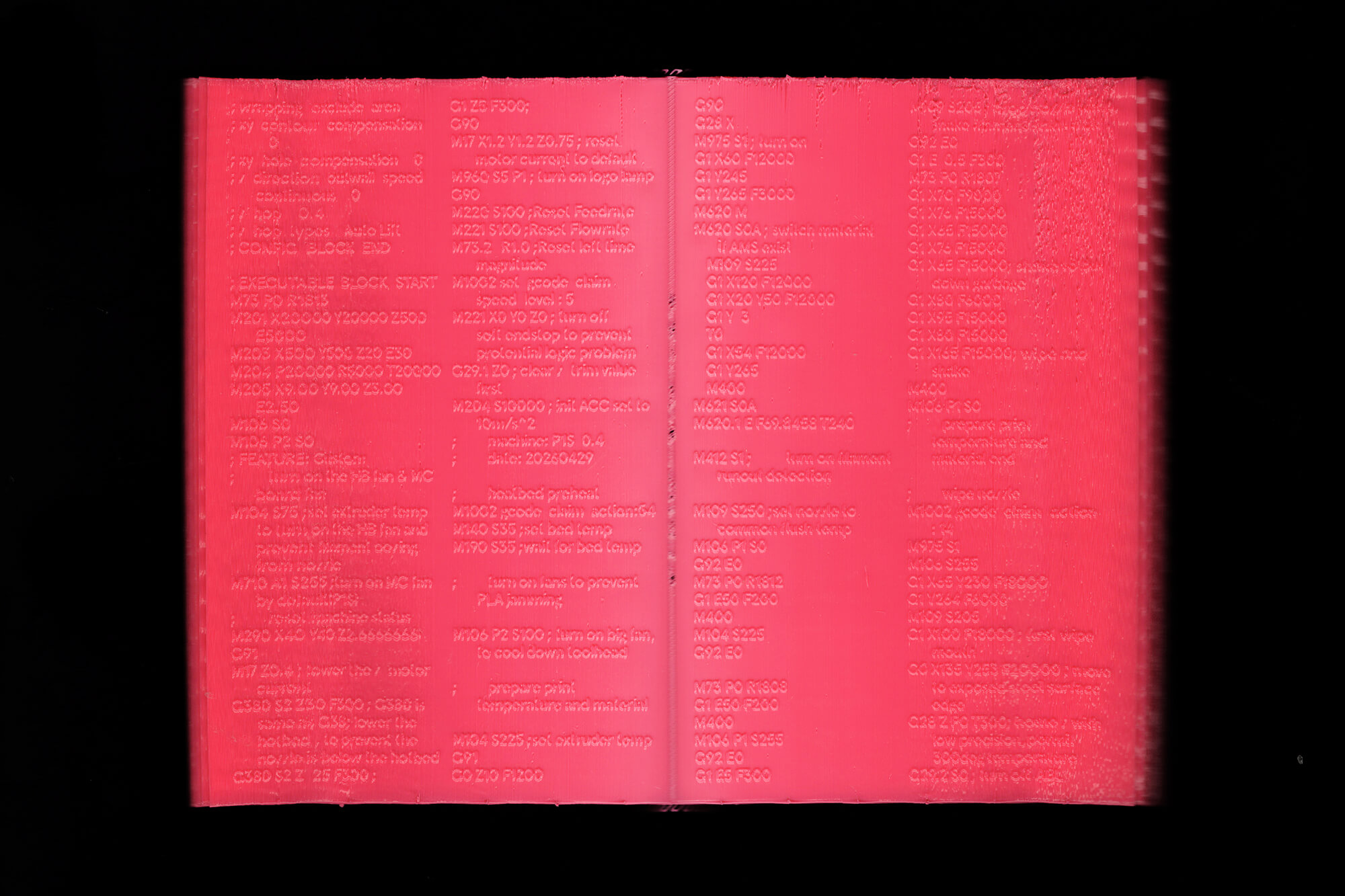
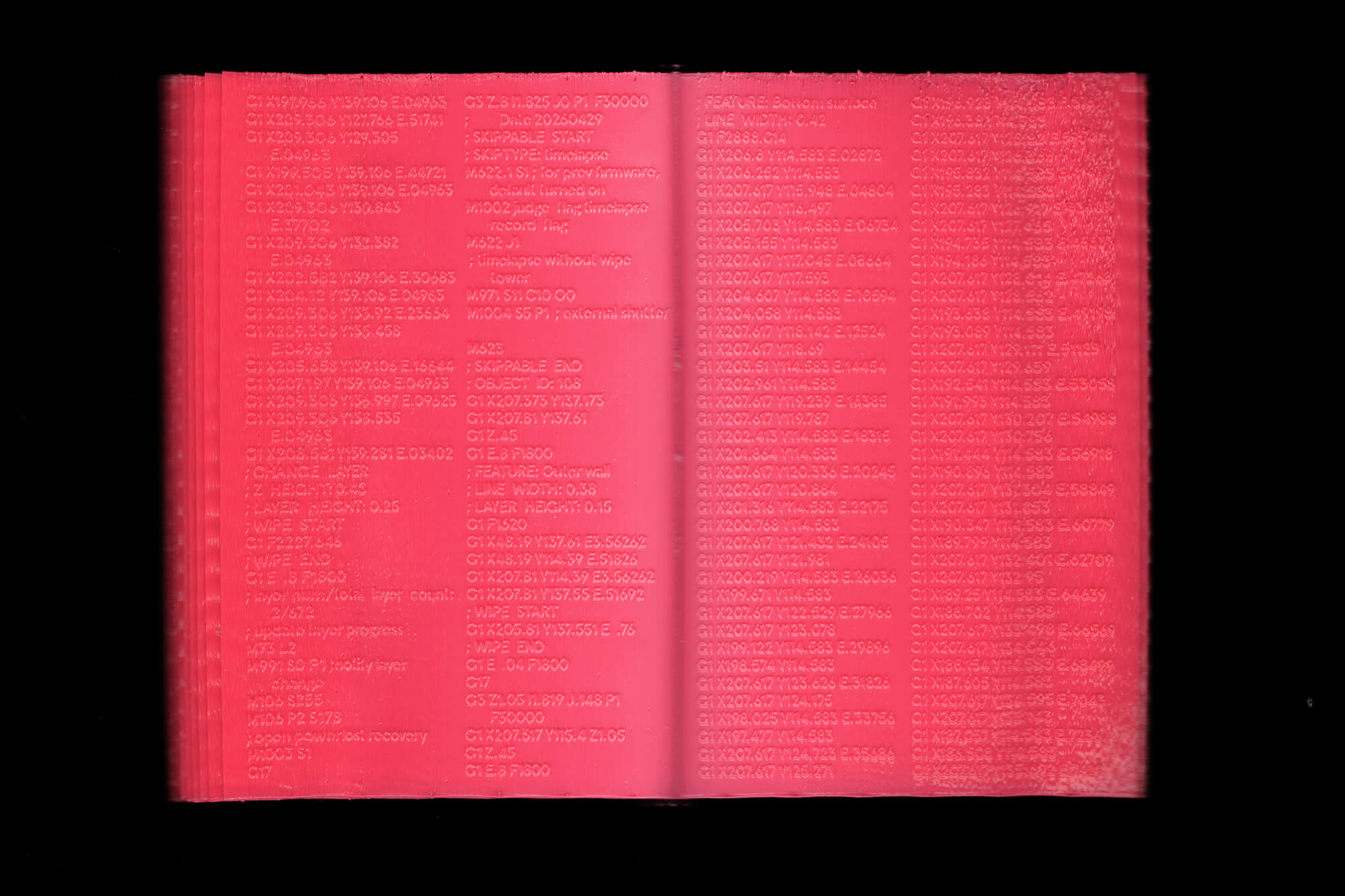
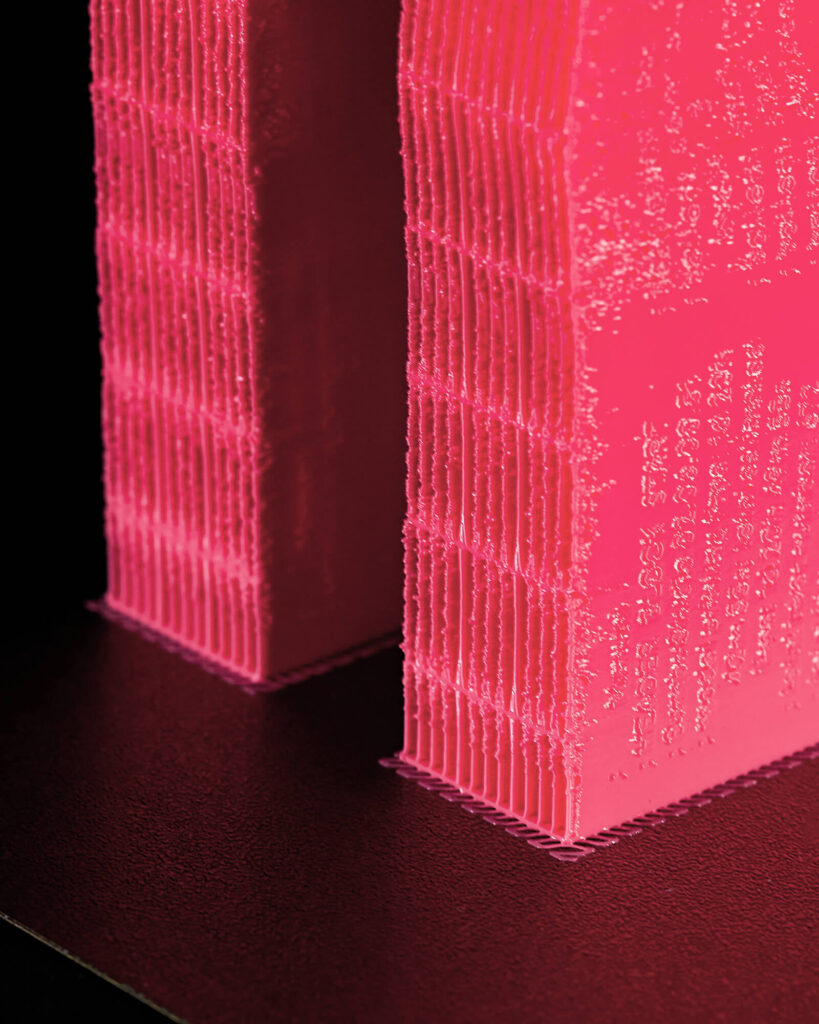
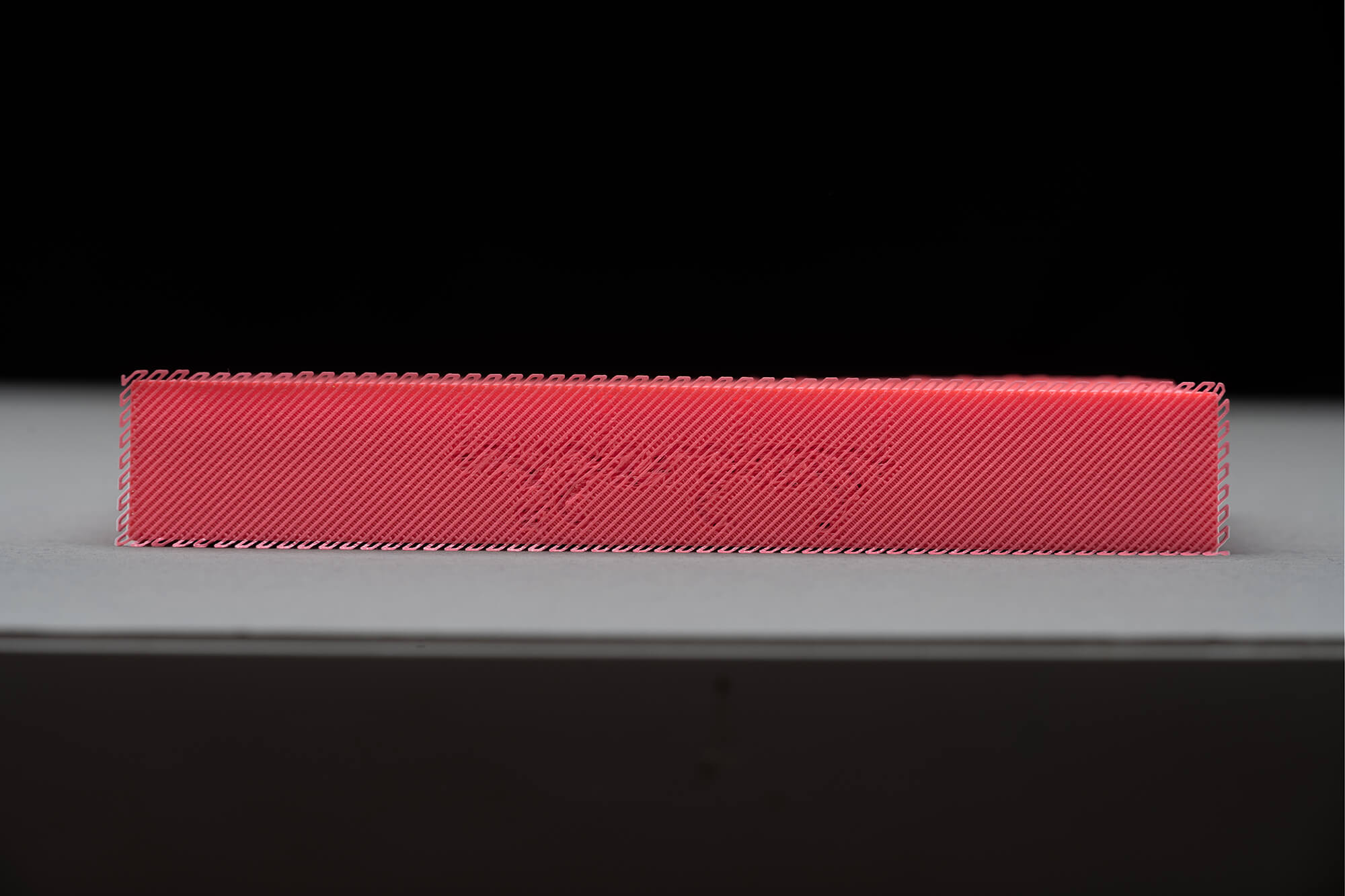
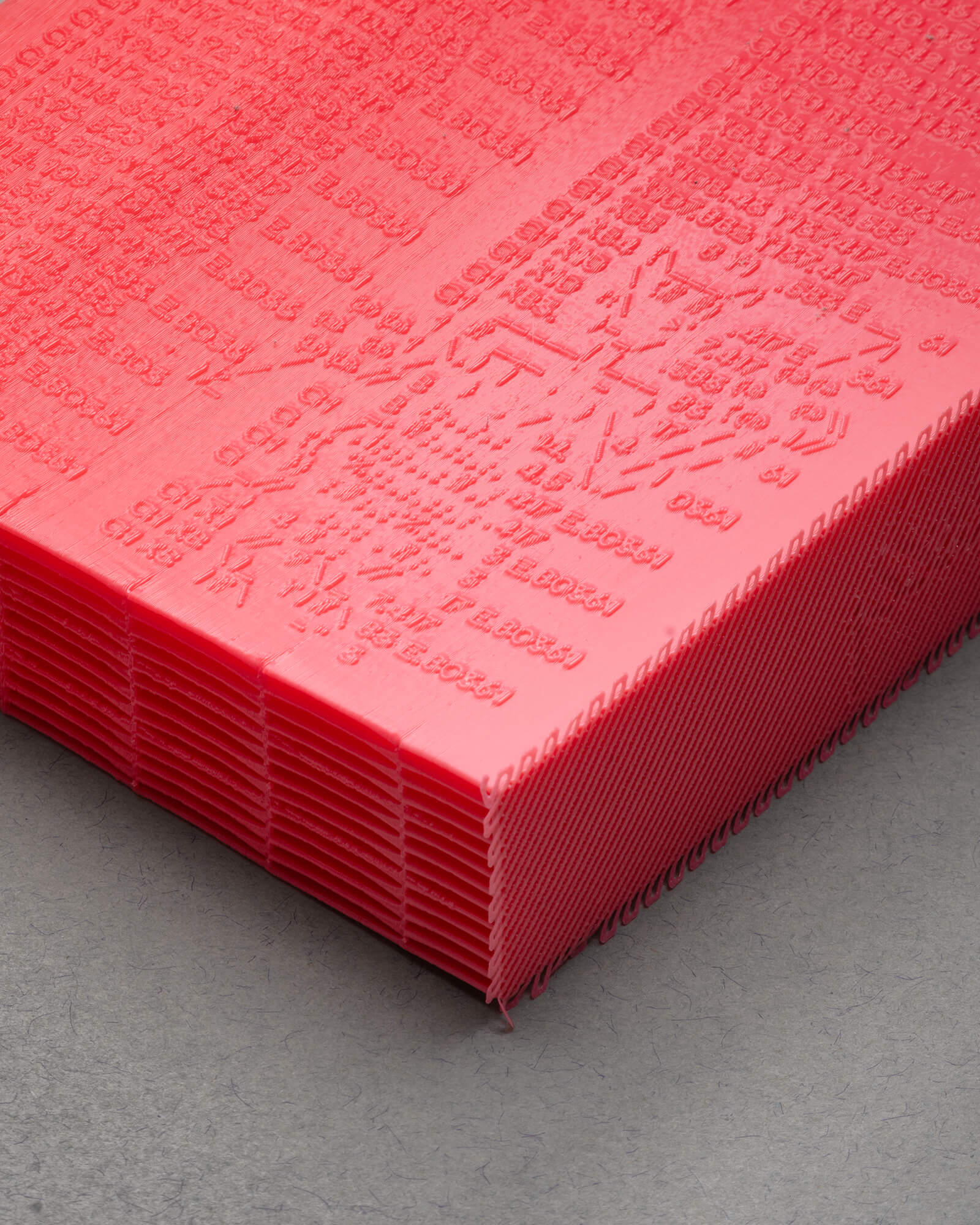
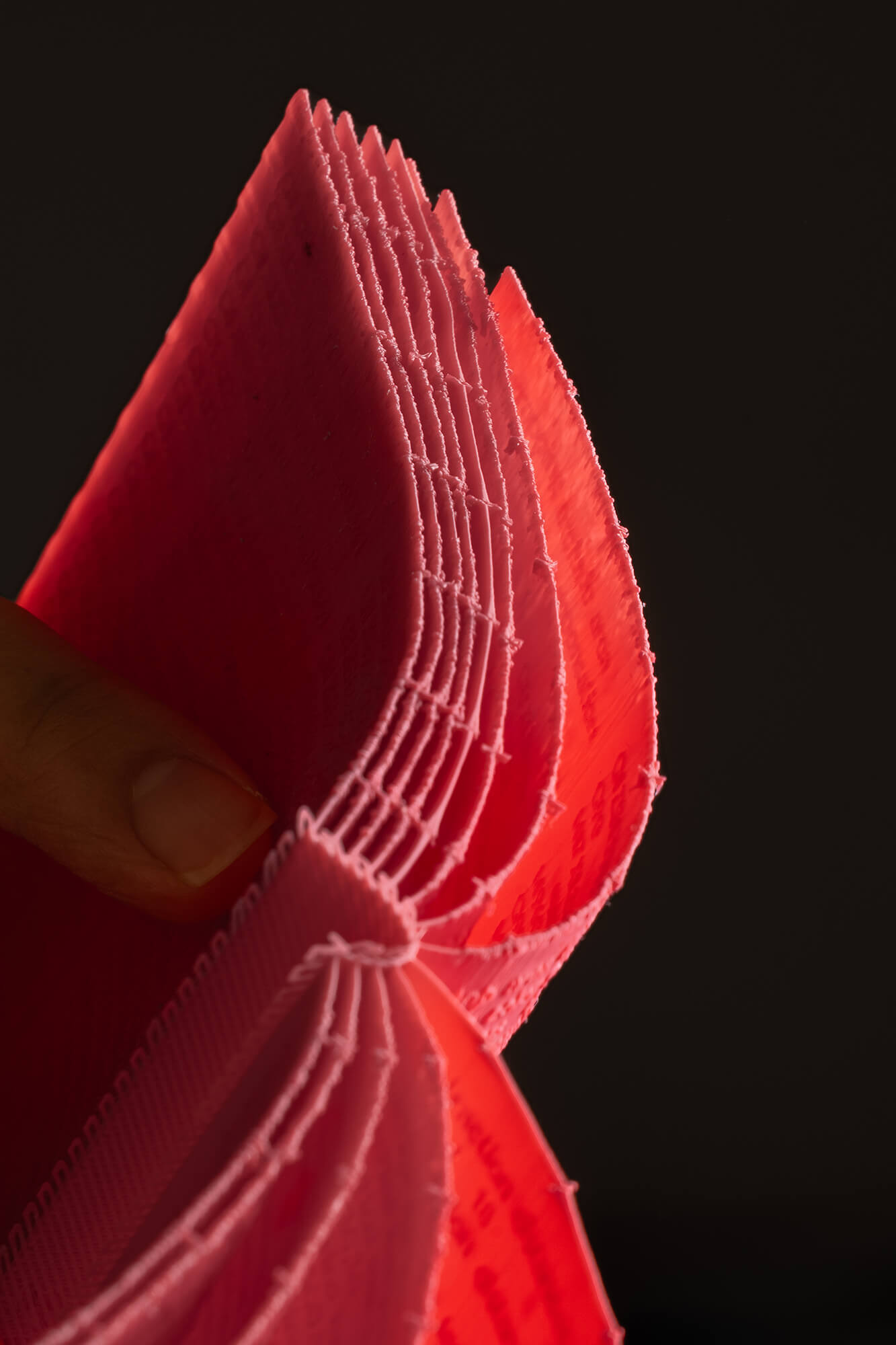
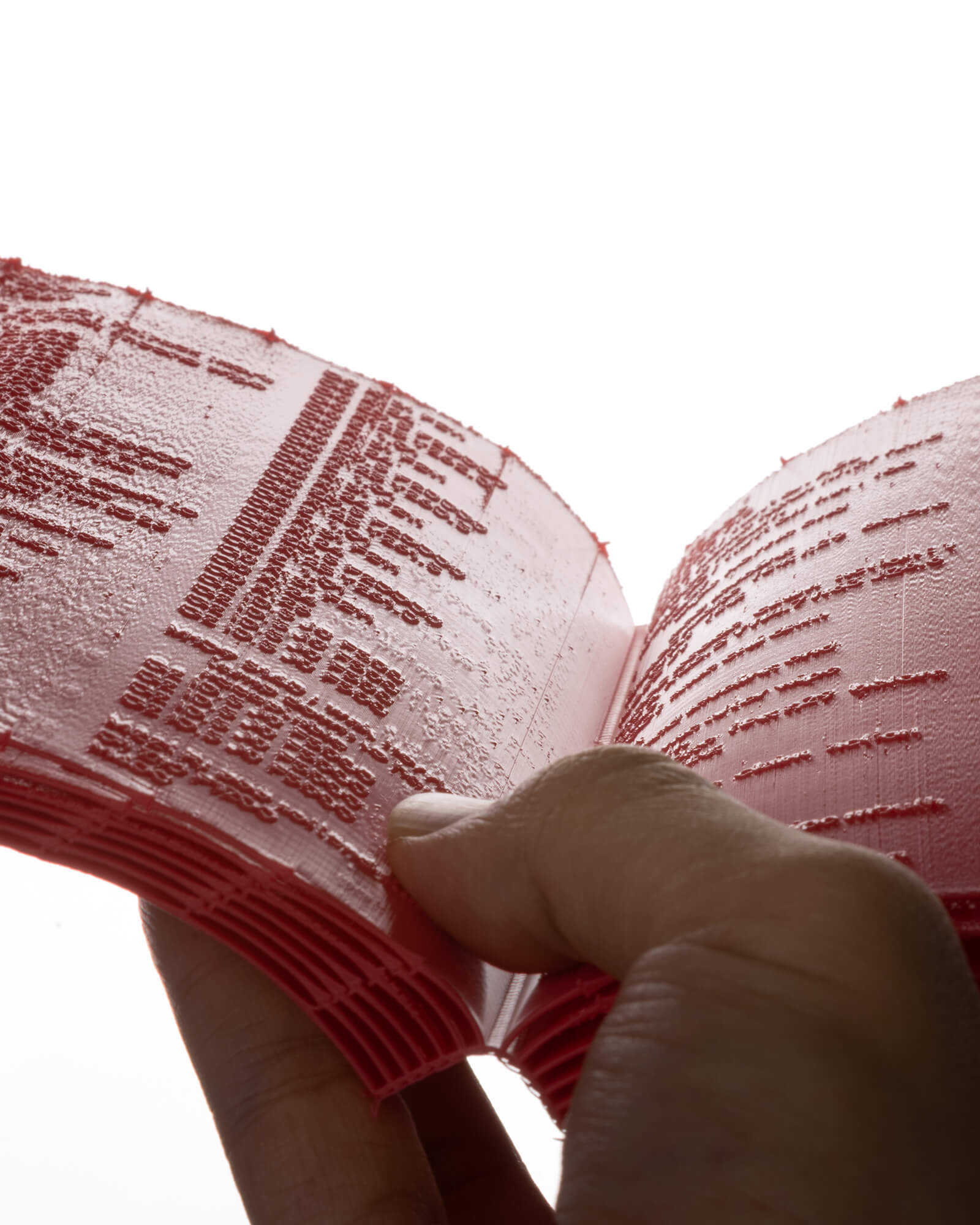
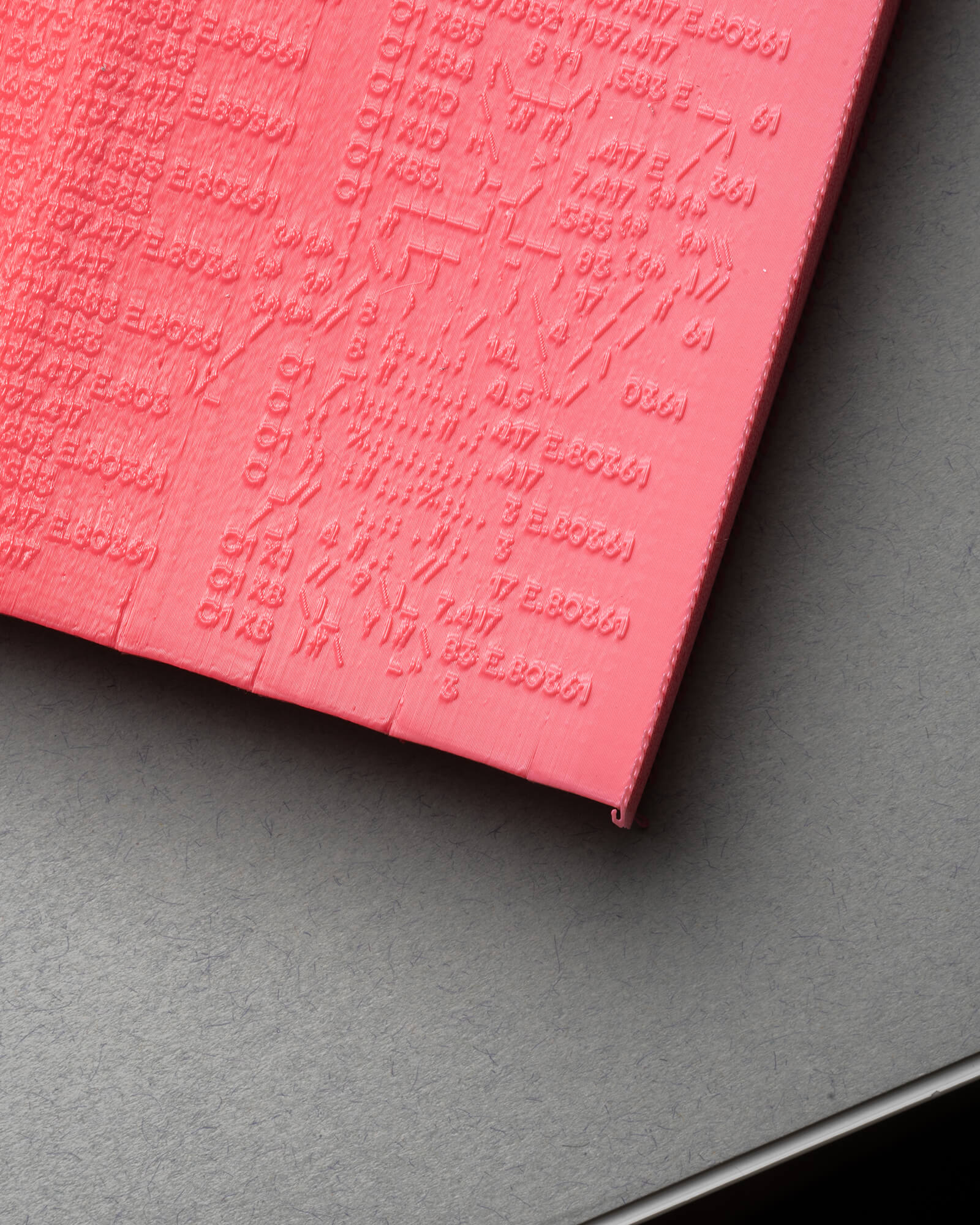
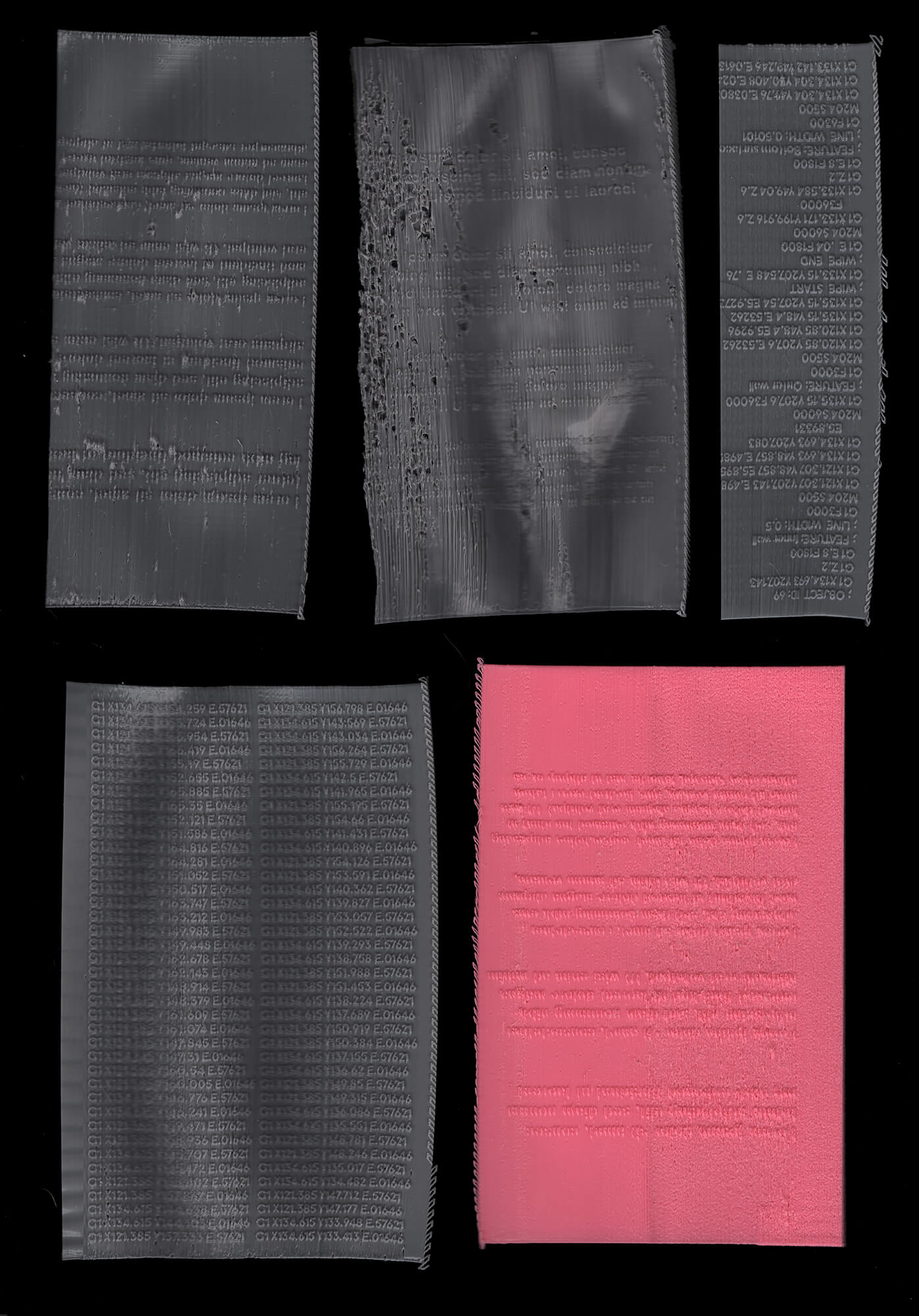
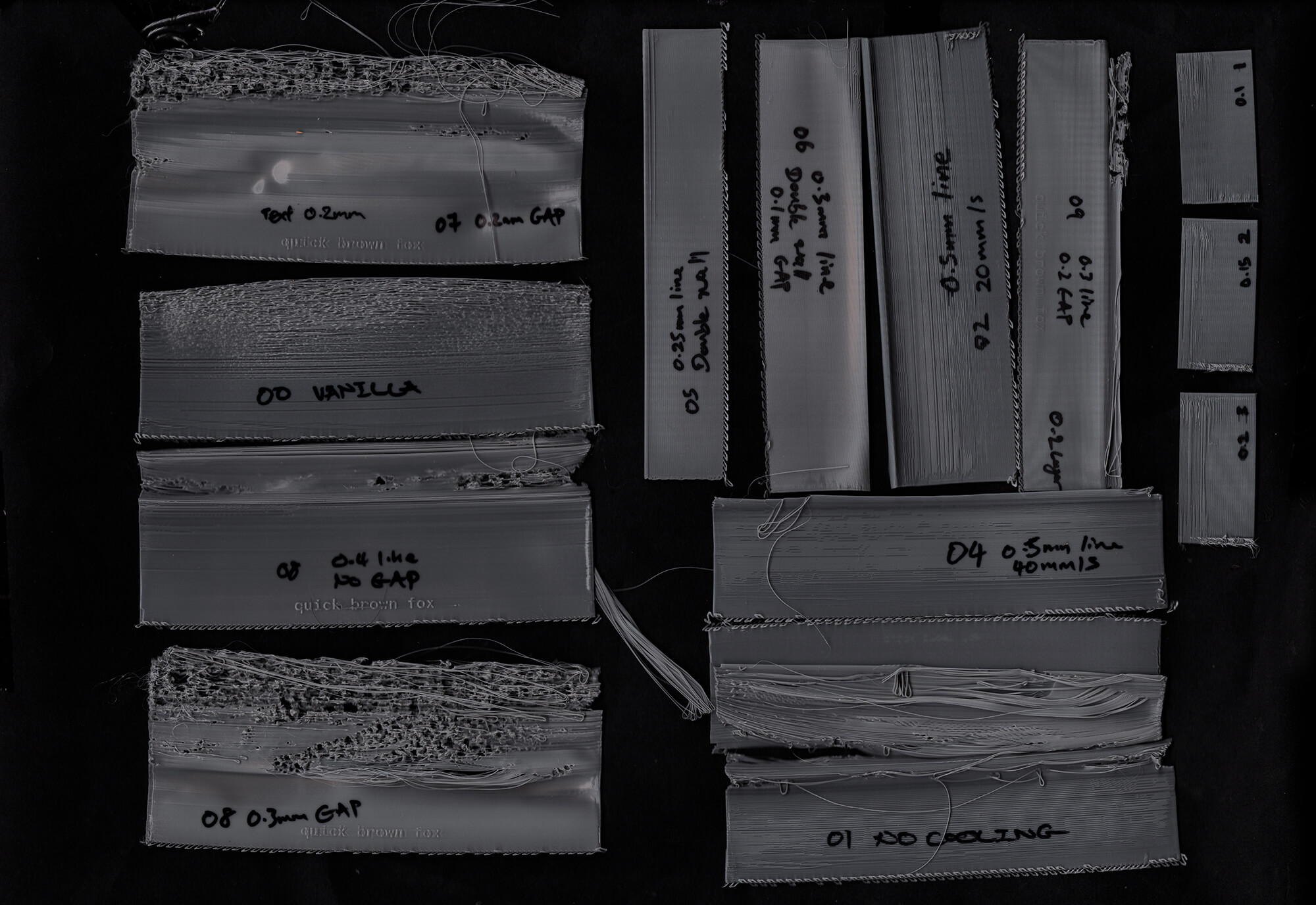
Manual is a fully 3D-printed book bearing raised marks of the very G-code (partial) used to fabricate itself, embedding within the object the instructions for its own replication. Manual is a book designed to be 3D printed in a single sequence with the XY-for-Z printing method that bypasses post-production, allowing the book to materialise directly on the print bed in fully bound form. Manual was developed in Singapore and was launched at an event in Toronto, where the book was sent digitally and 3D printed physically on site.
In 2008, a machine developed by the RepRap (Replicating Rapid Prototyper) project successfully 3D printed 48% of its own components. This figure accounted for all of the machine’s rapid-prototyped parts, marking one of the first significant demonstrations of machine self-replication. The remaining 52% consisted of electronics and components requiring non-printable materials or higher manufacturing precision. The long-term ambition of the RepRap is to achieve a fully self-replicating machine capable of printing complete copies of itself.
Founded in 2005 by Adrian Bowyer alongside collaborators including Michael S. Hart, the RepRap Project inherited an ethos already central to Hart’s earlier work on Project Gutenberg: another project concerned with the decentralised distribution of e-books. Hart is widely regarded as the inventor of the e-book, having produced some of the first digital books. The relationship between self-replicating machines and books is not merely coincidental. Both function as technologies for the replication and dissemination of human knowledge and endeavours.
Manual traces this shared trajectory between self-replicating systems and digital books by proposing the electronically transmissible and printable book object. Unlike the e-book, where only textual content is transmissible, this Replicable Book (r-book) enables the replication of both content and physical form. This process can also be understood as a form of ‘3D fax’: if the fax machine reproduced only the scanned surfaces of documents, the 3D printer enables the complete reconstruction of a fully functional book object. While the r-book can assume the form of any type of book, Manual consists solely of machine-readable code, positioning itself as addressed primarily to machines, not human readers.
The first version of Manual contains only 2.5% of its own G-code printed on its pages. The difficulty of achieving higher degrees of self-replication parallels the technical limitations encountered by early RepRap machines. Current print resolution of FFF 3D printing and text scales cannot support a code-to-volume ratio to fully account for the volume data of the object and marks it contains, and is infinitely recursive.
Manual’s print file is available on hyperpress’s Patreon.