The technical capabilities of the 3D printer also open up new possibilities for augmented books. Printed circuit boards (PCBs) were first developed in the early twentieth century and are now ubiquitous in modern electronics. The fabrication of PCBs shares the same foundational principles of the printing press: the systematic deposition of material onto a surface. In the case of PCBs, conductive paths (traces) are printed onto insulating substrates to form highly intricate electronic circuits. Multi-layered PCBs harnessed the third spatial dimension of print by stacking these circuit layers, significantly enhancing system functionalities. However, these printed matter were always meant to be read by machines, not human readers.
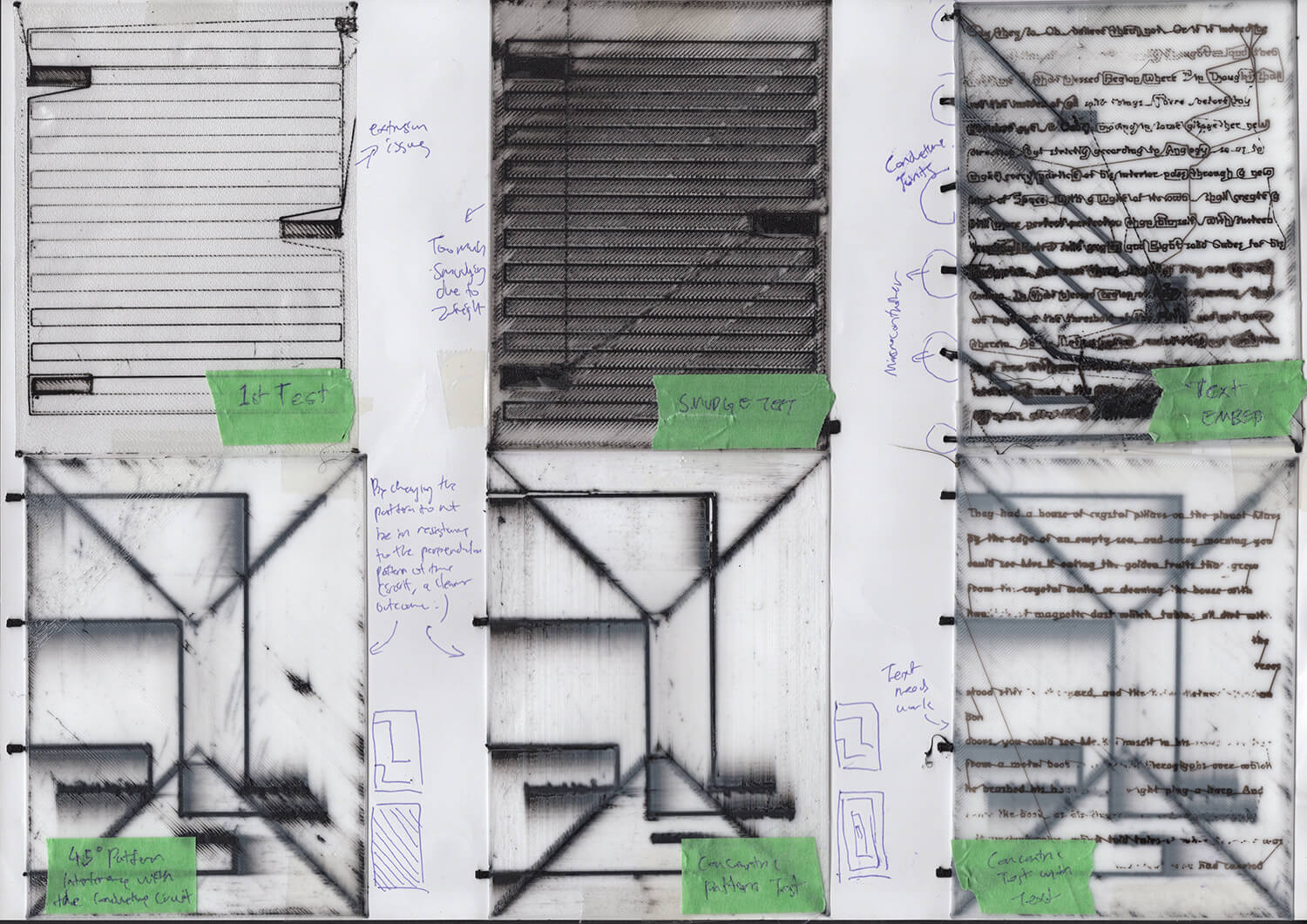
Fig.1. Testing of printing conductive filament within TPU substrates
Through 3D printing, the volumetric press already possesses the technical framework to integrate electronic functionalities into printed books. The nature of 3D printed substrates naturally lends itself to the possibilities of layered features and volumised pages. Reconceiving the page as a laminated structure allows electronic circuits to be embedded on the page level (Fig.1). As with a PCB, conductive traces can be 3D printed using electrically conductive materials, laminated onto or embedded within non-conductive thermoplastic layers and integrated with microcontrollers, touch sensors, audio, and even screen modules.
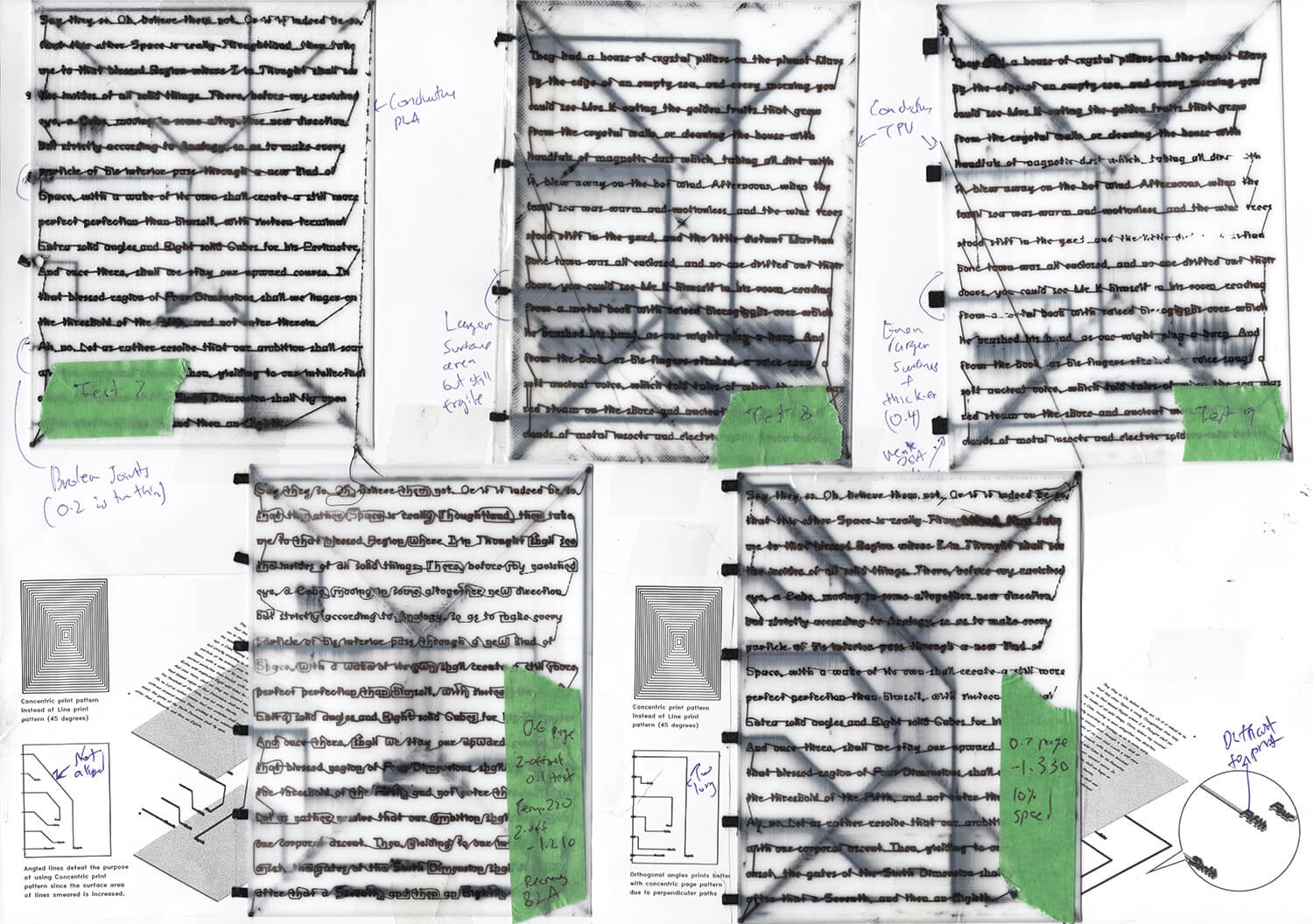
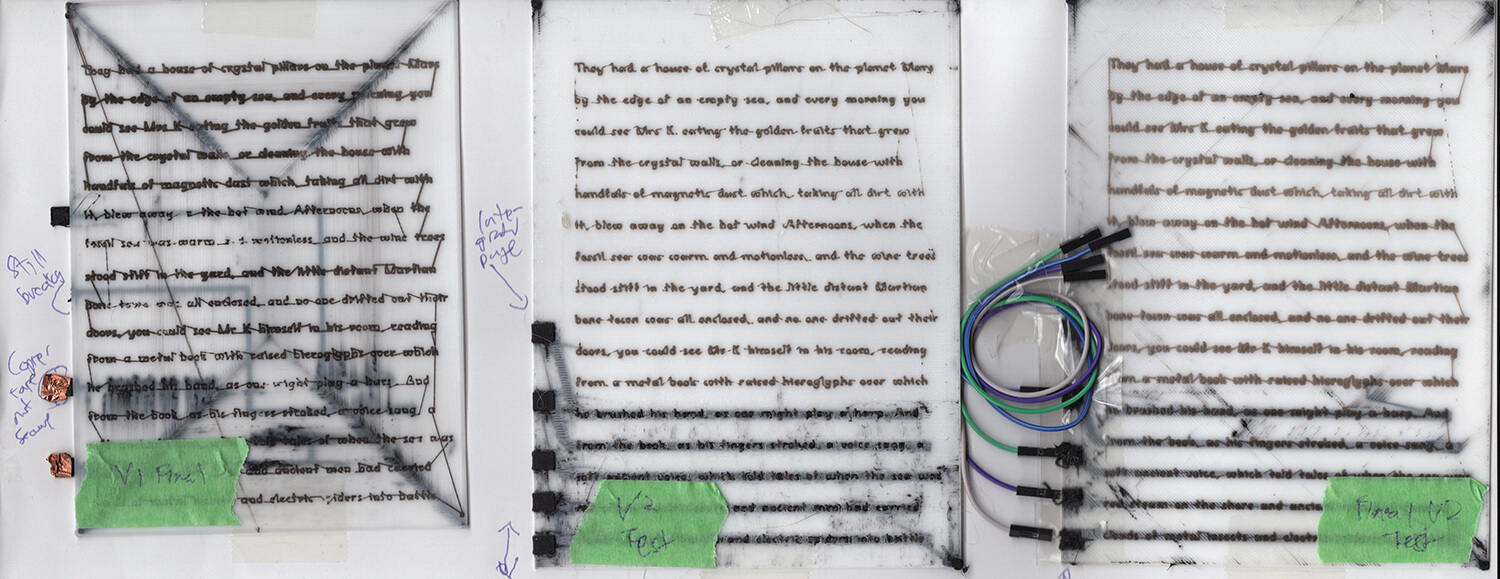
Fig.2. Testing of connecting conductive printed traces to jumper wires
With carbon-infused TPU traces 3D printed and embedded (Fig. 3) within flexible TPU substrates as thin as 0.6mm (3 stable layers), they can be connected electrically (Fig. 2) to an ESP32 microcontroller, SD card module, audio-speaker module, and an E-ink screen. In the final prototype, METALLY (2025), the method was tested on 5 lines of text on a single page. This printed circuit page introduces new interaction modalities, enabling Human-Computer Interaction (HCI) events for the book form. E-ink screen text and audio are triggered as the microcontroller processes fingers brushing across lines of text on the printed circuit page. On the printed circuit page, reading becomes a haptic experience. Words can be read aloud through integrated speakers in the spine, and sentences displayed through screens on the book’s tail.
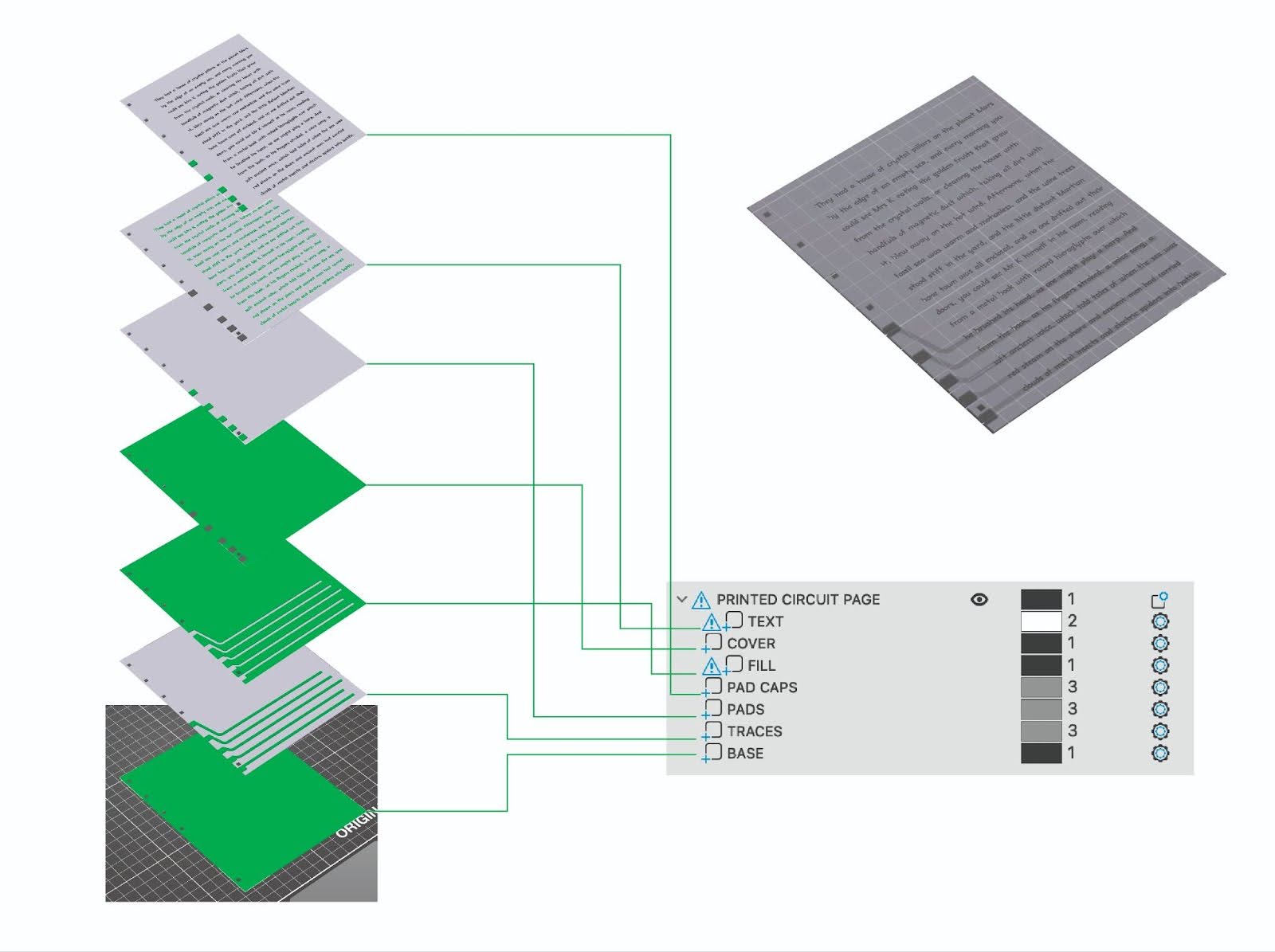
Fig.3. Schematics of the Printed Circuit Page
Such aspirations were once carried by e-books, though at the expense of the book’s form. The printed circuit page reclaims the book form while possibly retaining the e-book’s functionalities. Words are activated by pressing on printed text, sentences are parsed by brushing across lines—the act of pressing shifts from the machine to the reader.
View more on METALLY here.