Essay originally published in Singapore Art Museum Design Journal Issue #1
I
Etymologically speaking, the word “volume” was rooted in the idea of the book long before it signified the measure of space. Its origins can be traced to the Latin word volumen, derived from volvere (meaning “to roll”). Initially used to refer to rolled papyrus, the term endured even as the codex format—a stack of pages bound along one edge—supplanted the scroll in the evolution towards the modern book. By the 16th century, “volume” had come to refer to the extent and size of a book, which led to the expansion of the word’s meaning as a measure of space occupied by any object.
This affinity with volumes is echoed in the book’s structural evolution. The codex (from Latin caudex, meaning “block of wood”) brought about the flattening of rolled material and the binding of stacked material into blocks. The codex’s advantages over the scroll were manifold. An unfurled scroll could only store information in the form of marks made on its flat surface, an area defined by two dimensions (length and width). Information had to be accessed sequentially through unwinding, which meant that the back of the scroll was underutilised. The codex format not only enabled both sides of a leaf (page) to be used but also provided the possibility of random access to specific information in the stack of leaves via pagination. Loosely speaking in terms of dimensions, pieces of flat “two-dimensional” leaves carrying marks are reconfigured into layered “three-dimensional” voluminous blocks for efficiency, portability, and scalability. This afforded additional “degrees of freedom,” tapping into a third dimension (height) where information may be stored and accessed.1 Across length, width and height, the medium becomes volumetric.
The evolution of the book also afforded another degree of freedom in terms of material innovation. As the scroll format transitioned to the codex, the need for flexibility in the codex structure meant that parchment was gradually favoured over papyrus. A later iteration of papyrus, known as paper (from Latin papyrus), was developed in China in the first century using pulp. The paper technology underwent centuries of refinement as it spread across Asia and beyond, ultimately replacing parchment as the dominant substrate for book pages.
In 15th-century Europe, Johannes Gutenberg’s movable type press—built on the woodblock printing technology invented by China in the seventh century—marked the beginning of a new era for printing and graphic design. Besides the mass production of printed books, movable type technology also introduced the concept of casting reusable metal types for the Latin script. By repurposing the existing seal-stamping and wine-press technologies, Gutenberg later recounted in a series of letters that the concept of movable type struck him as a “ray of light,” an epiphany.2 From the perspective of engineering, academic James L. Adams describes in his book Flying Buttresses, Entropy, and O-rings that Gutenberg’s approach to using reusable moulds provided “carefully controlled dimensions” that enabled precise spacing and alignment of letters in print.3 Just as the codex afforded additional degrees of freedom to the book medium, these reusable moulds enabled the sophistication of making and printing typefaces. These “dimensions” laid the foundations for modern typography—a tenet of graphic design.
This examination of the nature of the book format not only underscores its affinities with volumes but also offers a framework through which dimensionalities can be explored within graphic design. As a professional discipline, graphic design emerged from the book’s heritage. Graphic design historians Drucker and McVarish describe the origins of the discipline as “tradesmen in print shops” in Europe, with roots tracing back to “artisans of the manuscript page.”4 At its core, graphic design can be described as “deliberate mark-making” on surfaces of pages.5
Analogous to how the scroll and codex functionally differ in dimensions, surfaces convey a certain flatness in contrast to volumes. These connotations are intrinsic to graphic design. Its focus on mark-making on “two-dimensional” surfaces sets it apart from other spatial and object-oriented disciplines. While the English term “graphic design” does not explicitly highlight this aspect, its Chinese counterpart, “平面设计,” translates directly to “flat surface design.” This translation offers an insight into the discipline’s fidelity to surfaces and flatness, pointing to a certain intrinsic dimensional identity.
If the book has always revolved around volumes, why is graphic design—arguably one of its closest allies—not similarly regarded through the lens of volume? What would it mean to explore the volumetric within graphic design and print?
II
In the 21st century, print technologies took a sharp turn. The latest advancement revolves around a relatively nascent technology colloquially referred to as 3D printing. Conceived for object fabrication, 3D printing is a marketing term for additive manufacturing (AM).6 AM is an umbrella of different techniques that mainly involve the layering of materials to form a three-dimensional object, chiefly Fused Deposition Modelling (FDM), which utilises thermodynamics for its mechanics. The FDM 3D printer, which is usually fed in a filament form from a spool, effectively melts thermoplastic filament into a viscous form before methodically depositing the material at precise points in space.
In his seminal work Fahrenheit 451, Ray Bradbury delves into the destructive powers of censorship in a dystopian future. The title references the book-burning narrative central to the plot: 451°F (approximately 233°C) was widely regarded then as the autoignition temperature of paper—the critical point at which paper spontaneously combusts.7 In that sense, Bradbury’s title hints at a symbolic boundary where paper books cease to exist.
In FDM 3D printing, a similar critical point is reached when thermoplastic filaments melt, known as the extrusion temperature. This melting point facilitates the 3D printing of an object. A common and flexible 3D printing material called thermoplastic polyurethane (TPU) melts at extrusion temperatures of 210–240°C, uncannily close to Bradbury’s titular boundary. This shared threshold of material destruction and creation projects a loose and possible continuity between the two forms—the destruction of one form of printed matter gives way to the genesis of another.
Since the 20th century, plastics have supplanted many organic materials in object-making, most notably wood. The paper book is one of the objects that has resisted the proliferation of plastics to this day. Historically, the material source for book substrates has alternated between plant-based and animal-derived materials: first papyrus, made from the papyrus plant, then parchment, made from untanned animal skins to modern paper produced using wood pulp. Speculatively, a return to animal-derived sources (fig. 1) could be marked by plastics synthesised from petrochemicals, such as TPU from (zooplankton fossil-based) petroleum. Notably, 3D printing is already well-equipped to facilitate a transition from paper to plastic books, albeit with a few nuances to address.
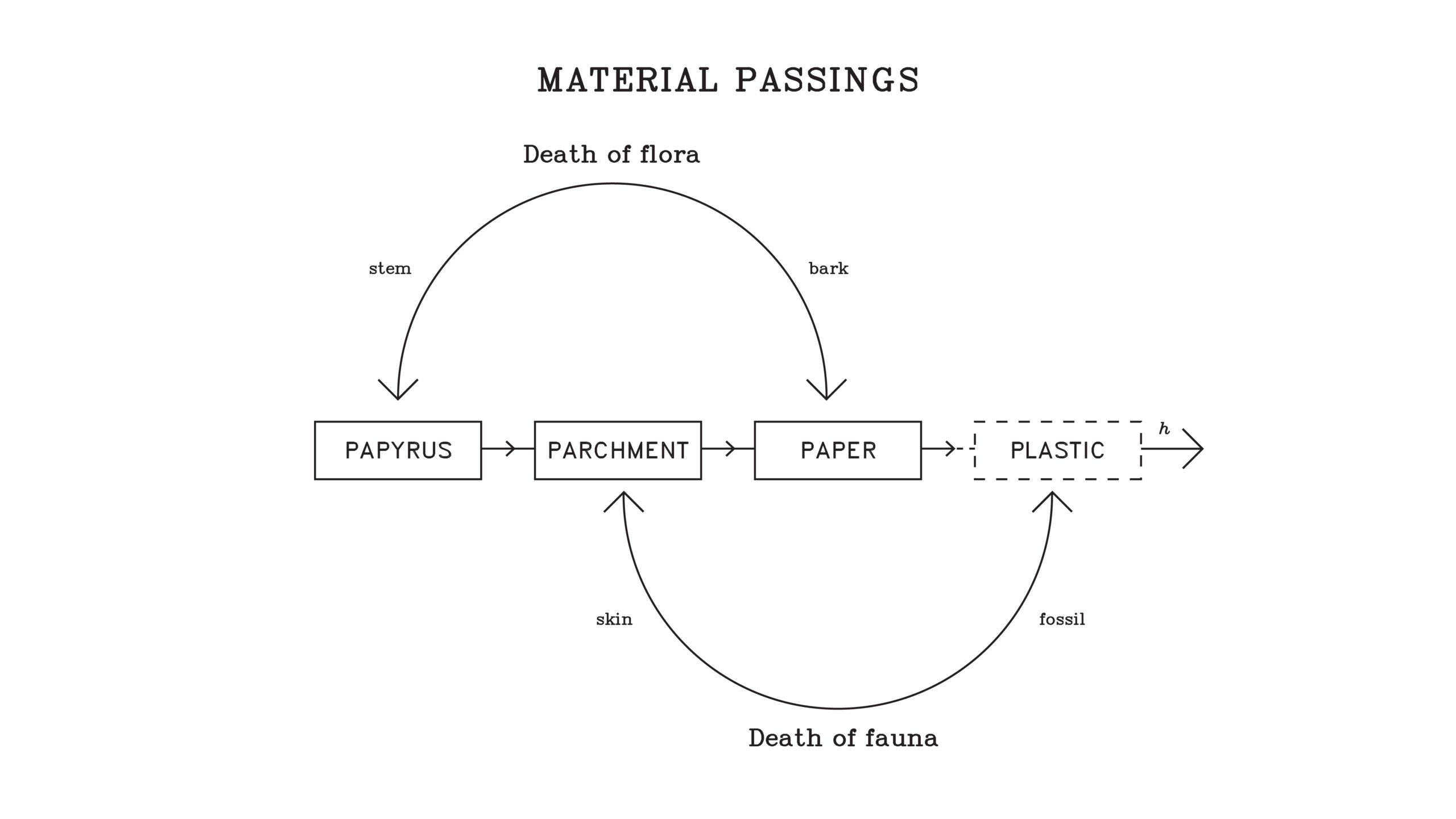
Fig. 1. Diagram illustrating speculative trajectories of the material composition of books. Image by the author.
The term “3D printing” suggests a clear reference to and relationship with print. Yet AM, which was initially conceived for industrial fabrication, has little in common with the printing press. The two technologies, with different pedigrees and aspirations, find themselves propelled into a collective future through these incidental naming conventions. Along this shared trajectory, the notion of the 3D printed plastic book reframes the 3D printer as a volumetric press and could in turn situate AM technology within the historical lineage of printing presses. In this context, paper-based printing must now be referred to as convention. By conferring an “additional dimension” through its name and co-opting the term “printing,” three-dimensional printing complicates conventional printing by implicitly and retroactively relegating it to the status of a loosely defined two-dimensional medium. This highlights a deeply rooted connotation in conventional printing that dimensionally subordinates paper prints as “two-dimensional,” which is hardly accurate for a physical object. Therefore, the additional dimension conferred to 3D printing either has to be interrogated in the context of presses or prompt the expansion of the definition of “printing.”
A case for a volumetric press
Print is inherently an additive process that facilitates the multiplication of materials. In conventional printing, marks are applied onto substrates (paper) by depositing material (ink) onto the surfaces. Here, the multiplication pertains solely to the content, while the substrate is procured externally, separate from the printing process itself. In 3D printing, TPU can mimic the pliability of paper when printed thinly. These TPU pages materialise directly on the print bed. Unlike conventional printing, multiplication in 3D printing involves not only the content but the substrate itself. 3D printing shifts the focus of print from mark-making to object-making.
The distinction between marks and objects is inherent in conventional printing. Ink marks remain discrete from the substrate-object as printing components, much as surfaces are distinct from the volume they encase. These components are brought together to produce printed matter in a mechanical process aptly named the press. The 3D printer, however, does not differentiate between material, surface and marks. After materialising the page, marks can be subsequently printed on its surface or even simultaneously printed in the same sequence with identical TPU material. The fully 3D printed TPU page is a materially singular object, with marks on its surface fused to the substrate by heat. Substrate, surface, and marks become entangled as one. In “volumising” the print medium, 3D printing inadvertently flattens the hierarchy and distinction between marks and objects. The press is no longer a definitive process nor a determinable locus, as if in a superposition of component and composition. The press becomes a displaced vector in this dimension (fig. 2), extending beyond conventional print definitions—a hyperpress.8
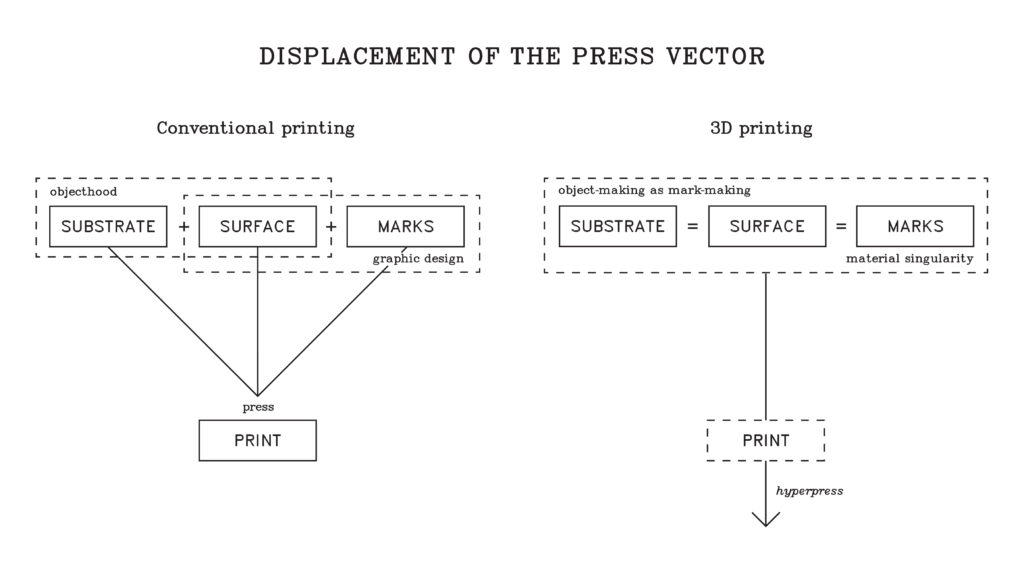
Fig. 2. Diagrams showing the differences between mechanisms of conventional and 3D printing. Image by the author.
The term “hyperpress” is the name I have given my practice that explores the relationship between 3D printing and graphic design. Specifically, I delve into the implications of a volumetric press for mark-making and printing. Despite the name, hyperpress points to an experimental practice rather than a printing press—referring to mechanisms, not machines. The rest of this chapter highlights some of the experiments that hyperpress has undertaken in charting the displaced vector.
Volumetric marks
In AM, a collective object materialises layer by layer—like pages of a book—from an empty print bed over time. If a book is a volume, each page is a slice of that block. Slicing is an integral part of the 3D printing technology, as digital 3D objects need to be processed into layers before printing in specialised software. The slicing of a three-dimensional object yields two-dimensional cross-sectional layers; each manifests as an image when isolated from the stack, and removed from its original context. This process is known as tomography (derived from Greek tomos, meaning “slice, section” and graphe, meaning “writing”), primarily an imaging technology adopted by medical fields. Notably, the Greek component tomos shares the same root as “tome,” originally used to describe sections of multi-volume works—underscoring the layered nature of books.
Tomography as a method requires the engagement of 3D properties of objects in 3D printing slicing software. To trigger the formation of lines and patterns on a two-dimensional position, one must manipulate the position, rotation and other parameters of 3D objects by navigating the three-dimensional space and its physical logic in relation to the print bed surface. The software then generates necessary support structures as it anticipates printing difficulties due to gravity. The tomographic images generate as layers for print only after the “slice” function is initiated in the software. Their generation is neither real-time nor responsive to two-dimensional manipulation, starkly contrasting graphic designers’ process and control with modern design software. They are created using 3D printing mechanisms and processes as methodologies; mark-making not on surfaces, but in slices of volumes.
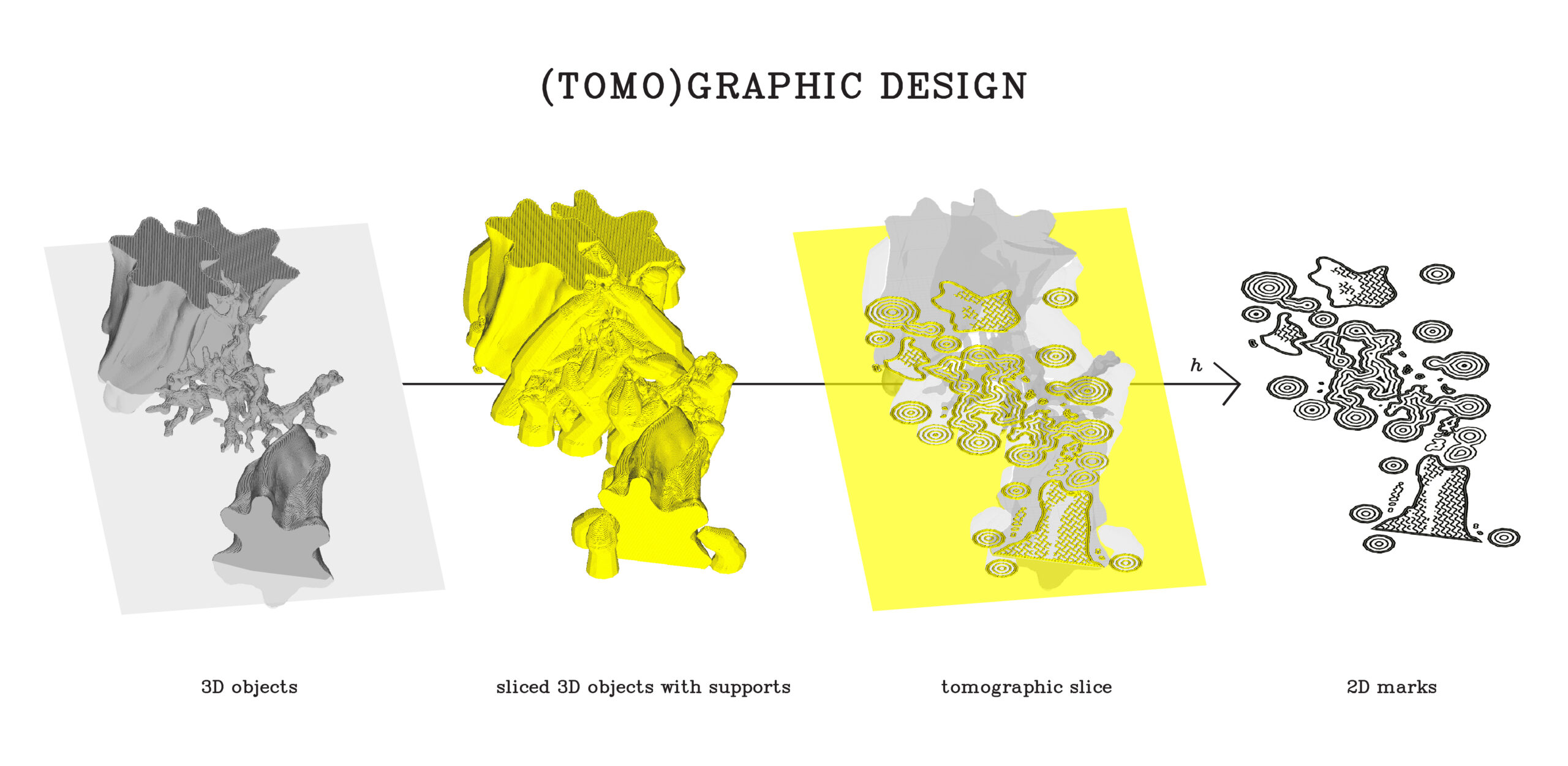
Fig. 3. Step-by-step visualisation of the tomographic process. Image by the author.
This tomographic method of producing and designing graphics (fig. 3) fundamentally differs from conventional mark-making processes. Slicing, as mark-making, operates under processes fundamentally different from the traditional mark-making processes. It introduces a novel method of deriving 2D graphics (in the form of abstract illustrations) not by marking the surface directly but from and within a higher dimension—a 3D workspace.
Tactile type
In another of Bradbury’s stories, “Ylla” (from his sci-fi fix-up classic, The Martian Chronicles), he describes a Martian interacting with a book object in detail:
[Y]ou could see Mr K himself in his room, reading from a metal book with raised hieroglyphs over which he brushed his hand, as one might play a harp. And from the book, as his fingers stroked, a voice sang, a soft ancient voice, which told tales of when the sea was red steam on the shore and ancient men had carried clouds of metal insects and electric spiders into battle.9
The book’s description of “raised hieroglyphs” bears an uncanny resemblance to the relief marks as artefacts of 3D printed text. The mechanics of FDM 3D printing are designed for printing 3D objects, not 2D marks, with its nozzle laying voluminous plastic instead of liquid ink. 3D printed marks are but just another physical layer of the page. This presents a set of challenges for printing small texts.
Achieving high fidelity in small text sizes requires a purpose-built typeface (fig. 4) designed to work with the 3D printing mechanisms and materials. Akin to how 20th-century typefaces incorporated ink traps to compensate for the issue of excessive ink spread on paper, 3D printing typefaces need to be designed with corresponding technical considerations.
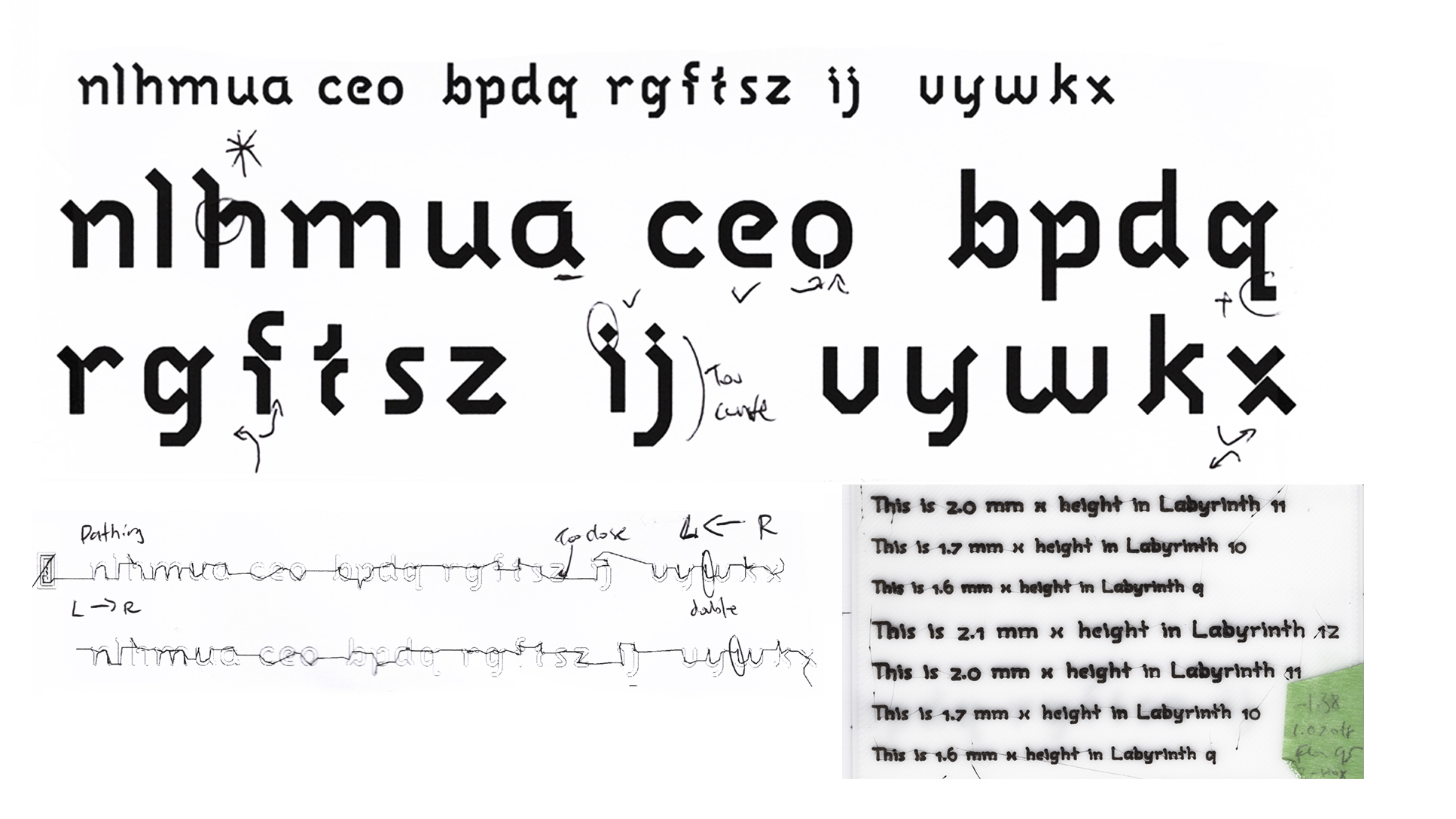
Fig. 4. Labyrinth, a custom, purpose-built typeface for 3D printing small texts. Image by the author.
In place of ink traps, 3D printed text employs path traps. Ink traps work by removing details at corners of letterforms, effectively functioning as mini reservoirs for excessive ink, compensating for the substrate’s absorbency to produce crisp edges. Path traps work with similar aspirations. In 3D printing, the substrate’s absorbency raises no issues; instead, it is the viscosity of the thermoplastic that poses problems. Simple marks such as intersecting lines are complicated due to material build-up on the surface. The travelling nozzle also follows path efficiency instead of writing logic, making printing word by word, line by line, a challenge. Path traps are specific design decisions to mitigate crossbar build-ups by reconsidering the paths of the travelling nozzle. Through a series of diverting lines and strategically separated joints, path traps effectively trick and redirect the traversal logic (fig. 5) of the FDM 3D printer.
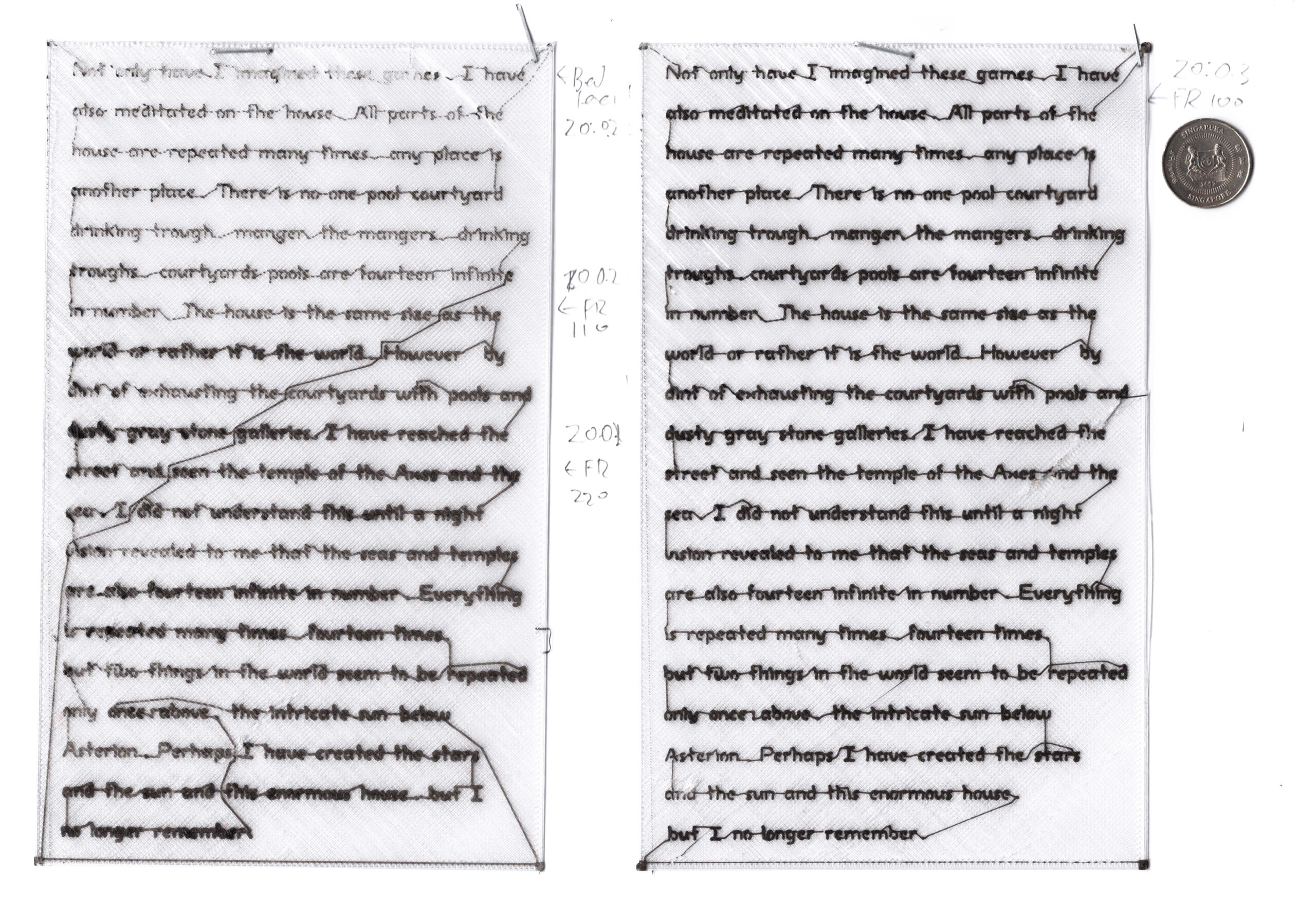
Fig. 5. 3D printed text showing the traversal paths. Image by the author.
Bradbury envisioned a future where books could engage and employ more than one of the five senses. In the aforementioned passage in “Ylla”, not only did he describe the printed text of this speculative book object as “raised”—explicitly three-dimensional—he also alluded to other accessible dimensions of the page beyond the visual, allowing readers to derive auditory information through touch. The volumetric press offers a unique opportunity to explore this concept: for example, embedding circuitry by printing conductive materials within the 3D printed pages. Coupled with microcontrollers, touch, and audio modules, Bradbury’s speculative “multi-dimensional” book-object is no longer science-fiction, but a plausible reality. In this book-object (fig. 6), words are read by pressing on printed texts, sentences parsed by brushing across lines. The “press” is no longer a printing machine’s function but the printed book’s reading mechanism.
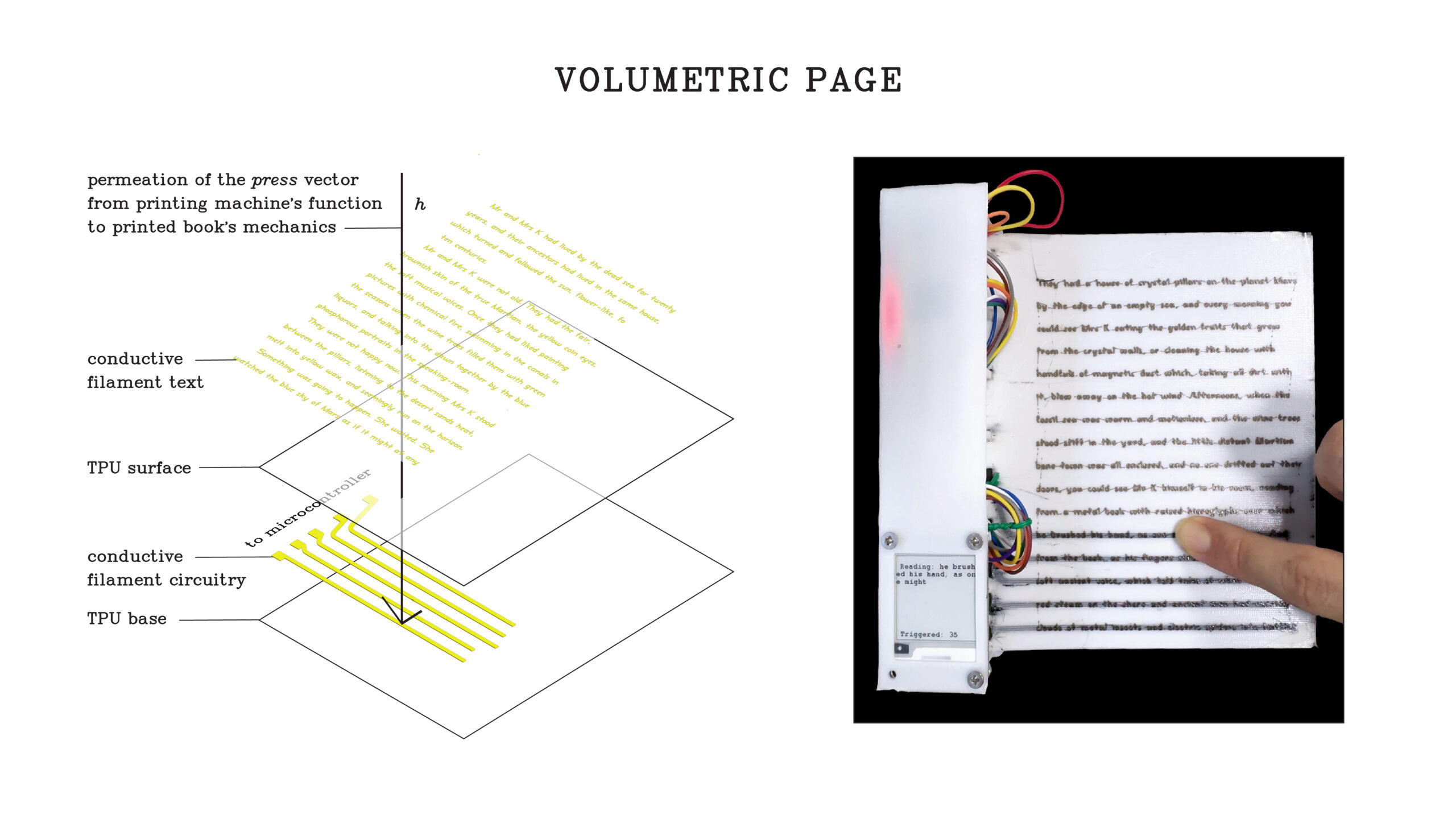
Fig. 6. A touch-sensitive page prototype achieved by 3D printing and conductive TPU filament. Image by the author.
Printing as binding
The first two 3D printed books (fig. 7) produced by hyperpress, SLIC3D (2022) and CORPUS (2023), have opted to keep the codex format with a bound spine. This aspect was intentionally retained to ensure the 3D printed books—as novel objects—can focus their explorations on the dimensional and material speculations of the book, instead of contesting their identities as books.
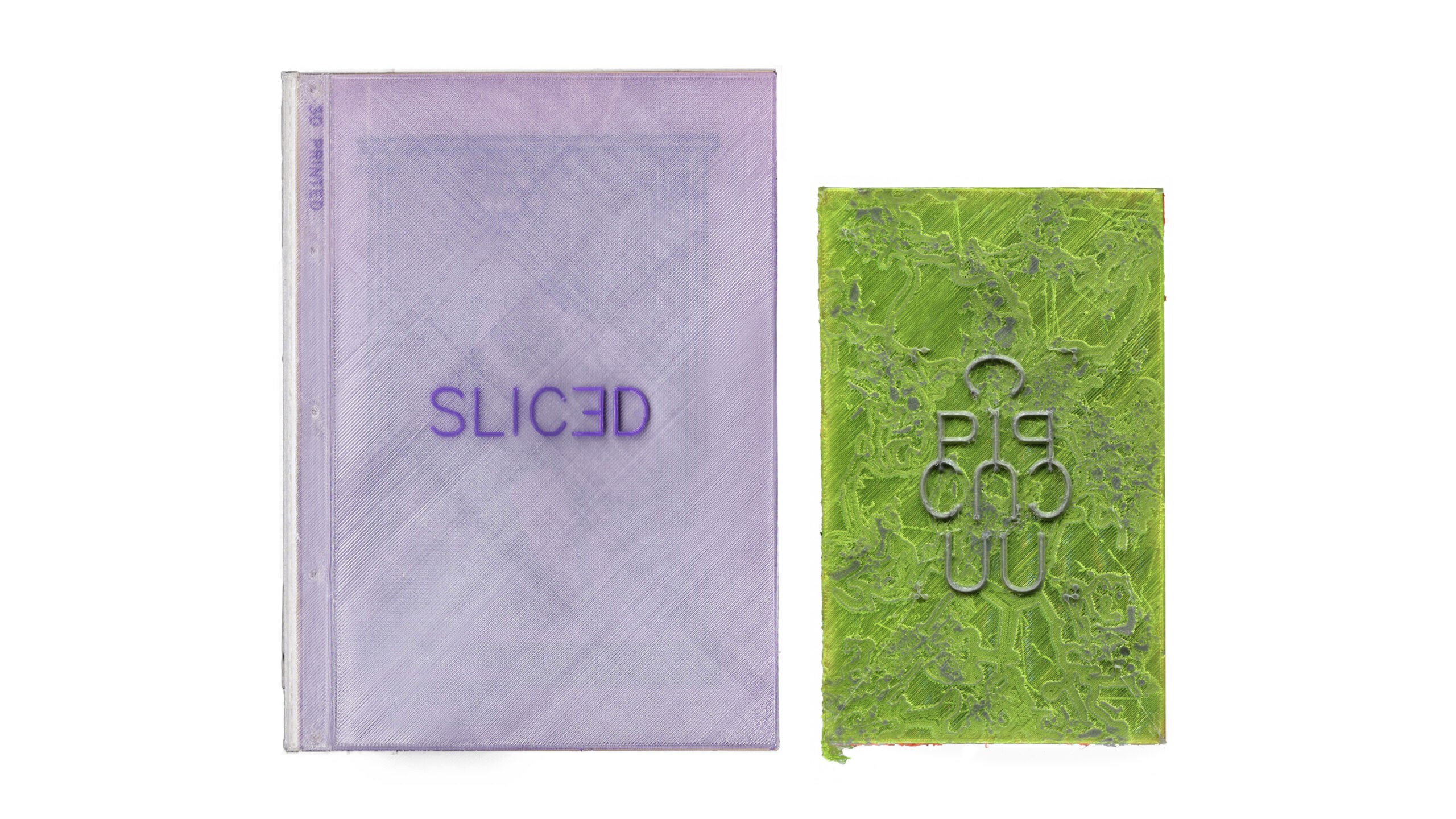
Fig. 7. Darius Ou, SLIC3D, 2022 and CORPUS, 2023.
In conventional book-making, stacks of paper are folded and bound using staples, threads, adhesives or other contraptions, often requiring specialised machines and even external vendors. 3D printing can effectively sidestep this binding process by leveraging the thermoplastic properties of TPU. This was explored in CORPUS’s experimental “print-bind” method. Since thermoplastics can return to a malleable state when reheated, a 3D print sequence can be initiated where the printer’s nozzle heat, coupled with additional TPU extrusions, can effectively melt and bind the 3D printed pages on their fore-edges. The spine is technically printed, pages molecularly bound together by heat. Using the same mechanics, the book is both 3D printed and bound by the same machine. Thus, it is not just substrate, surface and marks that become entangled as one, but also the binding: completing the “mono-materialisation” of the book.
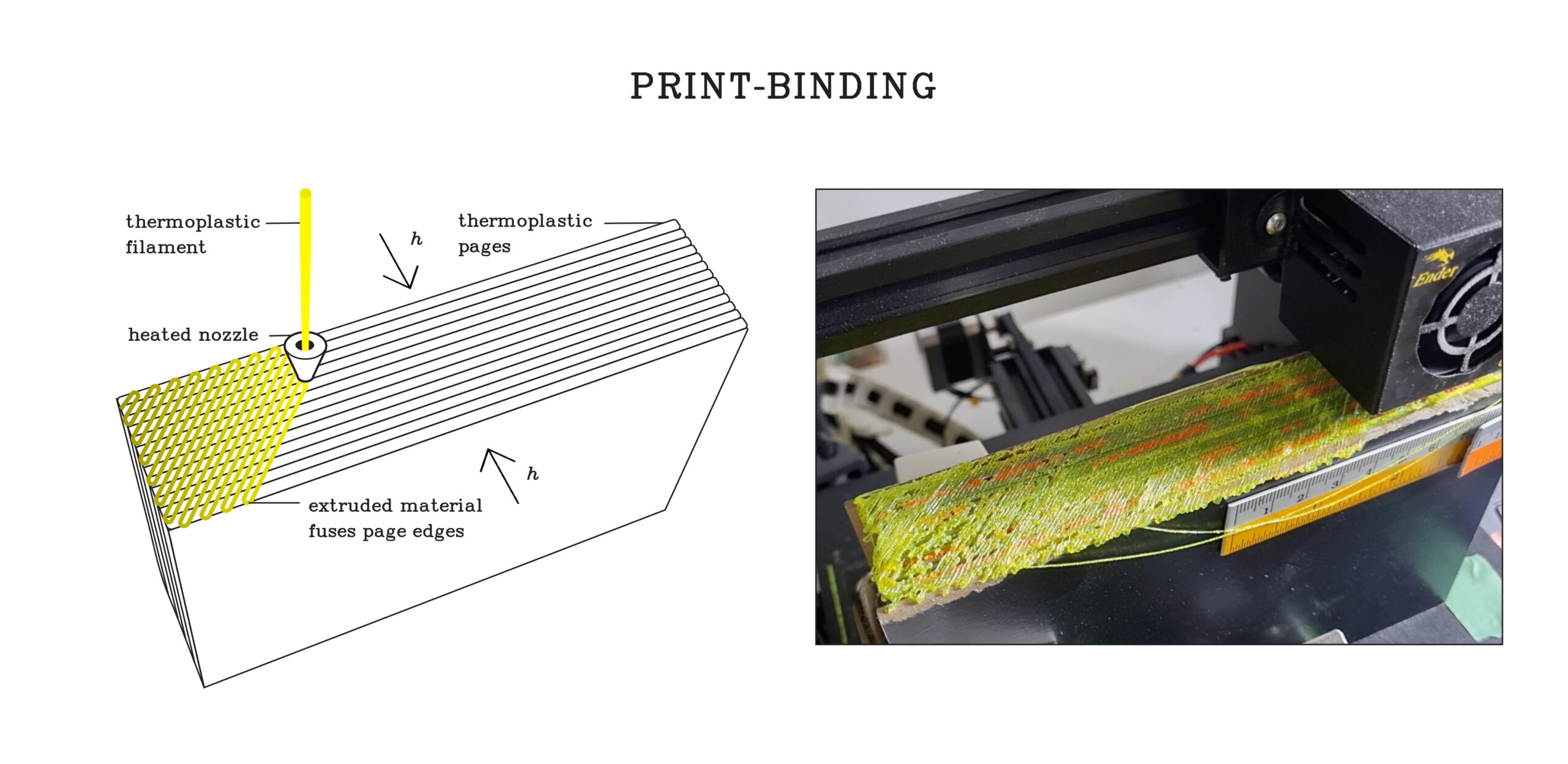
Fig. 8. Schematic and photograph of the mechanism of bookbinding with the 3D printer. Image by the author.
III
The bound spine, 3D printed or not, is the defining component of the codex format. Leaves of a codex coming together to be bound on one edge represent a convergent event to form a singular book-object. A gutter manifests as a result—a lingering reminder that every effort to access a book’s contents is an attempt to flatten its form. A three-dimensional volume pried apart to access its two-dimensional pages.
Cautionary tales for graphic designers are to stay clear of the gutter: keep words safely within the margins of the page, to avoid the void. The gutter packs printed matter so tightly together, resulting in curvatures of spreads (fig. 9) so great that straight lines of text bend along the surfaces directly into the crevice. The gutter is a black hole, where nothing, not even type—Gutenberg’s “ray of light”—escapes.
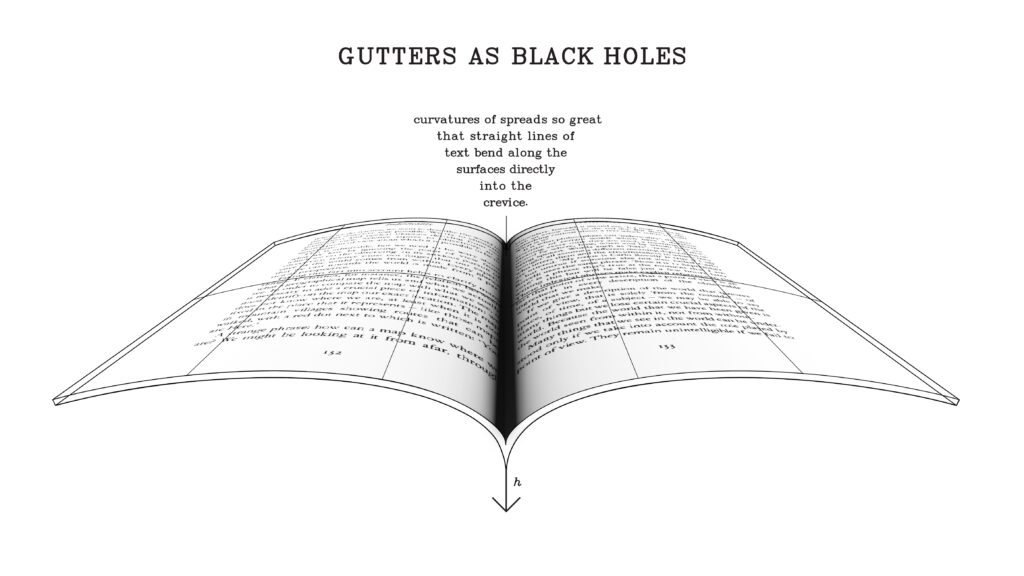
Fig. 9. Illustration of the curved book pages leading into the gutter. Image by the author.
Beyond bound spines, thinking about the book or the volume through the phenomena of black holes also raises some interesting points on questions of volume and dimensionality. In 1972, physicist Jacob Bekenstein formulated the Bekenstein bound while studying black holes in relation to information theory. Broadly speaking, this theory posits a fundamental limit on the maximum amount of information that can be stored within objects, or physical systems.10 This limit conjectures a counter-intuitive understanding that information storage in any finite region of space scales proportionately with the area, not the volume. A practical articulation of this theory would be determining a container’s capacity by its surface area rather than its interior volume—which profoundly impacts our understanding of dimensions in lived reality.
In the context of black holes, it means that all objects—which in some sense, contain a certain amount of information, such as the specific arrangements of particles that define their three-dimensionality—end up imprinted on a black hole’s surface (boundary) as a preserved image when they fall into it, instead of being stored within its volume. This insight led to the holographic principle.11 Like a hologram, information of 3D objects becomes wholly imprinted onto 2D surfaces.
Taking its cues from etymological roots, the word “hologram” comprising the Greek compounds holos and gramma (meaning “whole” and “which is marked”) also points towards a certain extensiveness found within mark-making. Likewise, the developmental trajectory of graphic design that is outlined in this essay, namely the pursuit of additional or access to higher dimensions, can be similarly considered as being holographic—an attempt at moving towards a certain dimensional integrity. The holographic principle further describes infalling objects, moving under the influence of gravity toward a celestial object, as “information imprinted on a surface” of a black hole. This could possibly be thought of as a printing event: the black hole as press, wholes within holes.
——
Perhaps invoking theoretical physics to talk about printed volumes is far-fetched even within poetic licenses. Another renowned physicist, however, offers a more tangible, even if still impractical provocation on the relationship between dimensions and volumes. In The Global Approach to Quantum Field Theory, theoretical physicist Bryce DeWitt famously laments the limitations of literary formats and the translation of complex mathematical equations into marks on paper and the bound book format. This grievance is, in part, aimed at publishing houses. DeWitt writes:
It could be avoided if equations could be written in three-dimensional arrays, but unfortunately publishers are as yet unable to provide such a service.12
This is followed by the footnote:
A novelist, or the writer of any work for that matter, will have encountered a similar problem many times. Ideas are linked to one another in complicated patterns but in expressing them one is forced to string them out in a line, sentence by sentence.13
DeWitt attributes the difficulties of translating complex formulas of quantum physics to the inadequacies of conventional publishing, alluding to higher indexical dimensions as a possible solution. While 3D printing will not offer any direct resolution for the syntactic linearities and limitations of written languages, experimenting with volumising the press may offer a starting point for acrostic approaches to designing, making and evolving the book form.
In an essay “The New Art of Making Books,” author and artist Ulises Carrión reflects on the book form in terms of space-time dimensions. He considers the book as a spatial medium, a vessel not primarily of words but of time, writing that:
A book is a sequence of spaces.
Each of these spaces is perceived at a different moment – a book is also a sequence of moments.
A book is not a case of words, nor a bag of words, nor a bearer of words.
A writer, contrary to the popular opinion, does not write books.
A writer writes texts.
The fact, that a text is contained in a book, comes only from the dimensions of such a text; or, in the case of a series of short texts (poems, for instance), from their number.
…
Written language is a sequence of signs expanding within the space; the reading of which occurs in the time.
A book is a space-time sequence.14
In this text, Carrión offers yet another provocation, highlighting the intricate relationship between language, marks and the book form. He lays out the concept of multiple dimensions contained within books, not just spatial and literary ones in their construction, but temporal ones in their consumption. Carrión directly references the conventional book as an “accidental container of a text” whose form is irrelevant outside the bounds of holding sequential text. In doing so, he advocates for new ways of making books, viewing the form and content as a whole, its construction and consumption as intrinsically connected.
The current form of the codex, with its rectangular bounds and spinal bind, is an artefact of conventional literary, design and printing processes. Looking back, Bradbury’s boundary delineated a threshold between materialities while Bekenstein’s eponymous bound imposed a limit on information. What do bound spines and rectangular bounds withhold from the book dimension? 3D printing, with its degrees of freedom in the spatial dimension, offers some possibilities for achieving a book unbound from its texts’ limitations, and even its format’s dimensions.
——
The volumetric press does not only return the book to its etymological roots. By expanding the definitions of the printed book, we also come to terms with the roots of graphic design. By slicing the book and page, we can better understand the medium’s perceived limitations and, in turn, push its boundaries. By restacking these slices, the volume is redefined. By volumising the press, the book format experiences new degrees of freedom in previously inaccessible dimensions, which can be described as dimension-agnostic. This borrows from a computing term, “data-agnostic,” referring to devices or data that are interoperable across platforms, regardless of formats. Could graphic design sensibilities similarly operate across different dimensions by embracing the volumetric?
What does it mean to insist on 3D printed books? It is through hyperpress that I hope to explore the discipline unbound from its dimensional biases, conventional workflows and outputs; to chart it through not just spatial and temporal dimensions, but experiential, or even poetic ones. As the previous chapters have highlighted, a volumetric press has the potential to disrupt and converge the composite workflows of conventional publishing press into a single locus—production of substrates, printing of marks and even binding of books—book-making entirely with 3D printing mechanisms. However, the aim of this essay is not to advocate 3D printing as the next frontier for publishing, nor does it merely suggest a material revolution. Both technical and environmental concerns surrounding the mass production of plastic books make the concept currently unfeasible. Nonetheless, the most valuable aspect that 3D printing offers is tied to neither the AM technology nor to plastic materials—it is the concept of the volumetric, of addition and layering as a means to approach mark-making and object-making. The concept of a volume connotes spatial extents, occupiable, traversable dimensions. The book has been conceived, designed, and produced in layers long before 3D printing laid its first. The hyperpress permeates through all these layers, binding them into a convergent future for both mark-making and object-making. Where might it head next?
Special thanks to editor Berny Tan, and to Samantha Yap for the conversations that helped shape this piece.
The histories of print, graphic design, and theoretical physics is complex and context-dependent. The timeline presented here reflects only a few possible interpretations of historical developments within the specific context in which hyperpress is engaged with, and is not intended to be exhaustive or definitive.
Notes
[1] “Degrees of freedom” are defined in mathematics and physics as a property of a system that corresponds to the dimension of its configuration space.
[2] Arthur Koestler, The Act of Creation (Hutchinson, 1964), 123.
[3] James L. Adams, Flying buttresses, entropy, and O-rings (Harvard University Press, 1991), 80.
[4] Johanna Drucker and Emily McVarish, Graphic Design History: A Critical Guide (Pearson Education, 2009), xxi.
[5] Drucker and McVarish, 3.
[6] The term “3D printing” traces back to a patent by Massachusetts Institute of Technology in 1993, building on sterolithography (one of the oldest AM technologies) invented by Chuck Hull in the 1980s. Stereolithography uses photochemical processes to build 3D objects by depositing material layer by layer. The MIT approach referenced and combined the then-burgeoning inkjet printing mechanisms with the additive workflow, hence adopting the “print” component word.
[7] This autoignition temperature is highly dependent on the material composition, volume of paper and external factors like exposure time and atmospheric pressure.
[8] Vectors are mathematical elements with both magnitude and direction, often visualised as an arrow in a vector space. Here, the vector references the key mechanism of the conventional printing press—the applied pressure to an inked surface on substrates.
[9] Ray Bradbury, “Ylla,” in The Martian Chronicles (Doubleday, 1950), 9.
[10] Technically, this refers to entropy, a measure of information. In the book The Black Hole War (2008) by theoretical physicist Leonard Susskind, entropy is described as “hidden information” that “for one reason or another are too hard to observe.” There are also a few chapters in the book exploring the concept of entropy in printed pages of books, and draw on the burning of books (from the Library of Alexandria event) to illustrate the relationship between information and entropy.
[11] The holographic principle, first proposed by theoretical physicist Gerard 't Hooft and later developed by Leonard Susskind, posits that the holographic events pertaining to black holes possibly extends to the entirety of the universe, with far-reaching consequences that our three-dimensional reality and lived experiences are merely holograms encoded on a distant two-dimensional surface.
[12] Bryce S. DeWitt, The Global Approach to Quantum Field Theory: Volume 1 (Oxford: Oxford University Press, 2003), 24.
[13] DeWitt, 24.
[14] Ulises Carrión, “The New Art of Making Books,” Kontexts No. 6/7 (Center for Book Arts, 1975).