In conventional book-making, stacks of paper are folded and bound with staples, thread, adhesives, or other mechanisms—often requiring specialised machinery or external vendors. The volumetric press bypasses this step by leveraging the substrate’s thermoplastic properties and FFF mechanics. This was explored through an experimental “print-bind” method (Fig. 1), in which a 3D printing sequence is initiated on a stack of TPU substrates where the nozzle’s heat (combined with additional TPU extrusion) melts and fuses the pages along their binding edges. In effect, a spine is formed, and the pages are molecularly bound in a single print run. Here, the volumetric press redefines the print function as a method to bind books.
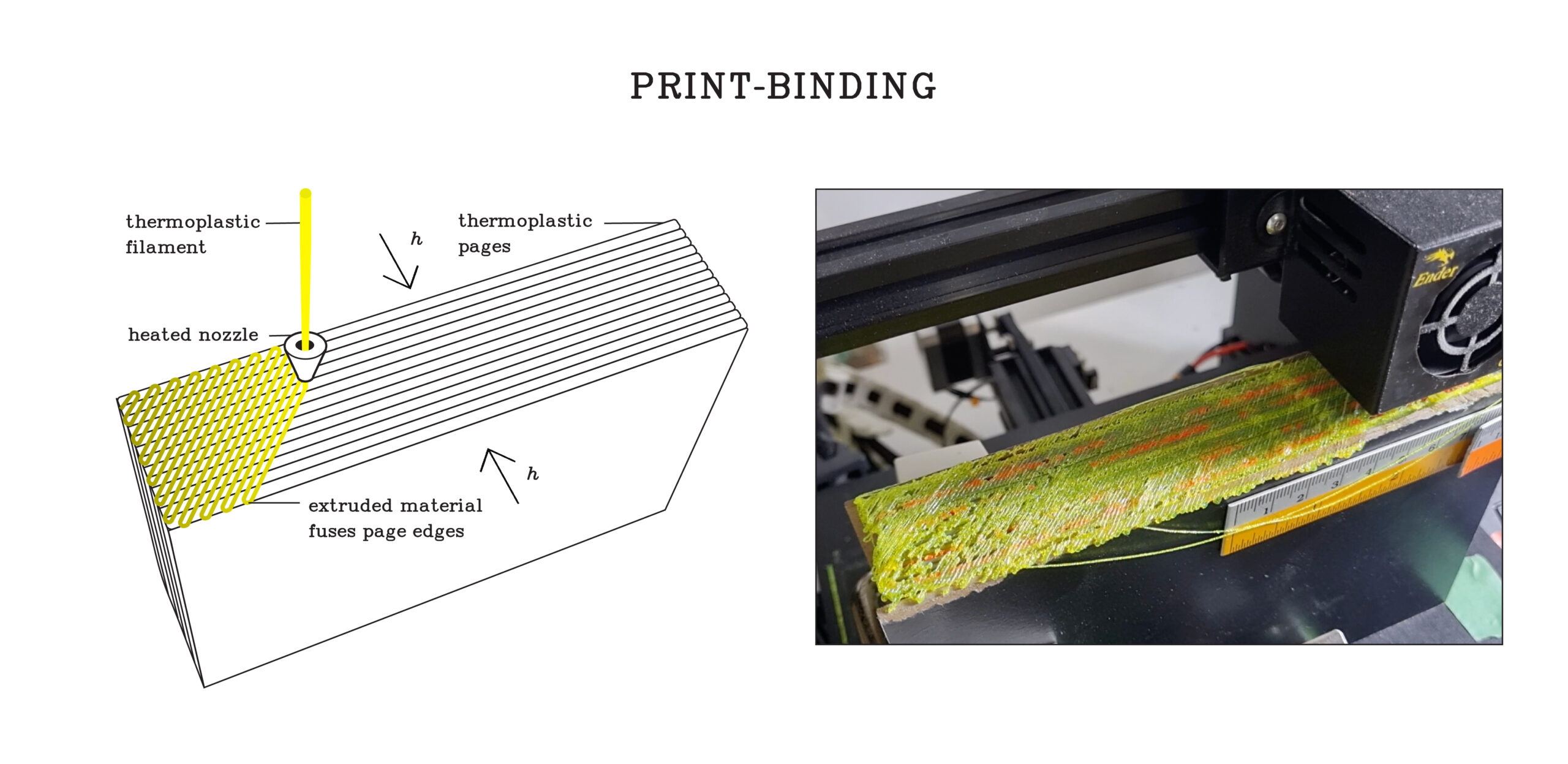
Fig. 1. Diagram and video showing the print-binding process for "CORPUS"
With this method, the printing and binding processes are once again consolidated. This allows the printer to continue printing the spine text immediately after the spine edge has been bound. However, the method is challenging to implement, as the height of the print-binding plane must be manually calculated and estimated while accounting for tolerances in the printed material. Ad hoc structures also need to be constructed/printed to hold the pages in place with the spine edge facing upwards. The printing sequence must therefore be carried out with caution, and the user must be ready to intercept the machine settings for live Z-offset adjustments.
The principles of print-binding through heat can also be manually administered using a standard 3D pen or a wood-burning tool fitted with a flat-edge tip. Heat is methodically used on their outer edges (Fig. 2). This method of binding yields the best tensile strength when applied in a cross-hatching pattern that effectively melts the edges together across the width of the spine.
Fig. 2. Video showing the alternative heat-binding process for "On the Nature of Volumes"
A similar process to the binding technique can be applied to repairing 3D printed substrates. Heat can return the thermoplastic material to a viscous state, facilitating a window of opportunity to spread the material in a cross-hatch pattern and effectively repair tears and holes in the substrate (Fig. 3).
Fig. 3. Video showing the repair process for a piece of 3D printed substrate page.