Expanding the range of interactive possibilities of the book can enable more dynamic and complex expressions of text within a book. In The Global Approach to Quantum Field Theory, renowned theoretical physicist Bryce DeWitt laments the limitations of literary formats and the translation of complex mathematical equations into marks on paper and the bound book format. This grievance is, in part, aimed at publishing. DeWitt writes:
“It could be avoided if equations could be written in three-dimensional arrays, but unfortunately publishers are as yet unable to provide such a service.”
This is followed by the footnote:
“A novelist, or the writer of any work for that matter, will have encountered a similar problem many times. Ideas are linked to one another in complicated patterns but in expressing them one is forced to string them out in a line, sentence by sentence.”
DeWitt attributes the difficulties of translating complex concepts in mathematics to the inadequacies of conventional publishing, alluding to higher indexical dimensions as a possible solution. While 3D printing will not offer any direct resolution for the syntactic linearities and limitations of written languages, experimenting with volumising the press may offer a starting point for acrostic approaches to designing, making and evolving the book form.
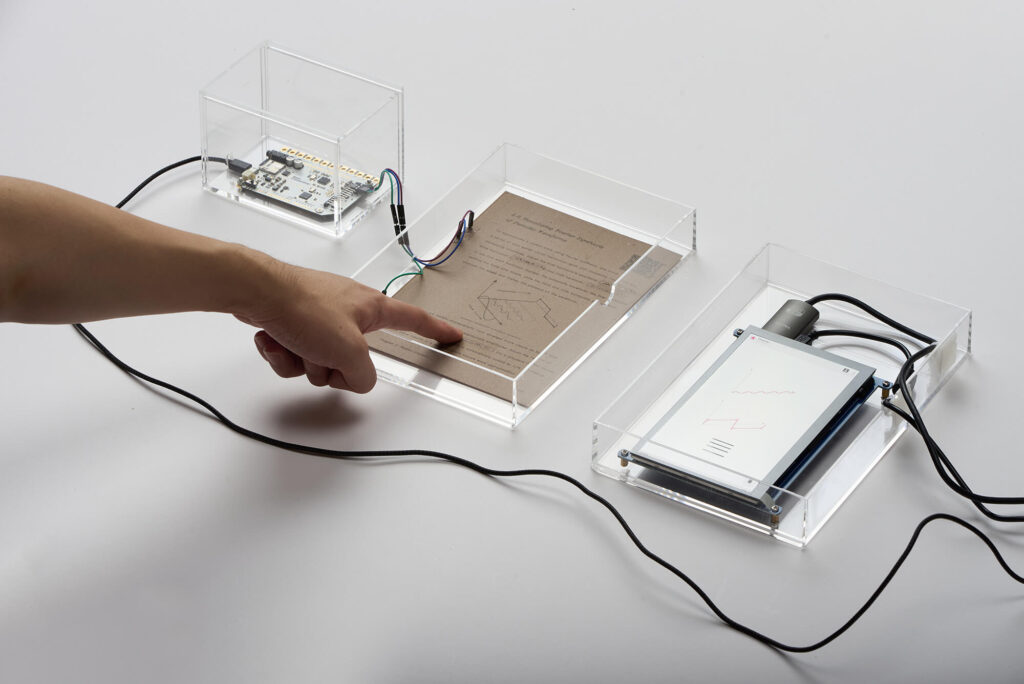
Fig. 1. A proof-of-concept mockup of a page from an functionally enhanced textbook.
The limitations of conventional paper textbooks lie not only in the static nature of the content but also in the limited expressivity of the publication’s graphic diagrams, particularly in visualising complex schematics and concepts. This single-page 3D-printed prototype (Fig. 1) with conductive copper-polymer traces simulates the experience of functionally enhanced textbooks (coupled with the electronic display and microcontroller) where readers can utilise capacitive touch-sensing functions to interact with the content (Fig. 2), improving visualisations of and increasing accessibility to complex concepts. How might the printed book gain access to addtional arrays of information?
Fig. 2. Demonstration of the mockup sensing finger touches on the page.
In another proof-of-concept (Fig. 3), a printed circuit page simulates the experience of a functionally enhanced substrate that can detect finger gestures on its surface. This page contains traces 3D printed using copper-polymer and arranged in a classic touch-sensing antenna pattern: a two-layered matrix pattern of intersecting but isolated rows and columns of connected diamond-shaped pads.
Fig. 3. A prototype of a functionally enhanced textbook page demonstrates gesture-sensing capabilities that can be mapped to functions.
This diamond-shaped pad pattern setup enables the triangulation of multiple finger positions on any surface with precision by utilising capacitive near-field mechanisms and software logic developed by a do-it-yourself technique called Multi-Touch Kit (Pourjafarian et al.). However, FFF 3D printing overlapping patterns on a single layer without the rows and columns fusing at intersections is challenging without software or procedural interventions. This is because FFF mechanics do not support subdivision per layer (as of 2026), both on the software and hardware levels. This makes printing thin substrates challenging, as any overlapping manoeuvre would require at least 2-3 layers to achieve. Horizontal traces are 3D printed with diamonds connected, while vertical traces are disconnected. The vertical traces are then connected via their sub-surface contact with joints printed on the preceding layer. This undercrossing method topologically routes and separates perpendicular traces, possible only with a mid-print intervention method of applying insulated tapes (Fig. 4) at the intersection points to prevent electrical shorts.
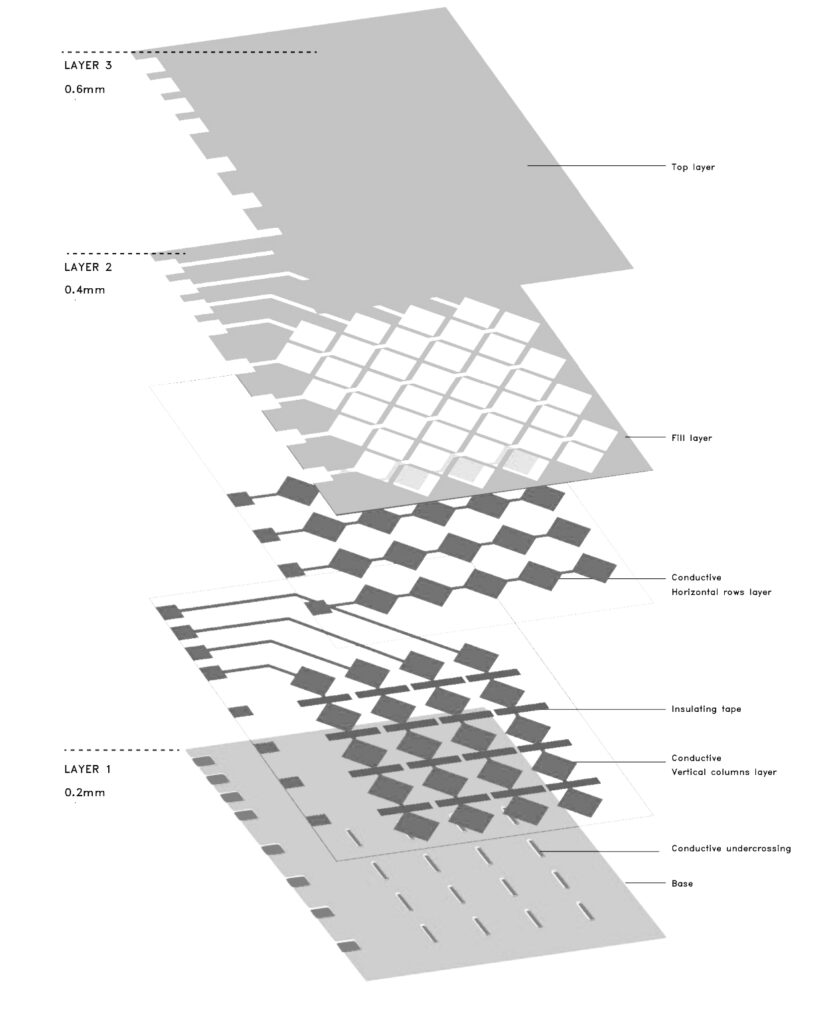
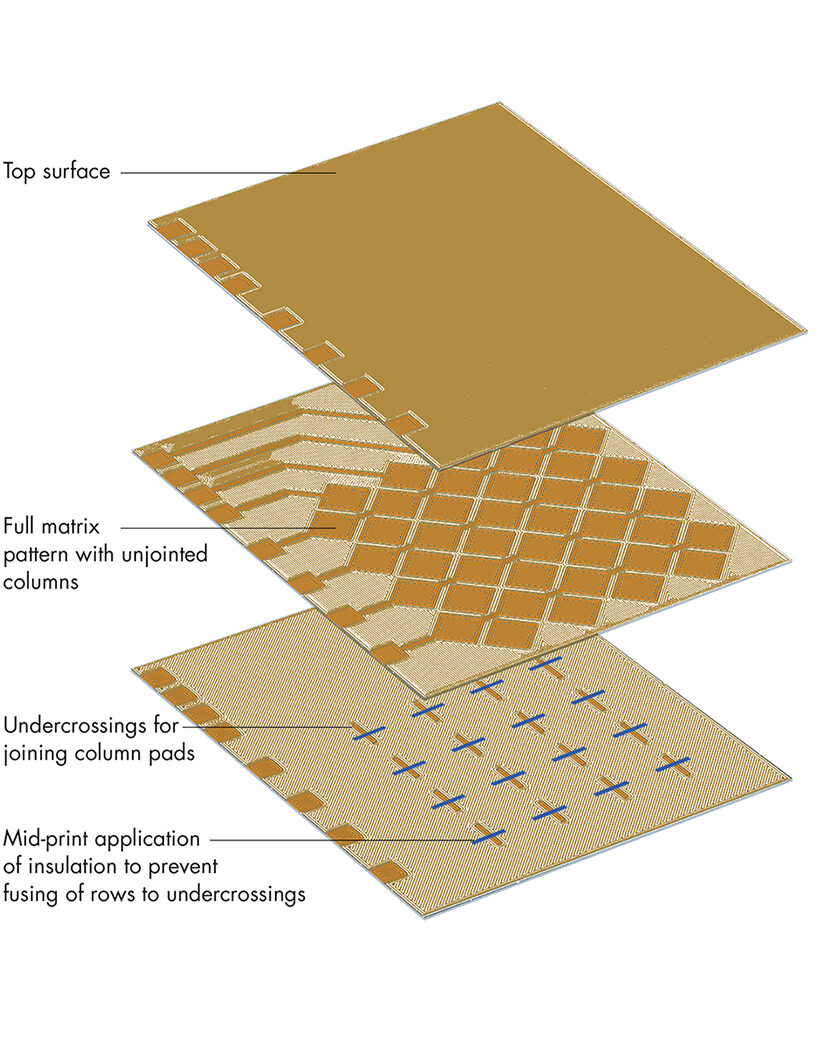
Fig. 4. Details and technical diagram of the prototype.
This method enables the functional implementation of a 5 x 5 touch-sensing matrix, encased within a flexible page substrate with an ink-printable surface, in just three print layers (0.6 mm thick with 0.2mm layer height). Even at a low sensing resolution, the prototype can sense distinctive finger gestures on the substrate, which can be potentially mapped to other functions through gesture recognition software (Fig. 4).
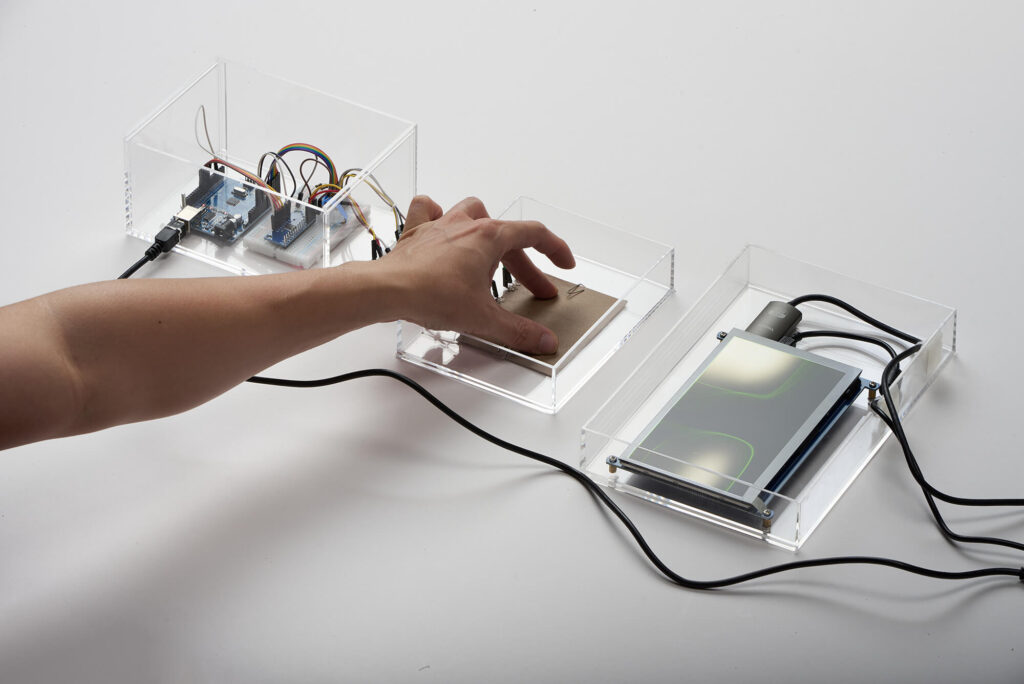
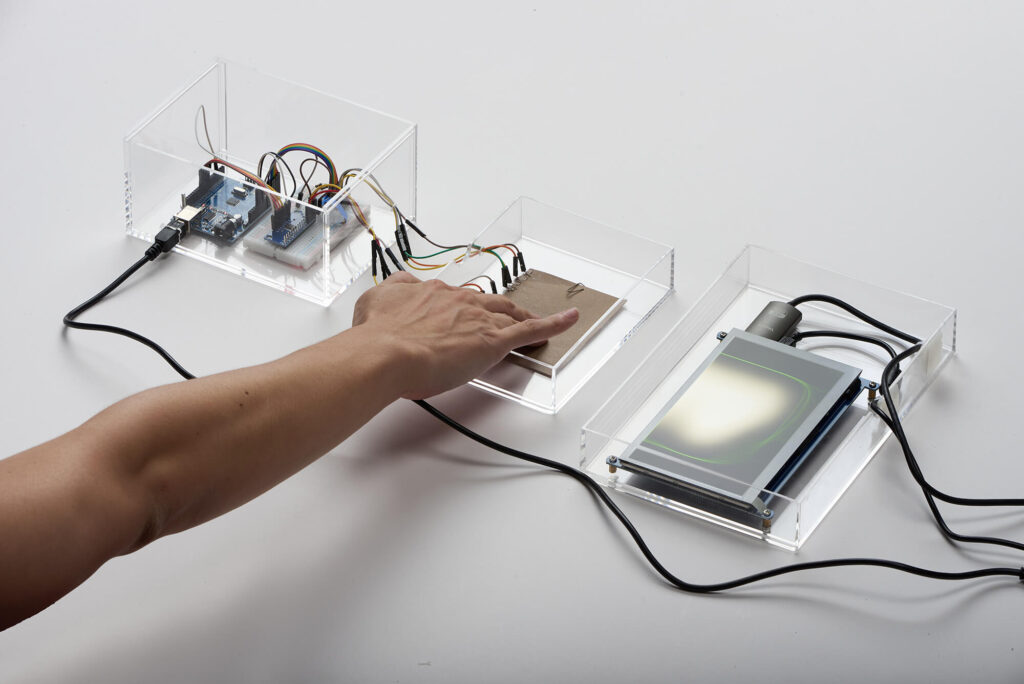
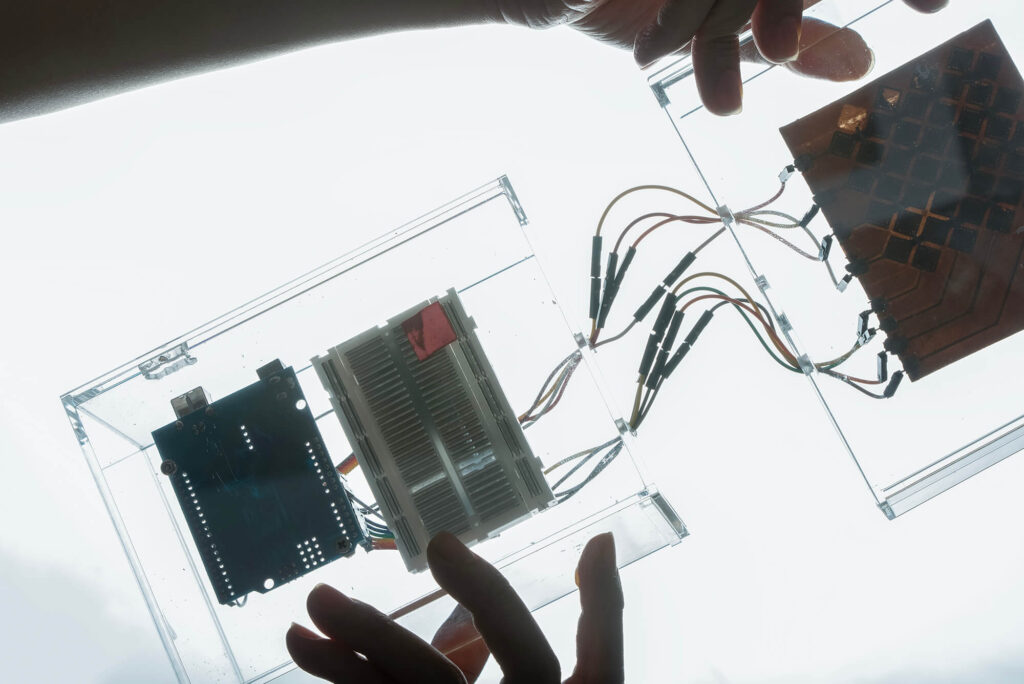
Fig. 5. Details of the prototype page sensing gestures and touch.