2025
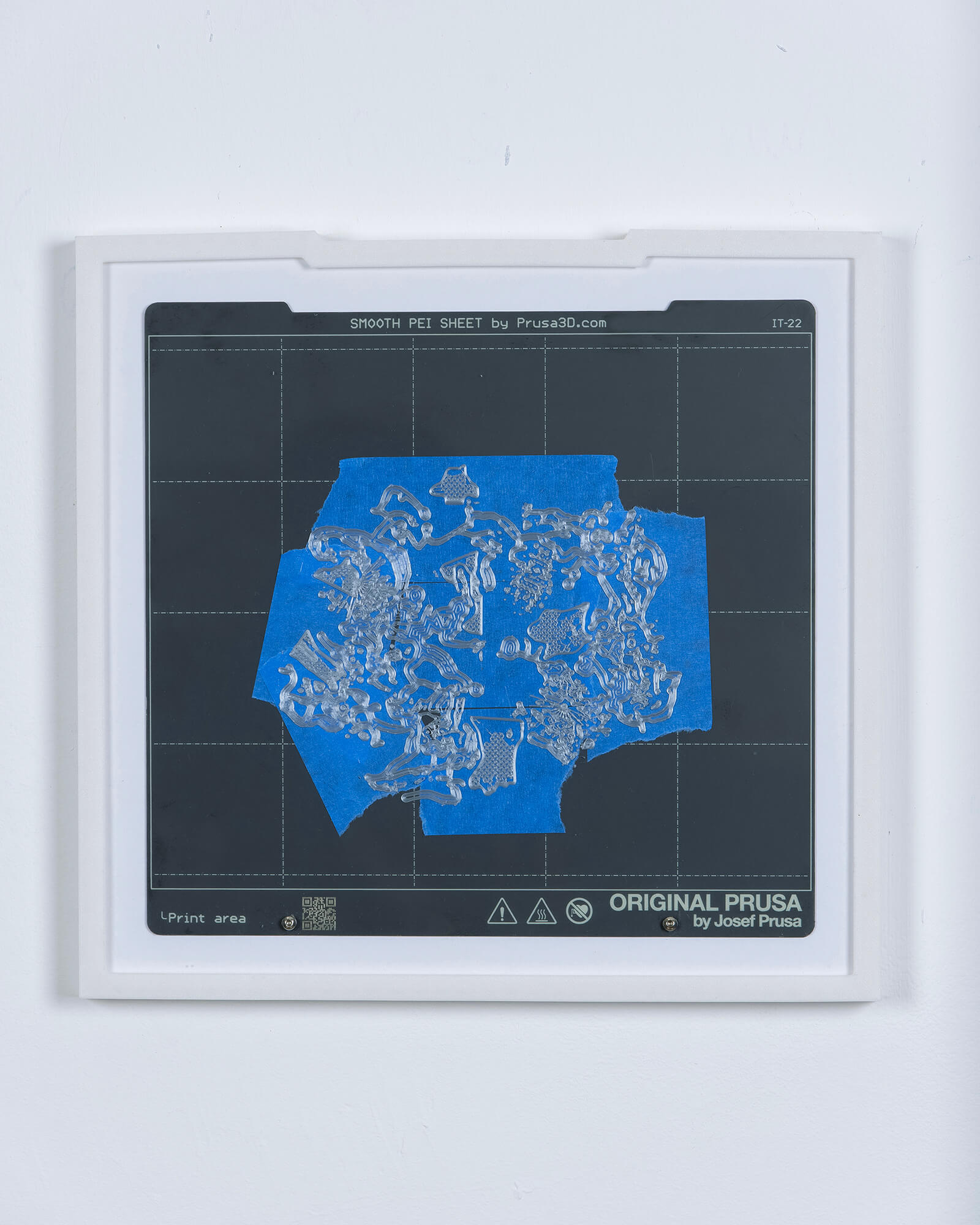
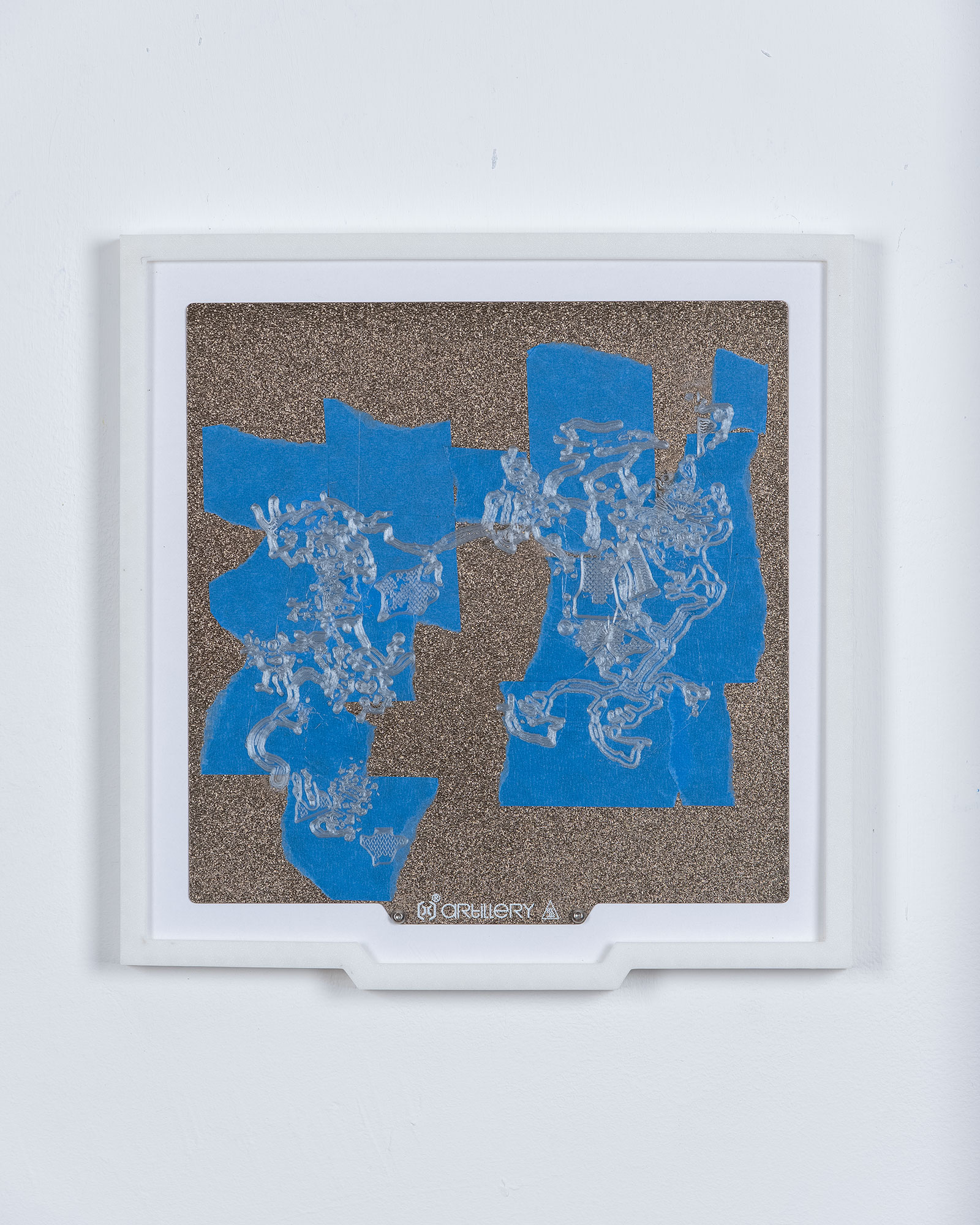
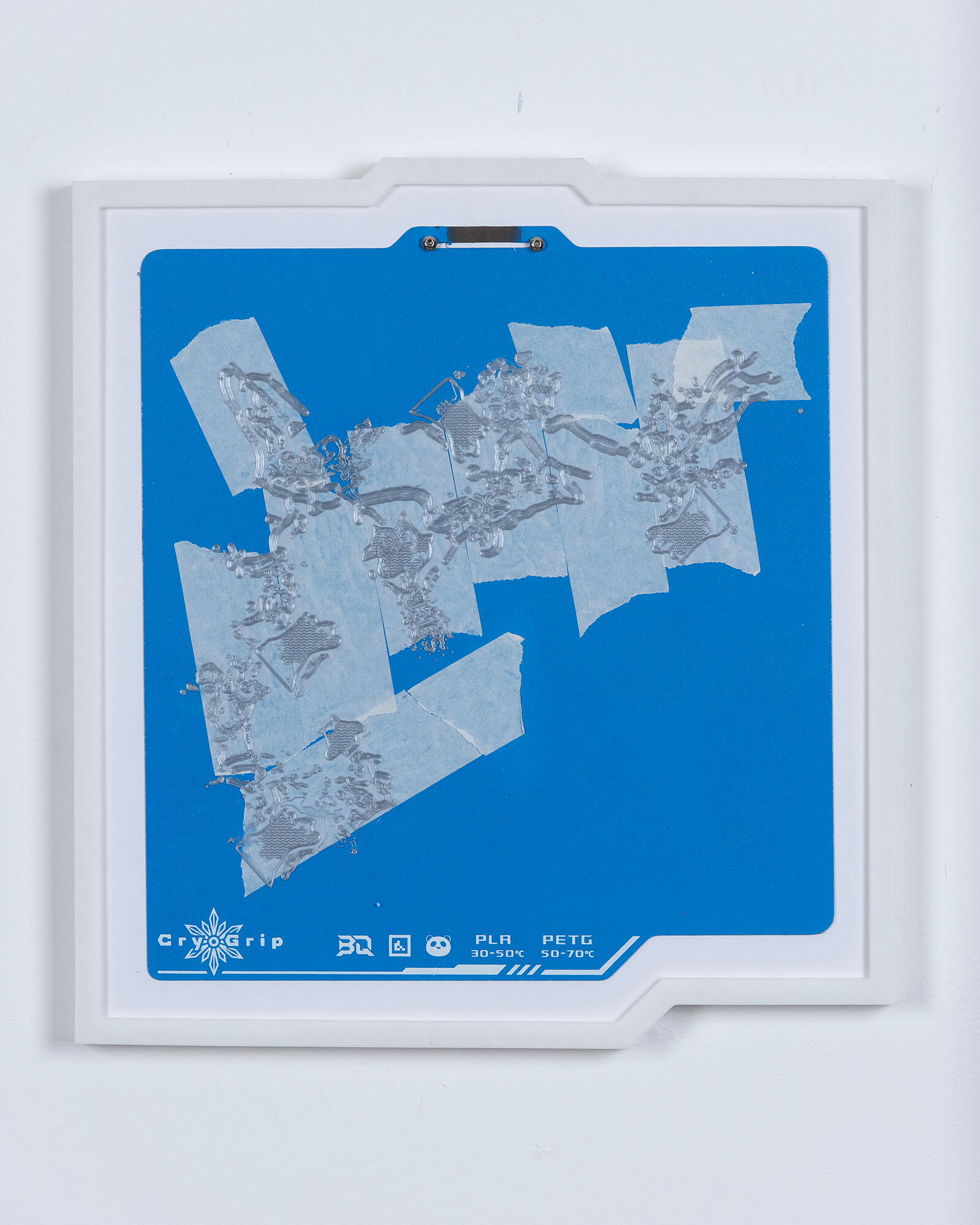
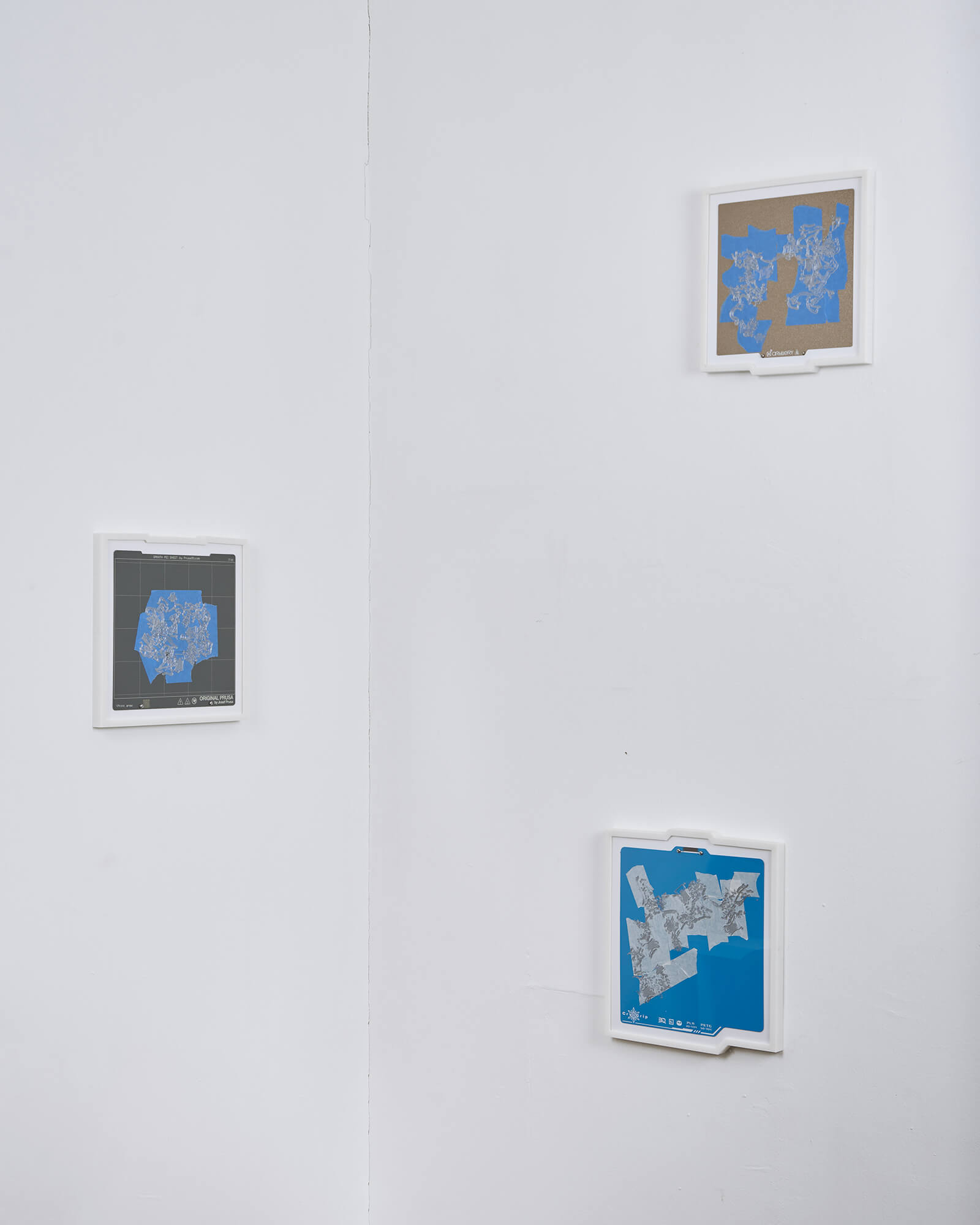
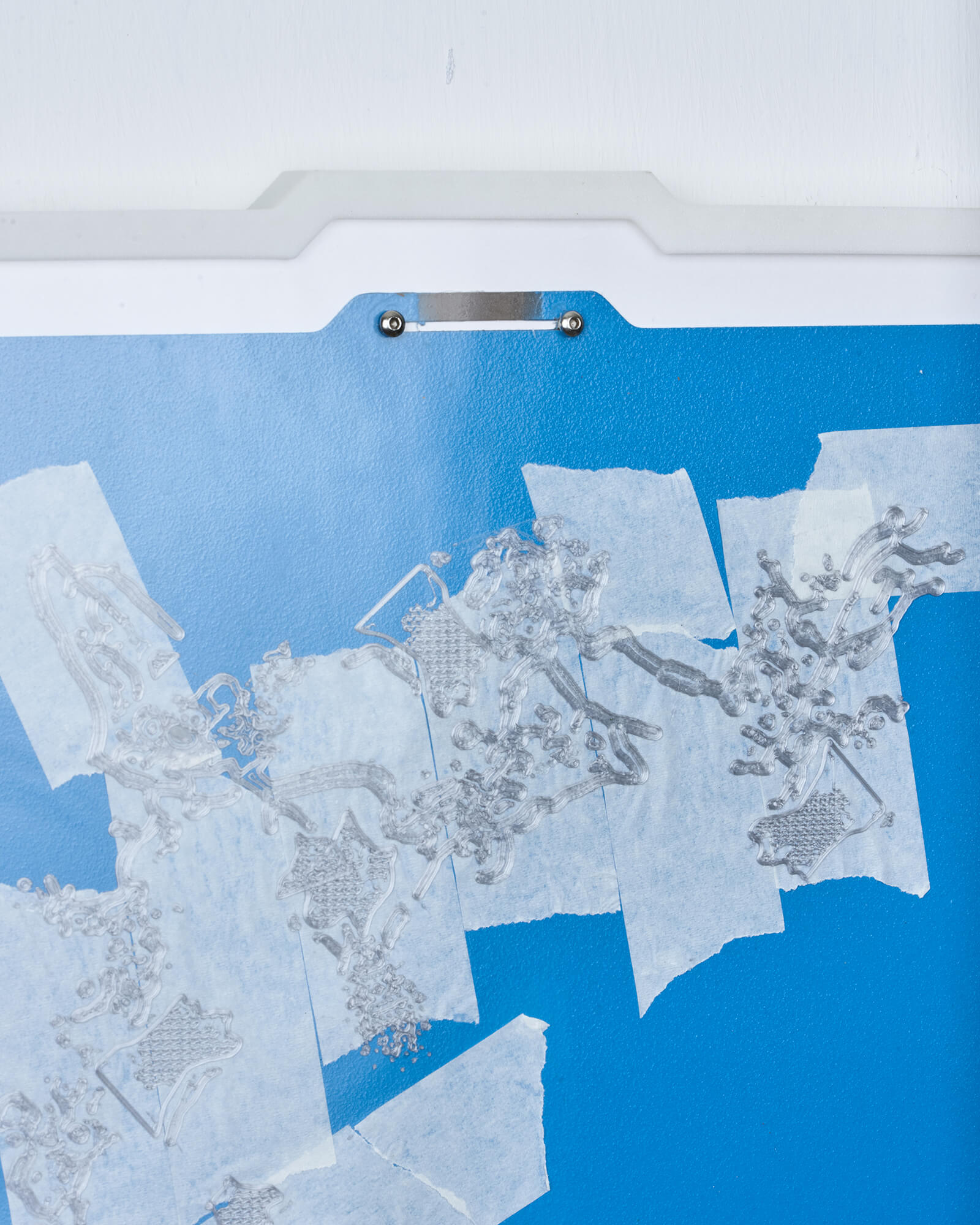
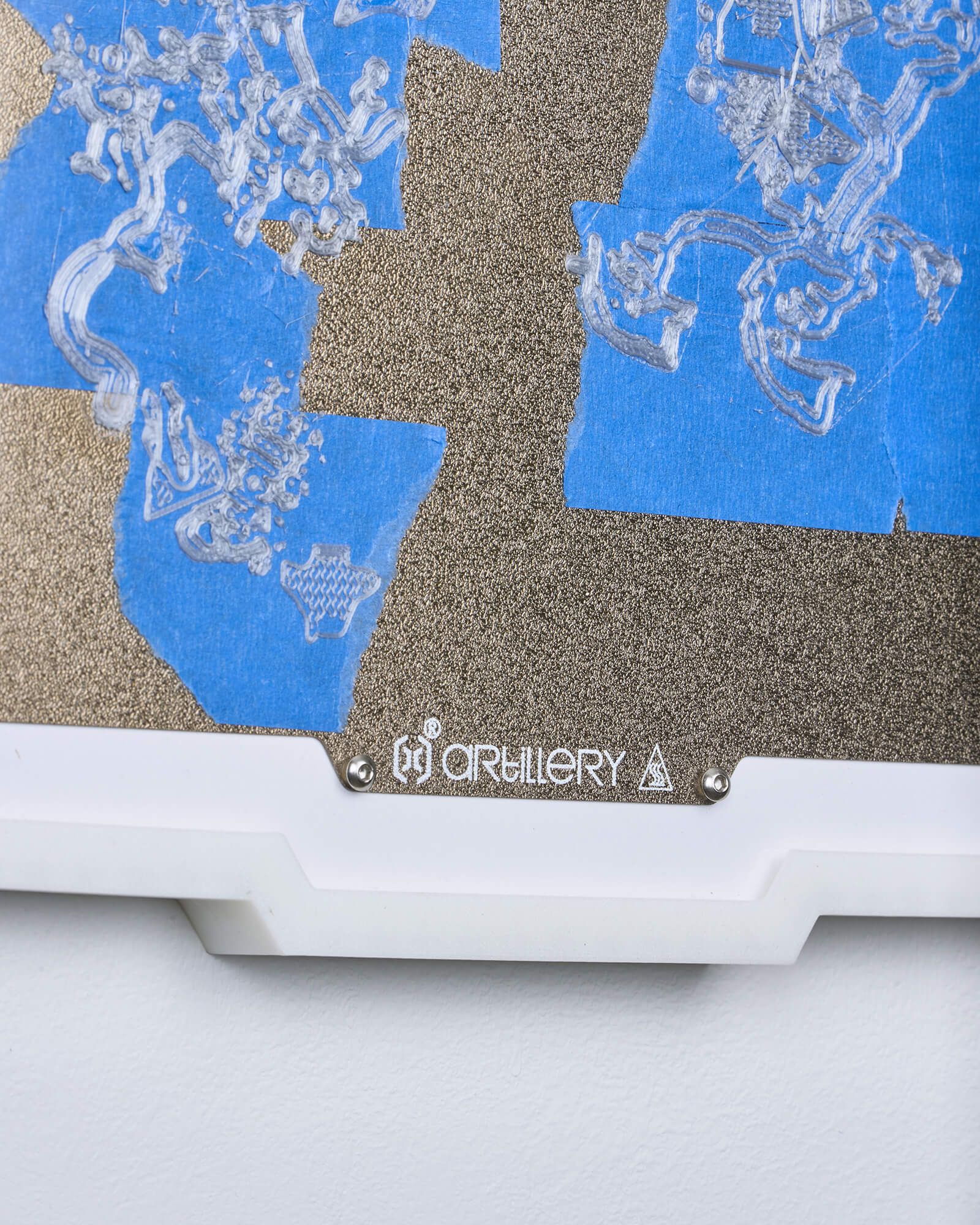
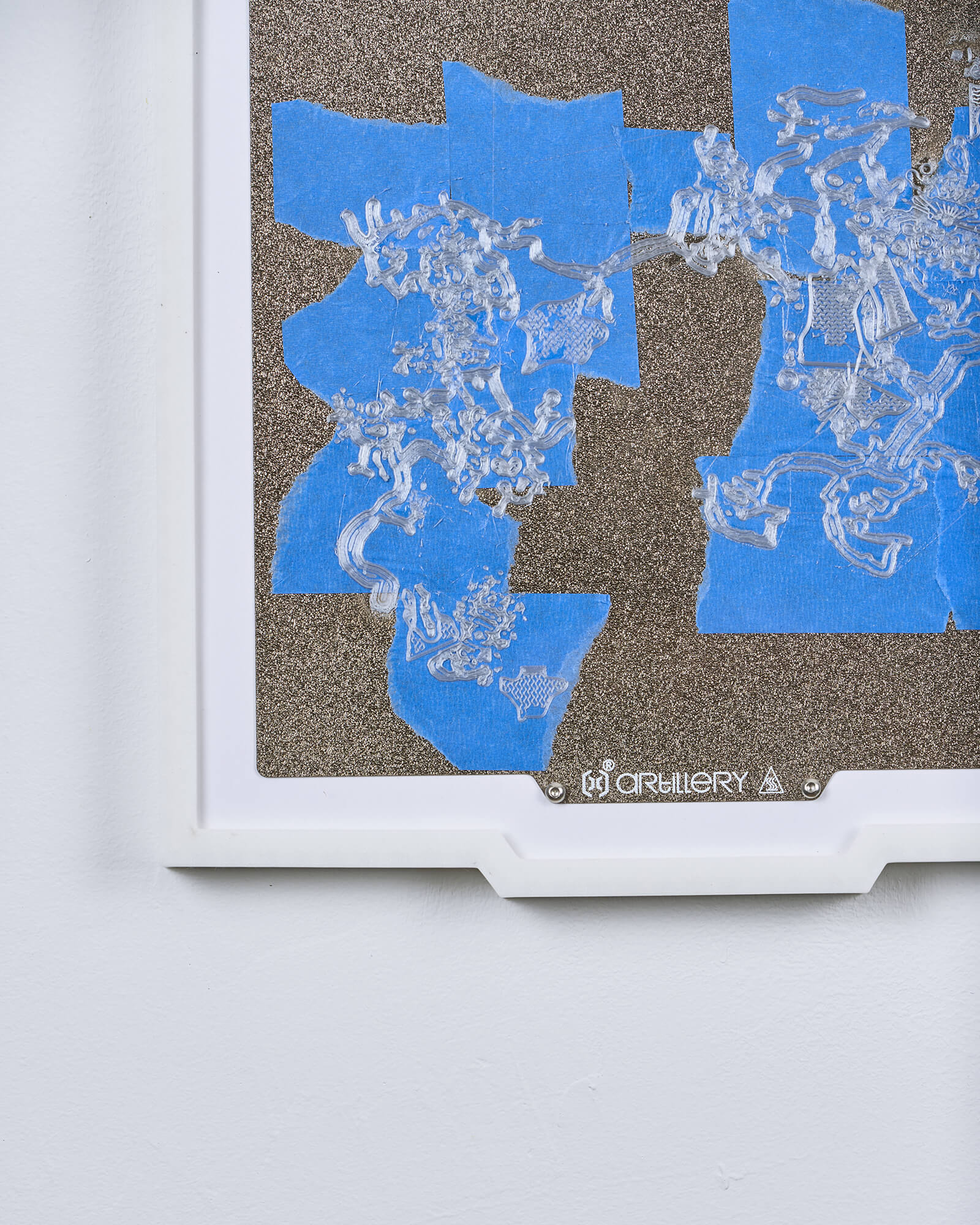
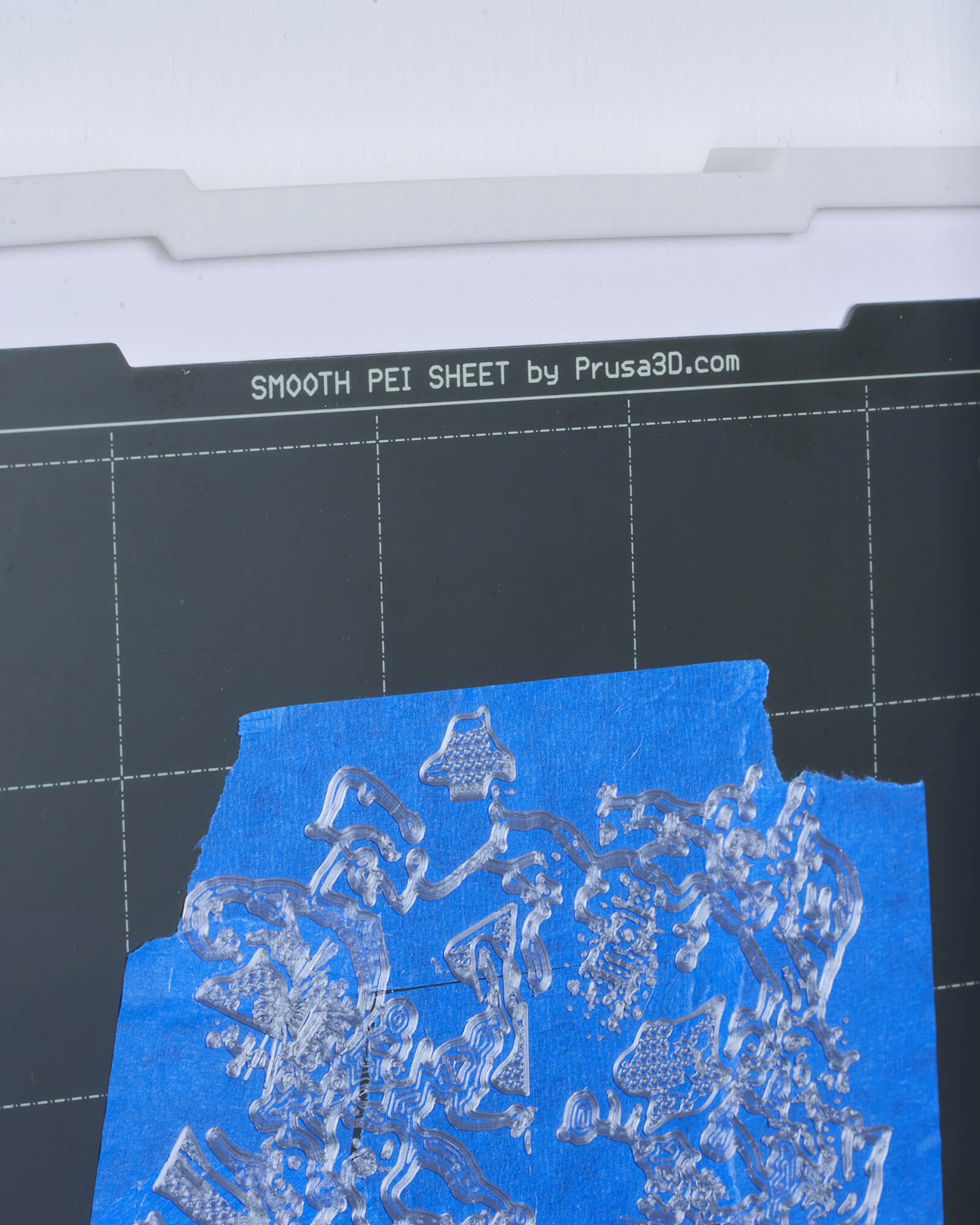
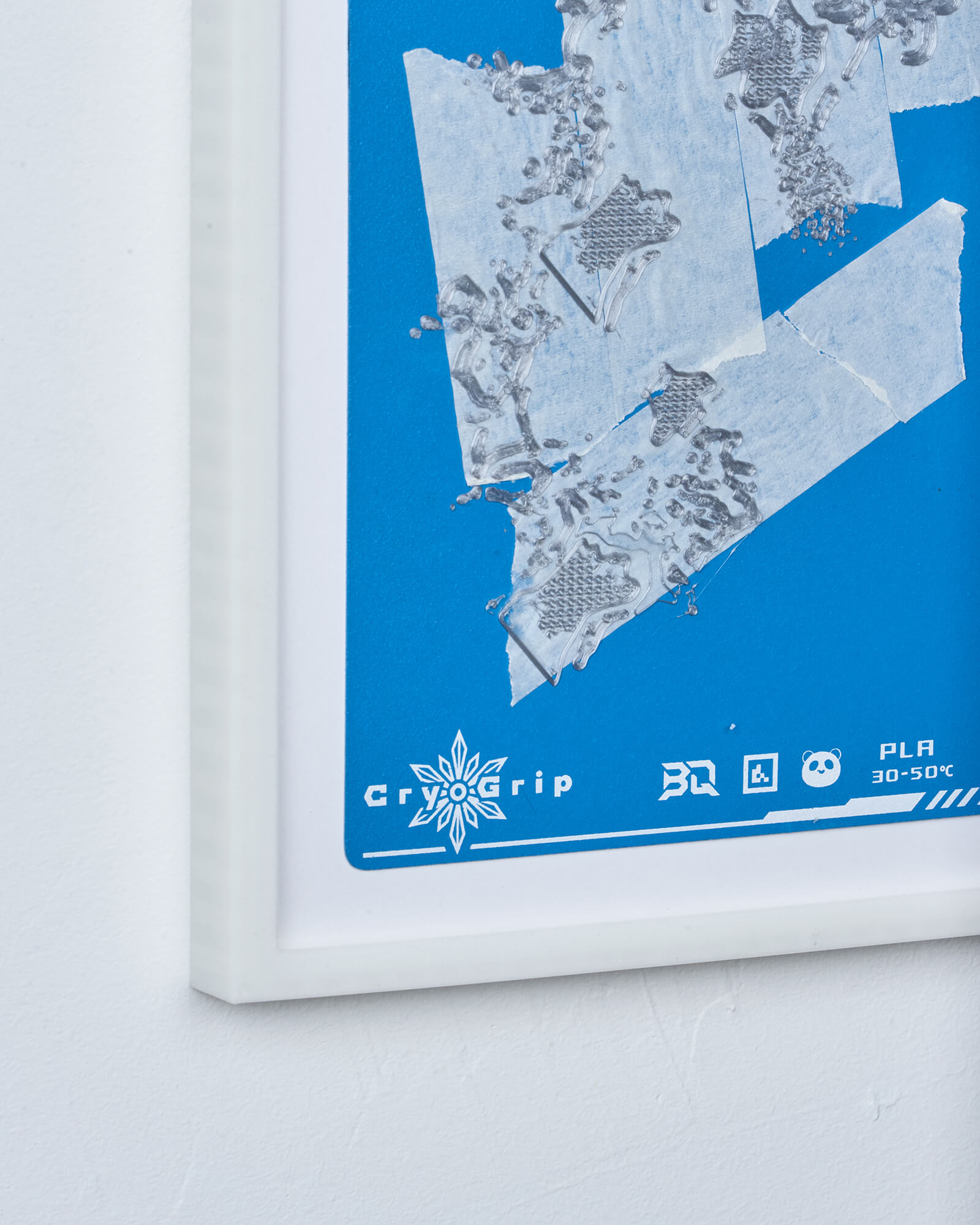
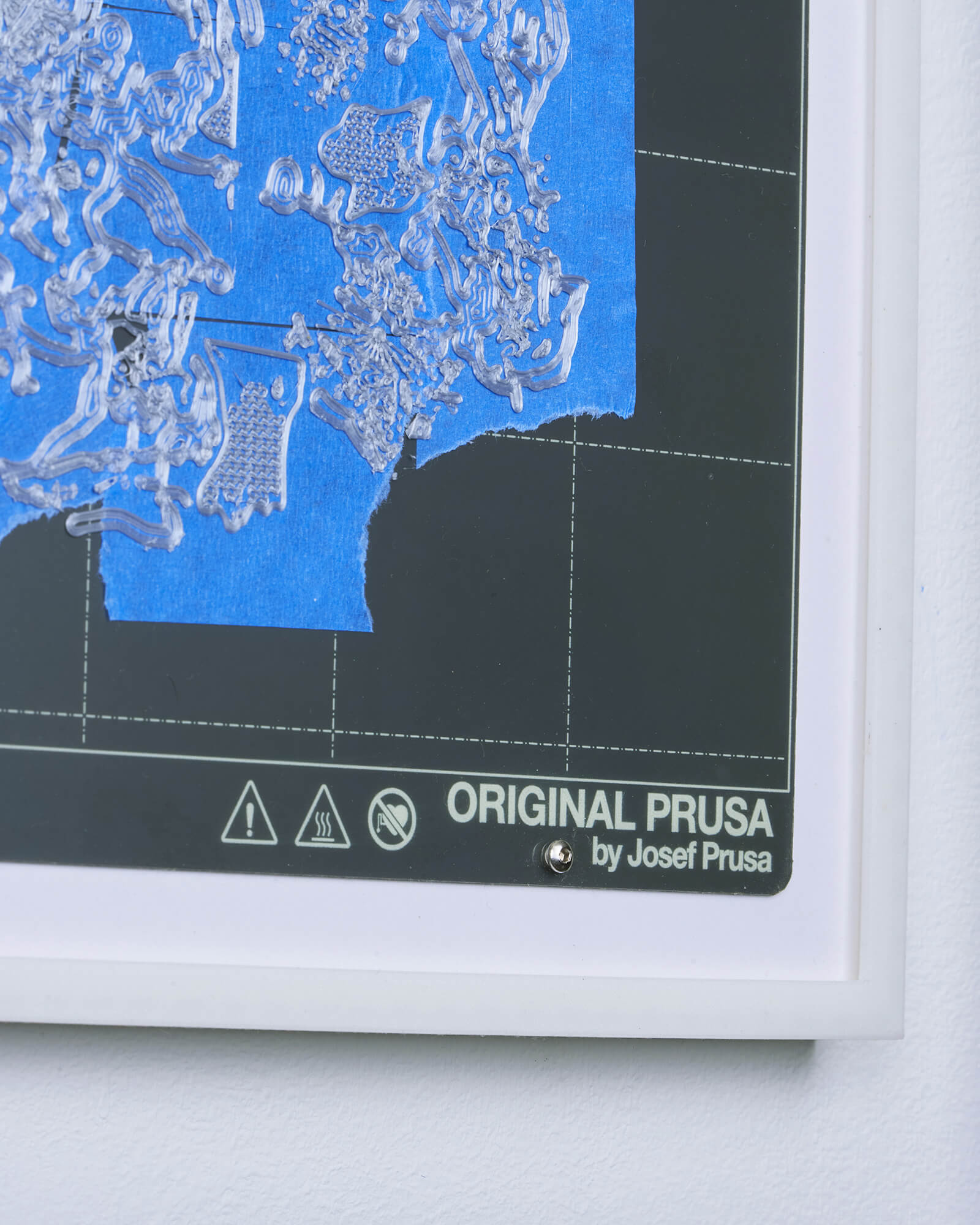
3D printed polylactic acid tomophanes on steel spring sheets, custom 3D printed frames
29 x 28 x 2 cm, 29 x 30.5 x 2 cm, 31 x 33 x 2 cm
Shown in Art Outreach Singapore as part of group show Lines of Influence
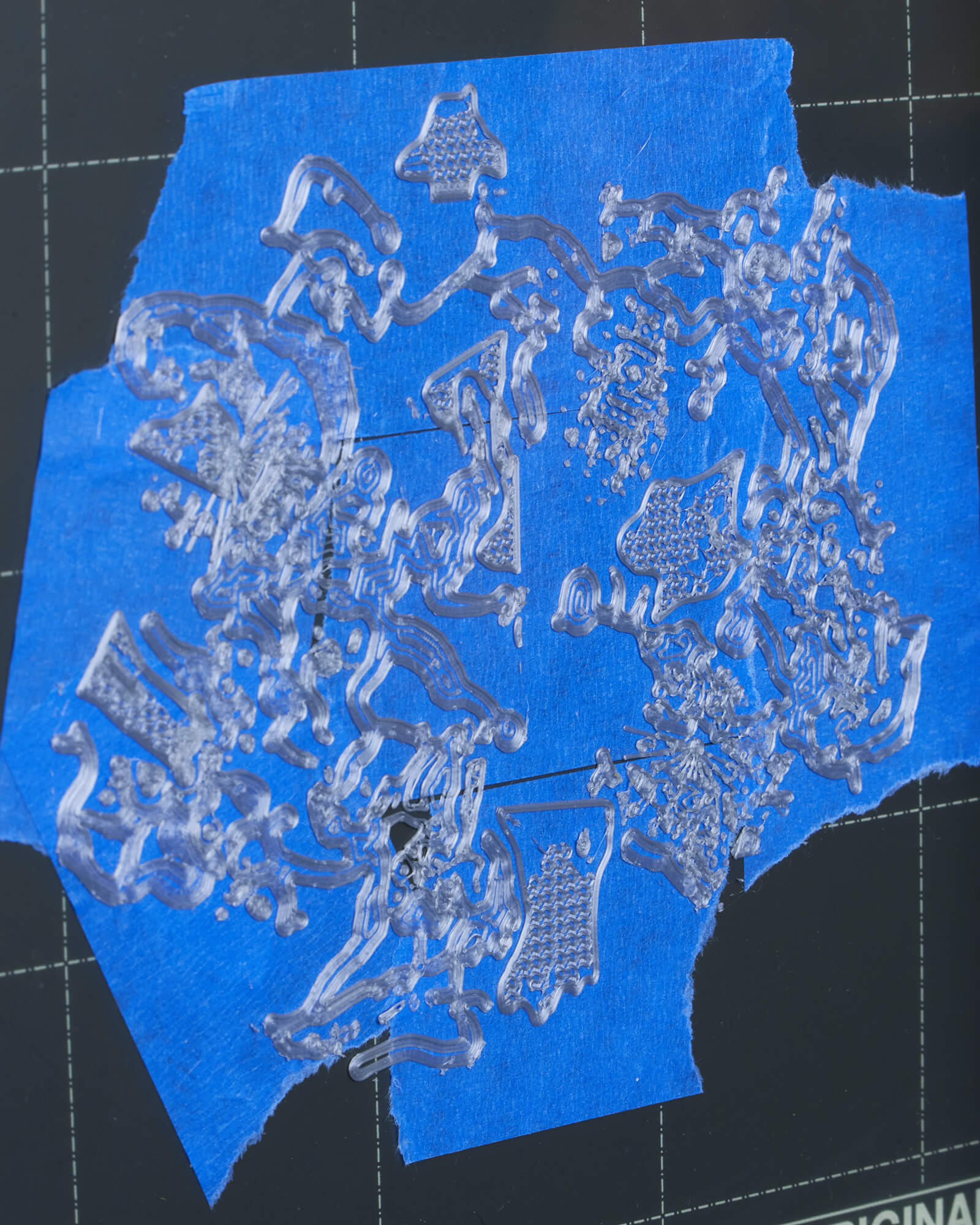
Near-planar is a triptych that explores processes of object-making for mark-making—using 3D printing mechanisms as painting tools and its hardware as canvas. Tomographic marks emerge through a collaborative process with the printer software where open-source 3D digital objects are arranged in haphazard ways, prompting the software to generate support structures for 3D printing. Processed into 2D slices for print, each tomophane is printed only with the initial layers, resulting in near-planar, layered compositions of patterns and volumetric marks on print sheets.
The use of blue masking tape (commonly known as painter’s tape) dates back to the early days of desktop 3D printing, when print beds often struggled with adhesion issues. Applying painter’s tape to the build surface quickly gained popularity after it was found to both improve first-layer adhesion—dramatically increasing print success rates—and protect the bed from residue and wear. In this work, the presence of painter’s tape on this work’s 3D printing “canvas” is a direct nod to its namesake in painting (both as a tool of decorative painting and as an artistic medium), establishing a link between the practices of object-making and mark-making.
At its core, 3D printing is a tool for mark-making. Layer by layer, these marks accumulate into volume—into object-making. The mechanics of 3D printing was first described in a patent by Johannes Gottwald in 1971, who used the term “printing” to loosely encompass forms of mechanised mark-making such as “symbols, characters, or patterns of intelligence by marking”. He highlighted its core principle as the deposition of flowable substance (ink or otherwise) to form “writing or other symbols, character or pattern formation”.
If 3D printing were to return to its roots in mark-making and print, one element is conspicuously absent—the substrate. Inevitably, the printer’s build plate assumes that role. Reframed through mark-making, the volumetric press reimagines its mechanisms as marking tools and its hardware as canvas.
The use of FFF 3D printers to produce images is comparatively recent; most explorations over the past decade has centred on lithophanes—thin reliefs whose images appear in transmitted light. Traditionally, this mark-making technique uses incision to carve the material of objects (typically porcelain) into varying thicknesses, rendering images when backlit. Lithophanes can be easily replicated with 3D printing by modulating layer deposition to vary thickness. Other approaches to 3D printed reprography include luminance-based methods such as HueForge and topographic “paintings” (e.g., Océ) to reproduce gestural features on 3D printed “paintings”. These techniques essentially emulate conventional graphic and painting methods, mapping them onto 3D printing processes—generating marks, but they rarely engage the technology on its own terms and workflows.
The term “lithophane” is derived from Greek compounds “litho-” (meaning stone) and “phainen” (meaning “to cause to appear”). hyperpress explicates the concept of “tomophanes” (tomos- meaning “slice”) as a mark-making method to derive graphics from slices of 3D objects after being processed by the 3D printer slicing software. Layers of patterns appear when the processed 3D objects are viewed layer by layer. This preparatory step of the 3D printing process can yield interesting visual possibilities when interpreted as creative output.
The method requires the manipulation of position, rotation, and other parameters of 3D objects within the three-dimensional space, navigating their physical logic in relation to the print bed surface. Slicing becomes a distinct process for deriving two-dimensional graphics not by marking a surface directly, but by working within a higher dimension (a three-dimensional workflow)—mark-making not just on surfaces, but within volumes.