2025
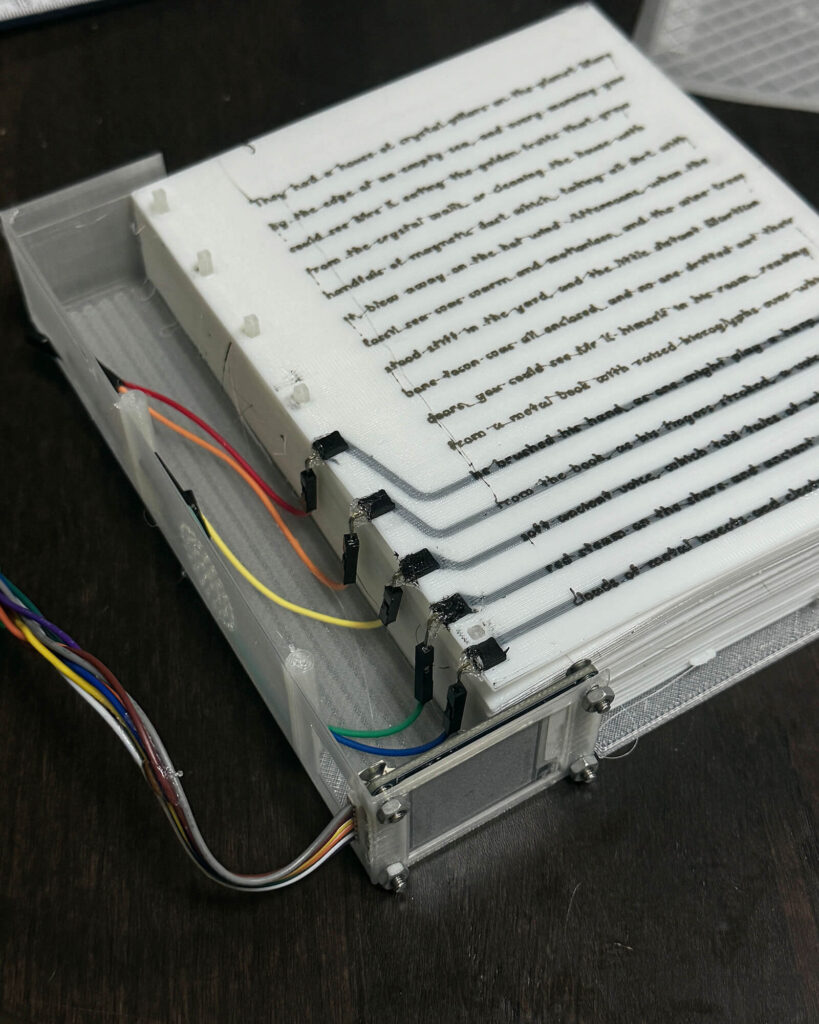
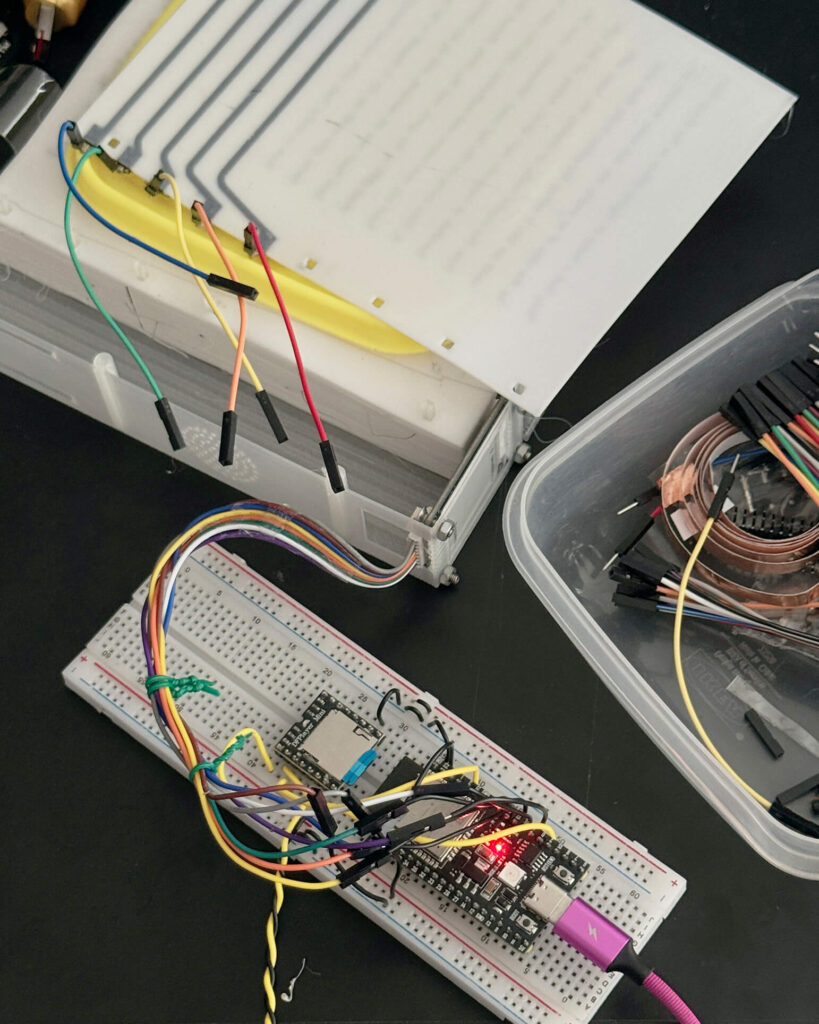
3D printed / Conductive Thermoplastic polyurethane, metal-infused Polylactic Acid, microcontroller with capacitive touch sensors, audio speaker and SD card modules, E-ink screen, wires
17 x 16 x 3.5 cm
Awarded Excellent Work at Tokyo Type Director’s Club 2026
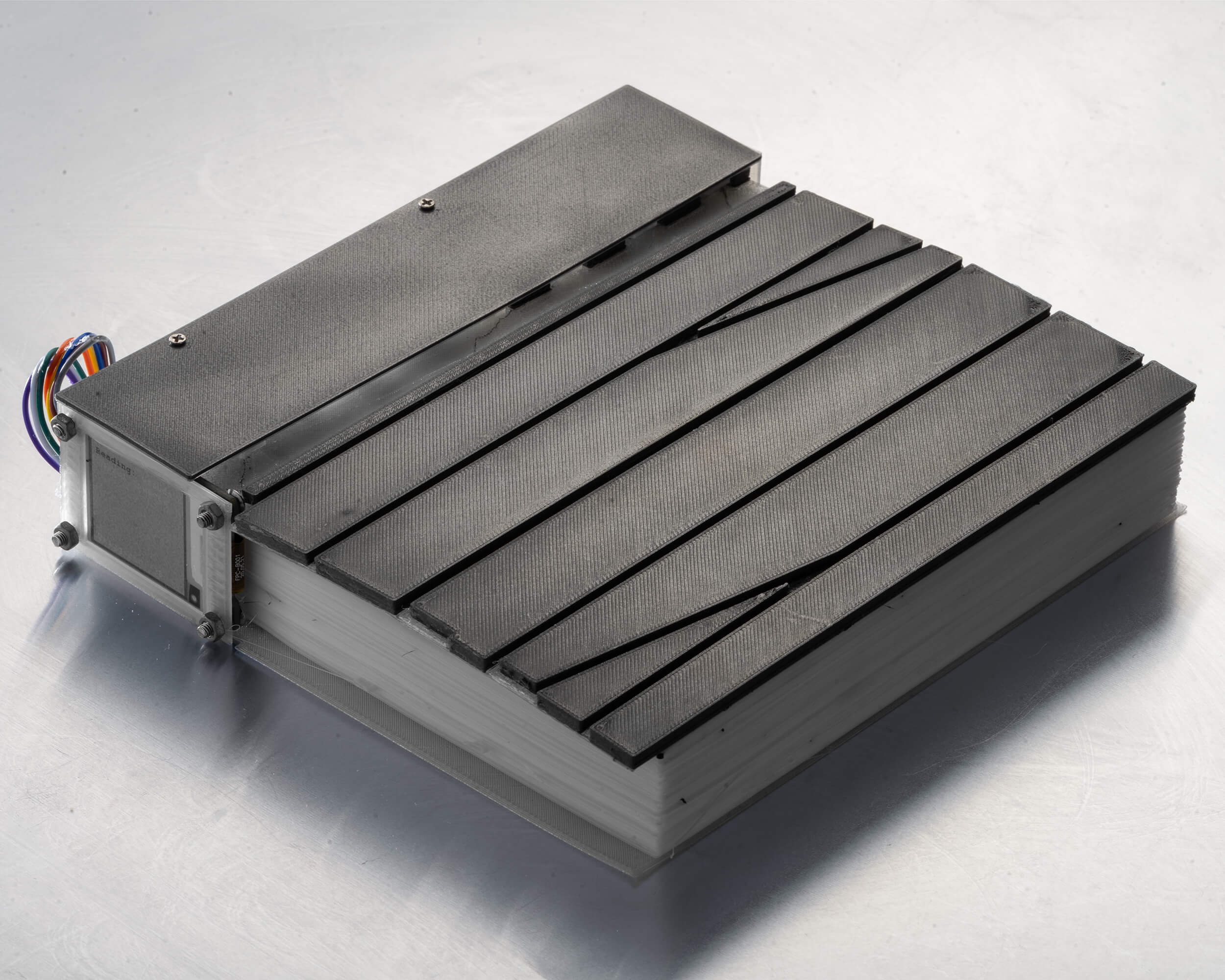
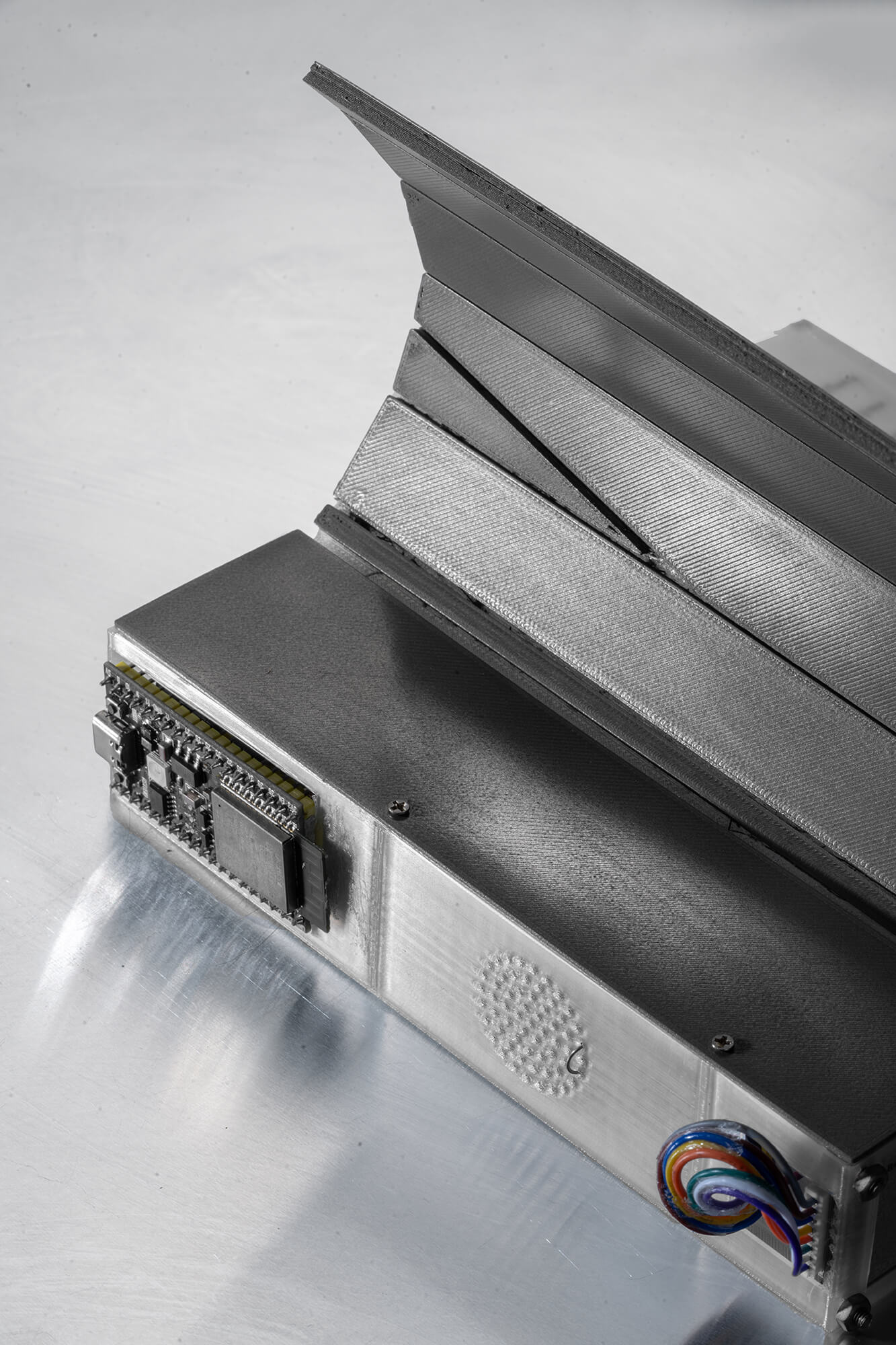
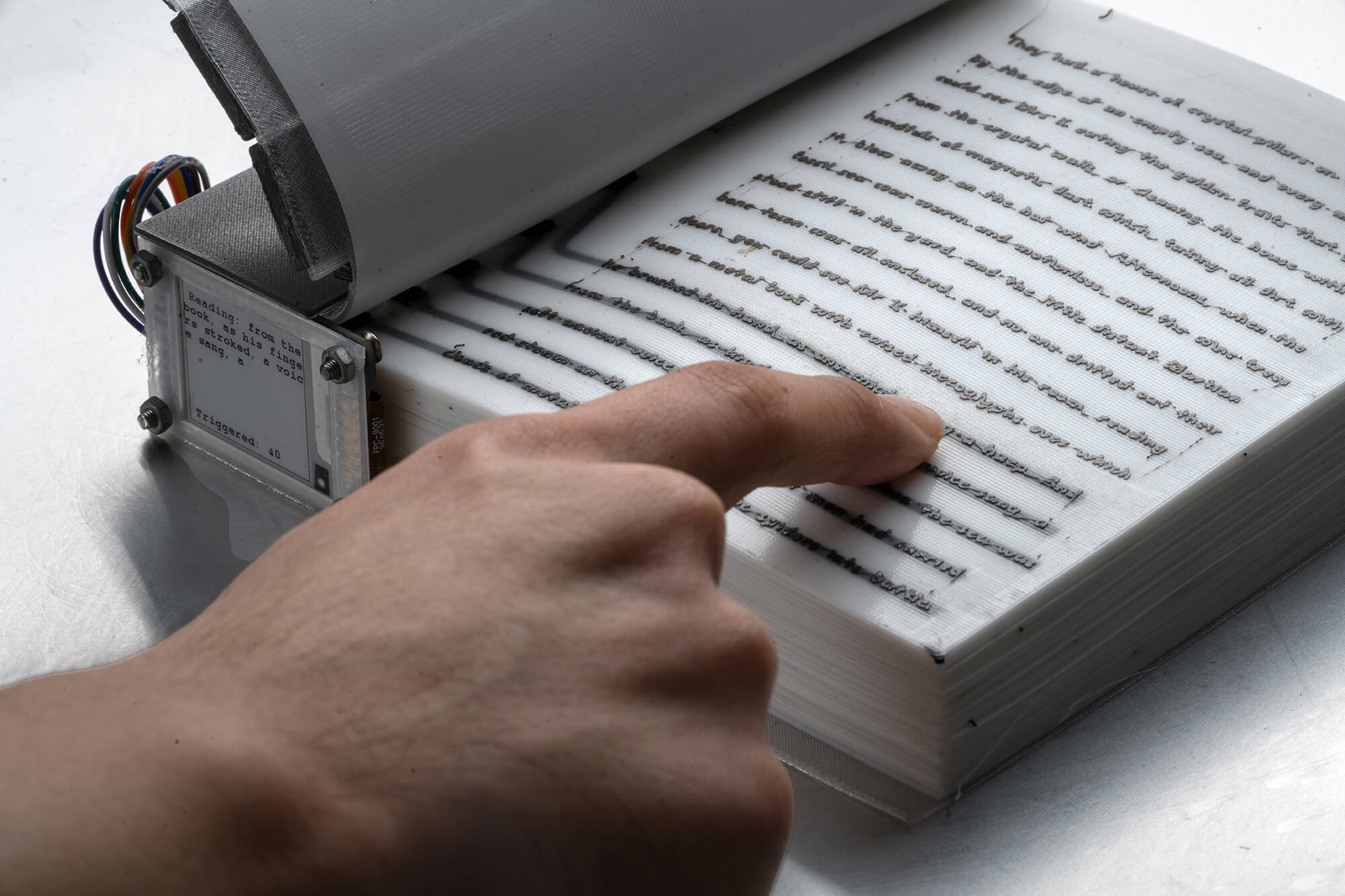
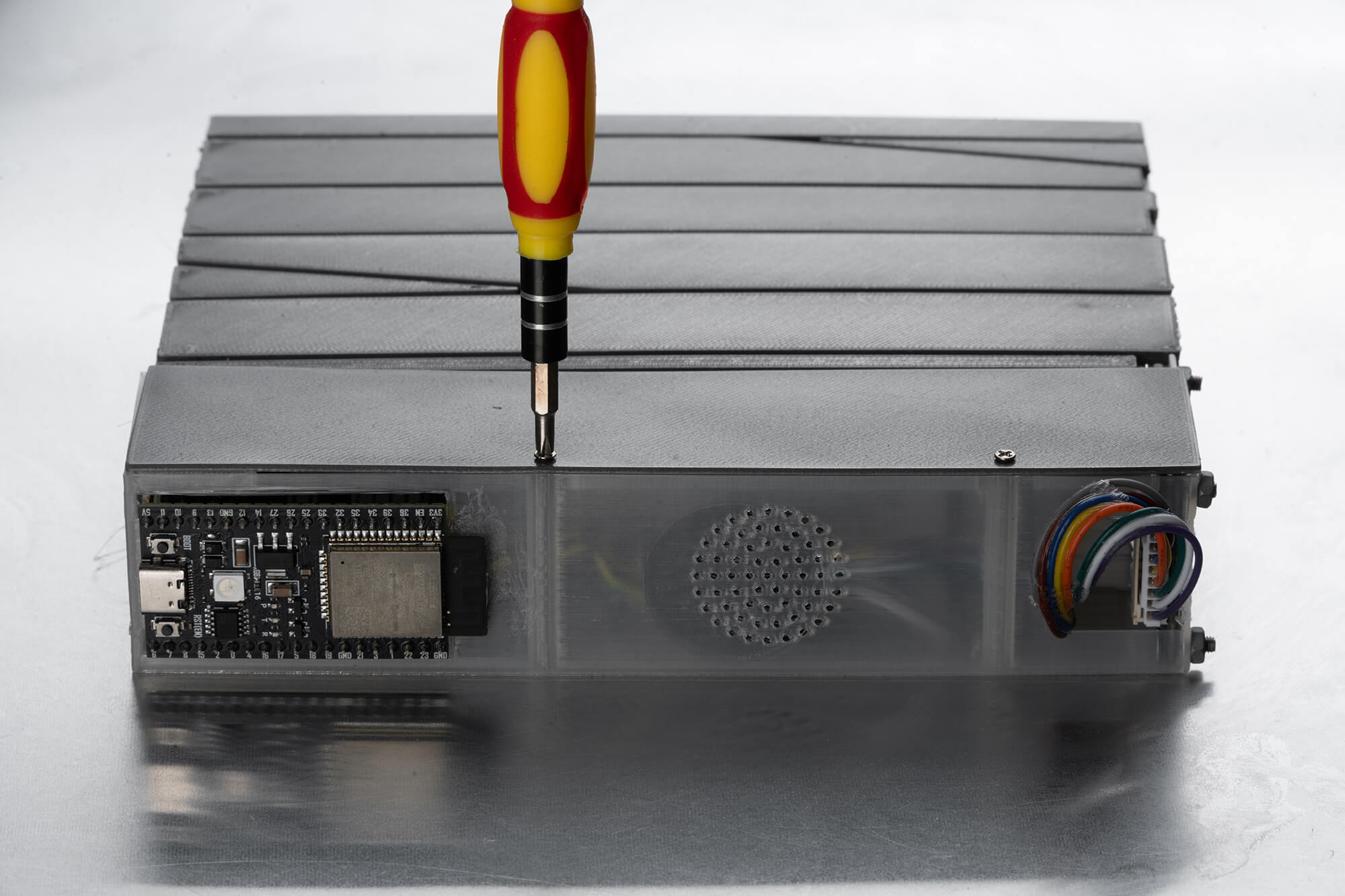
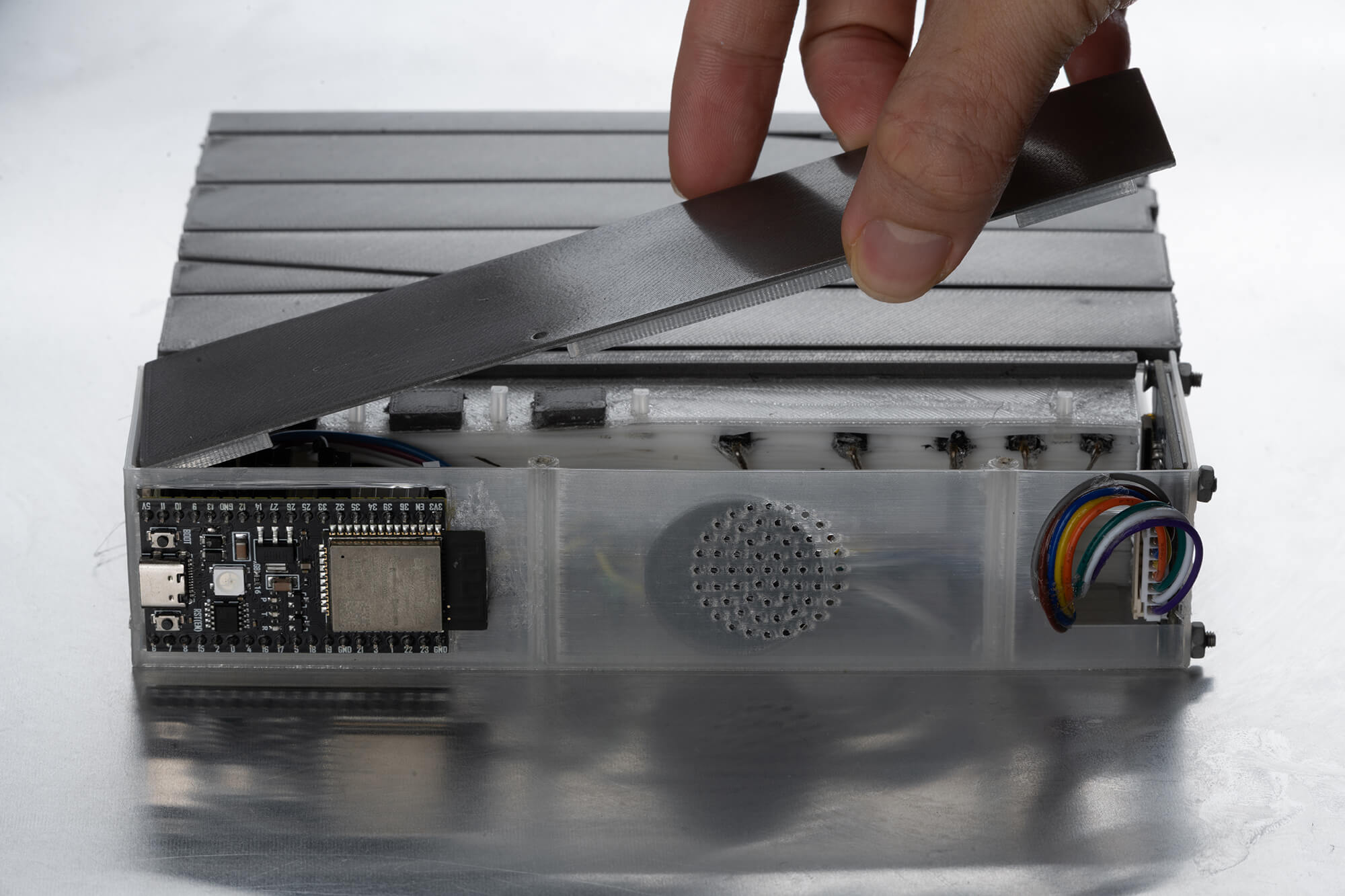
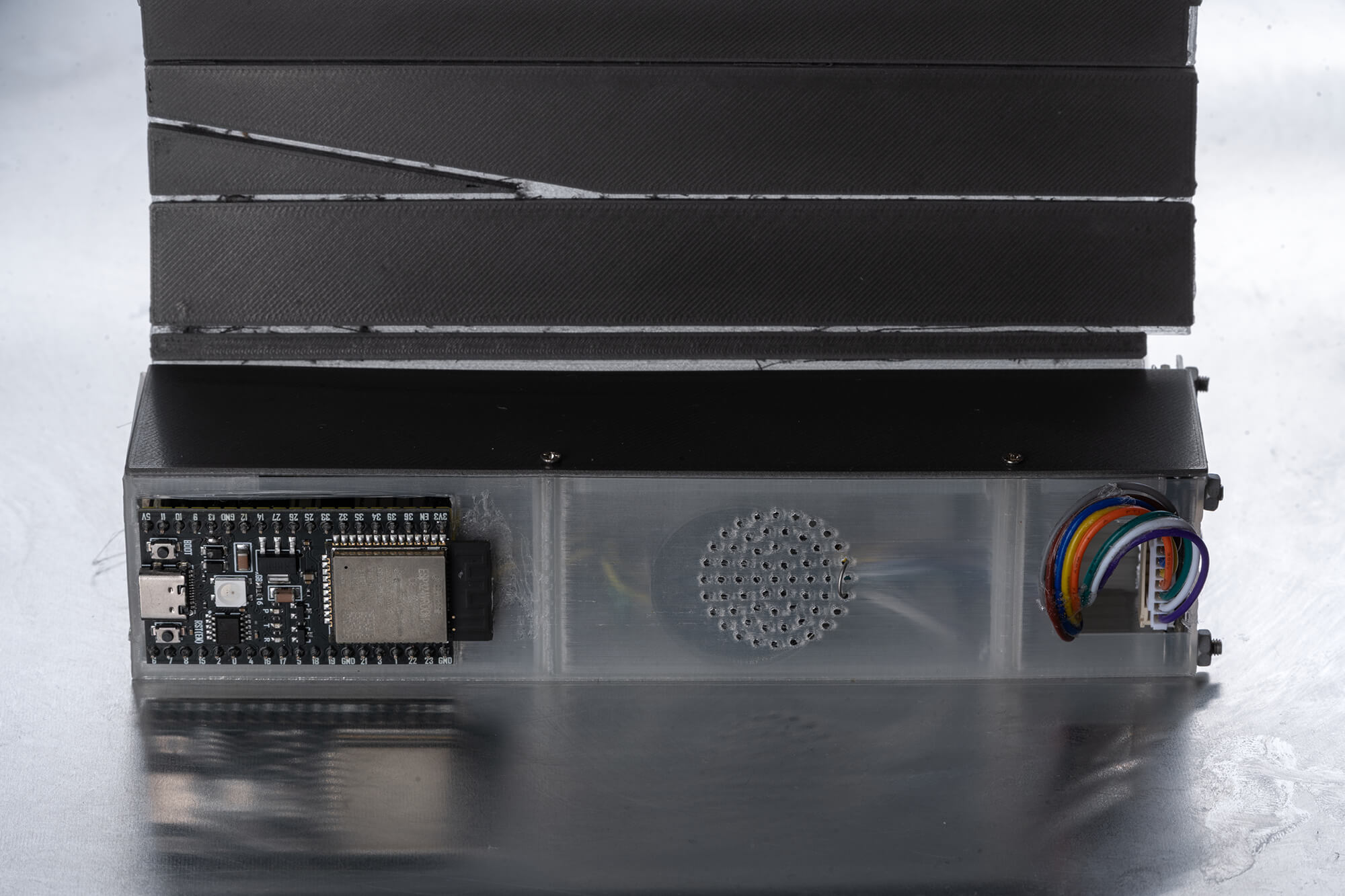
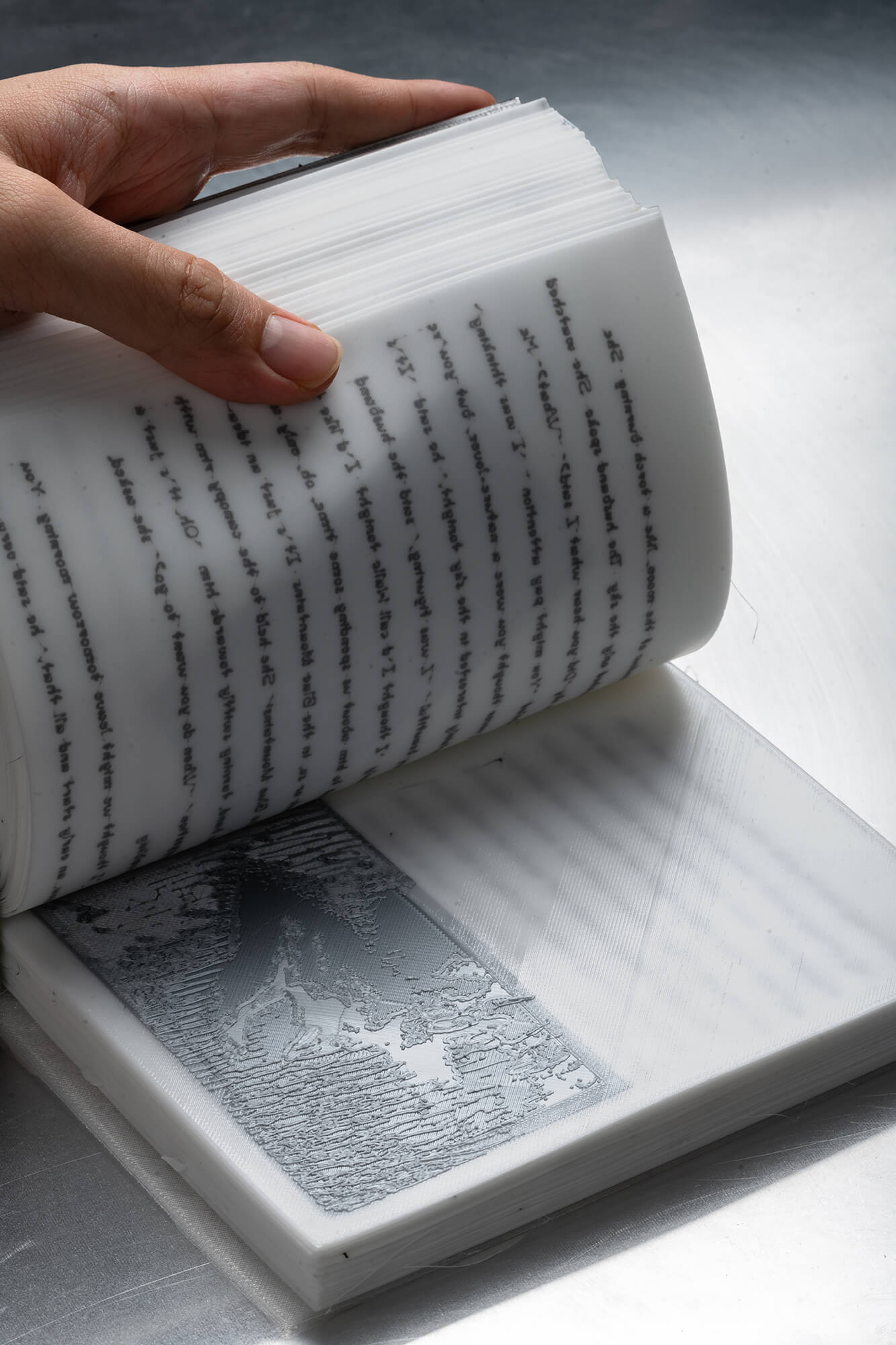
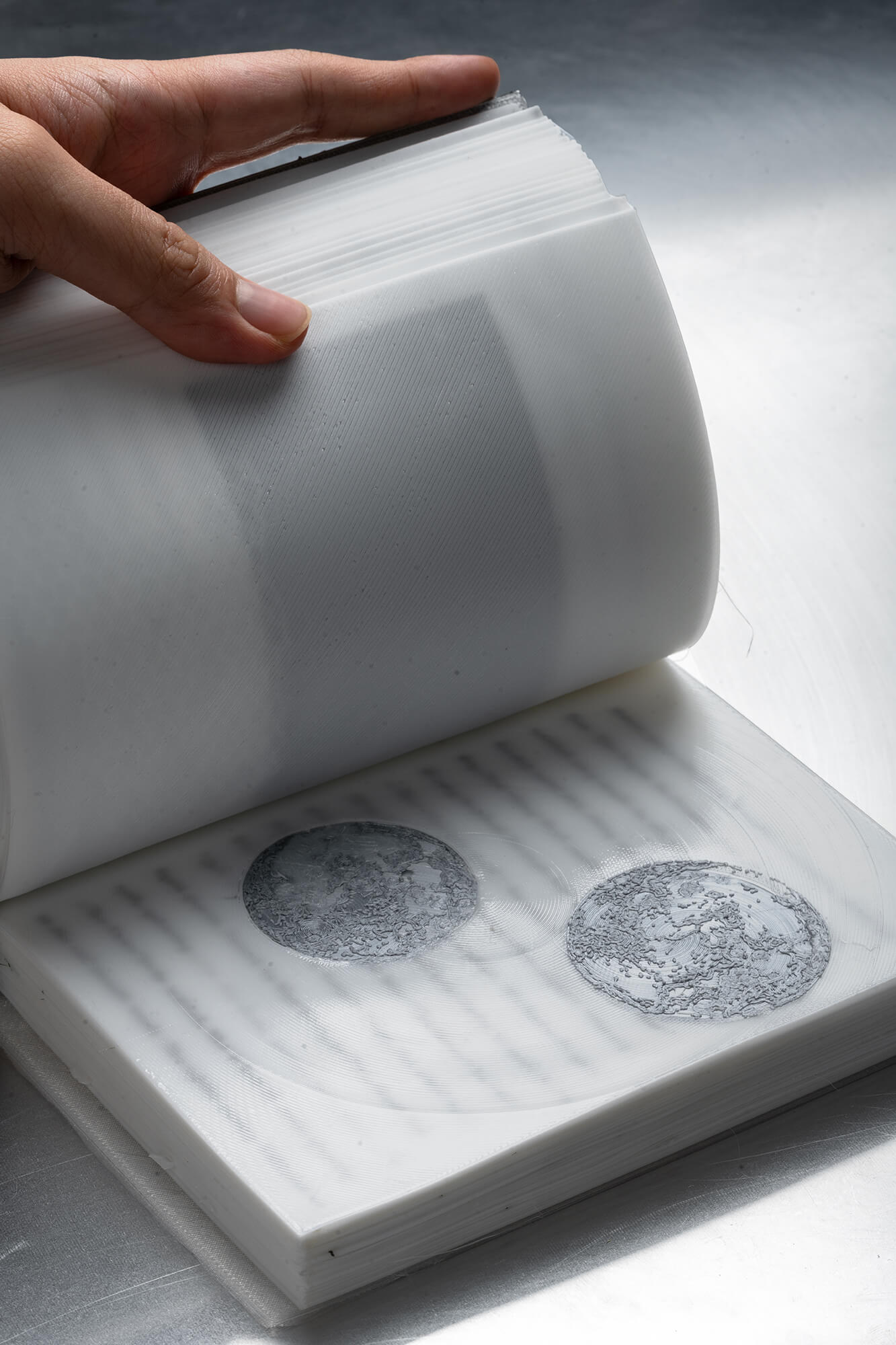
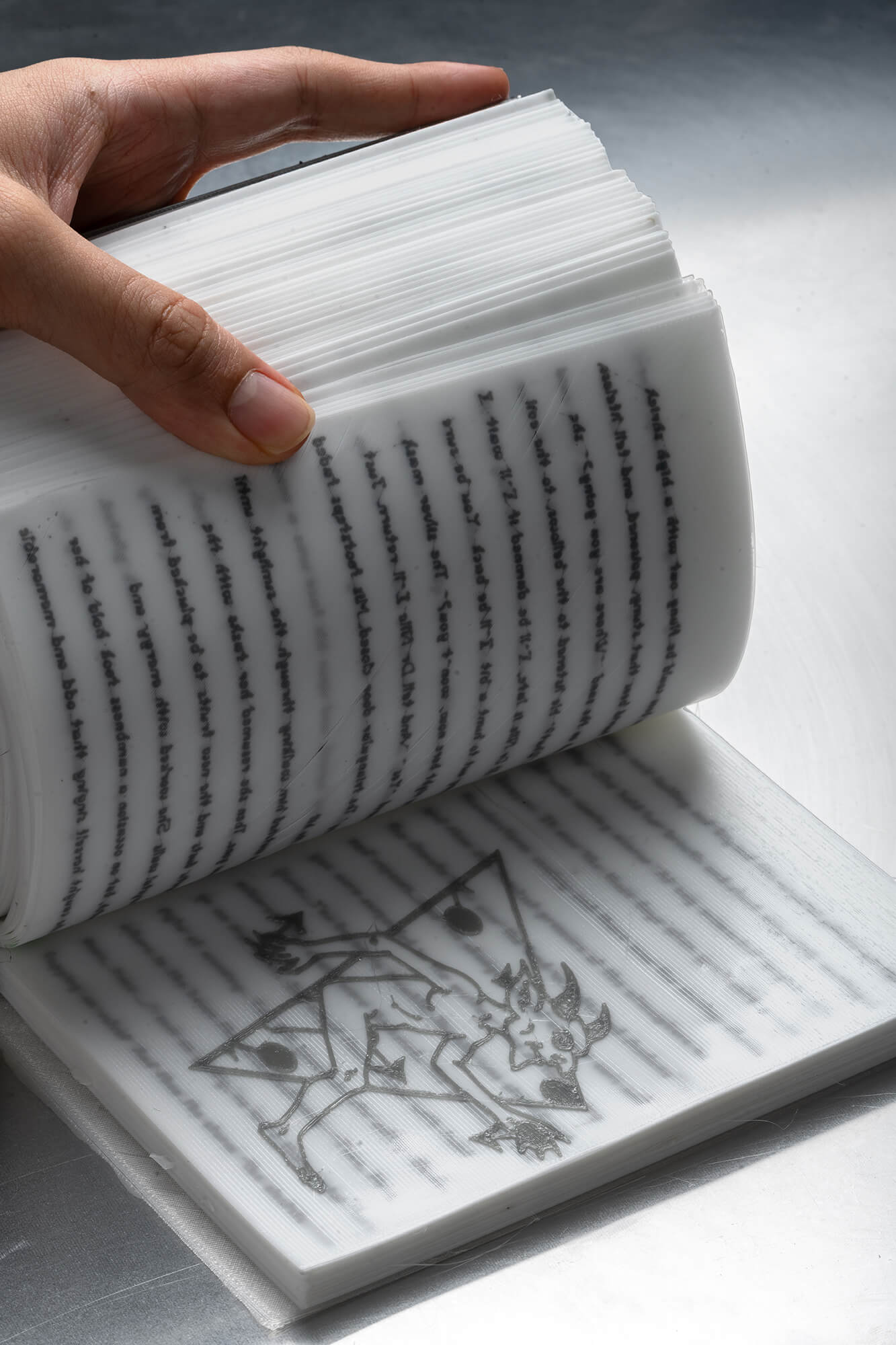
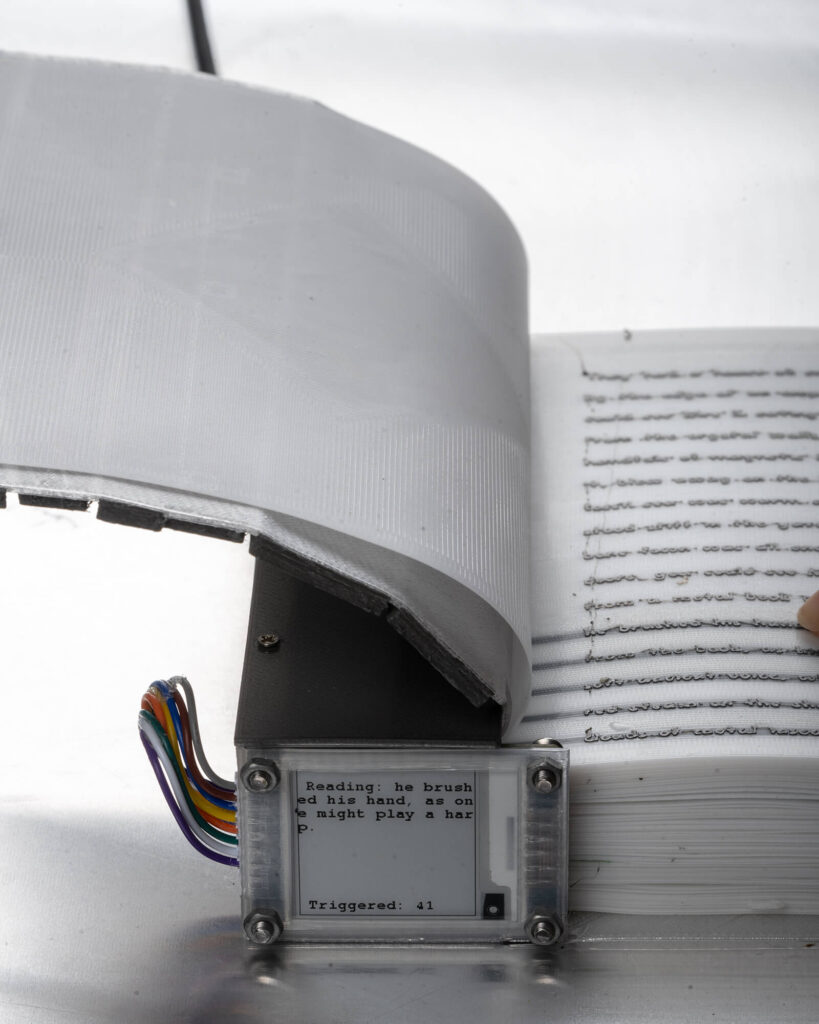
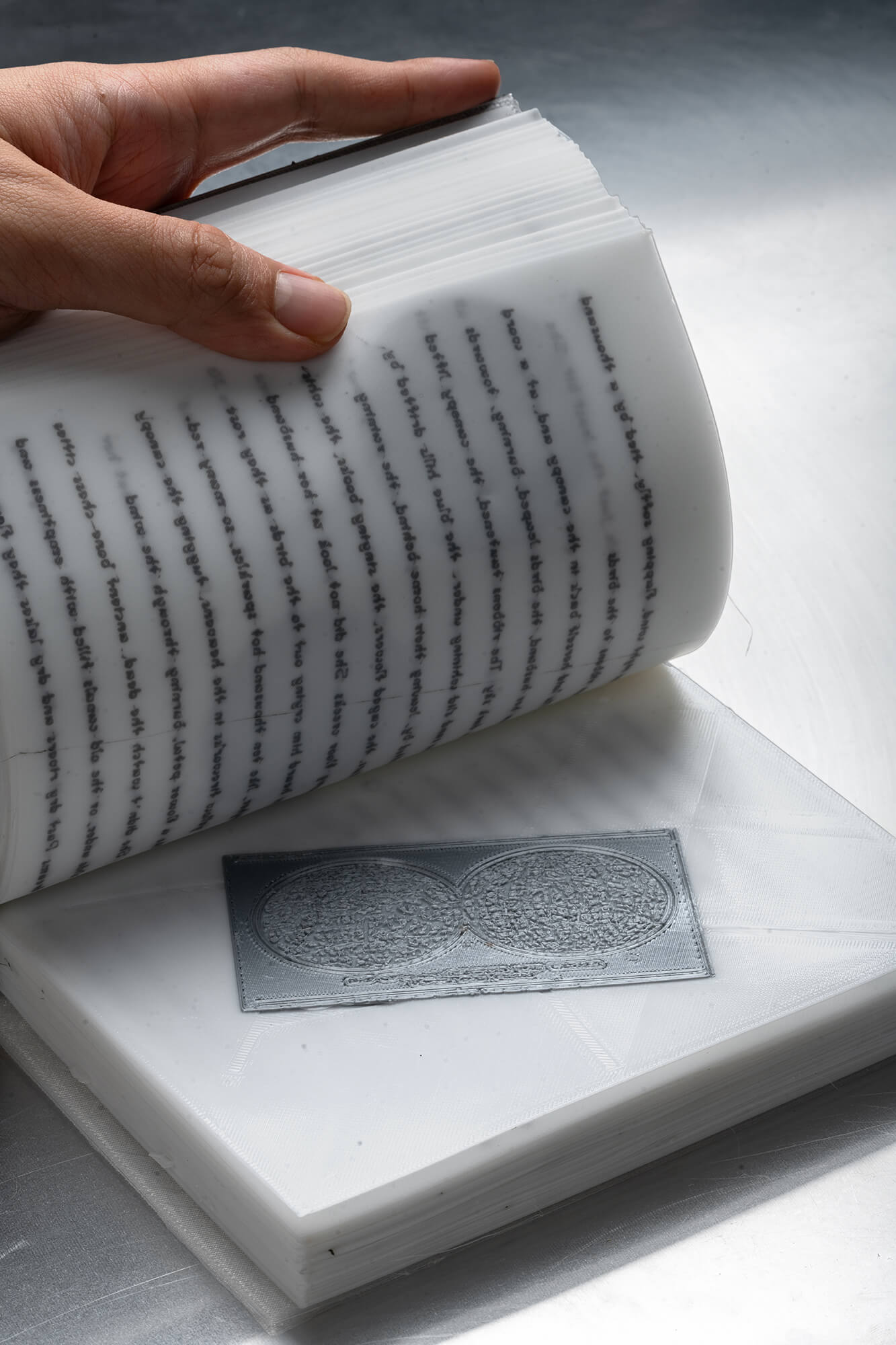
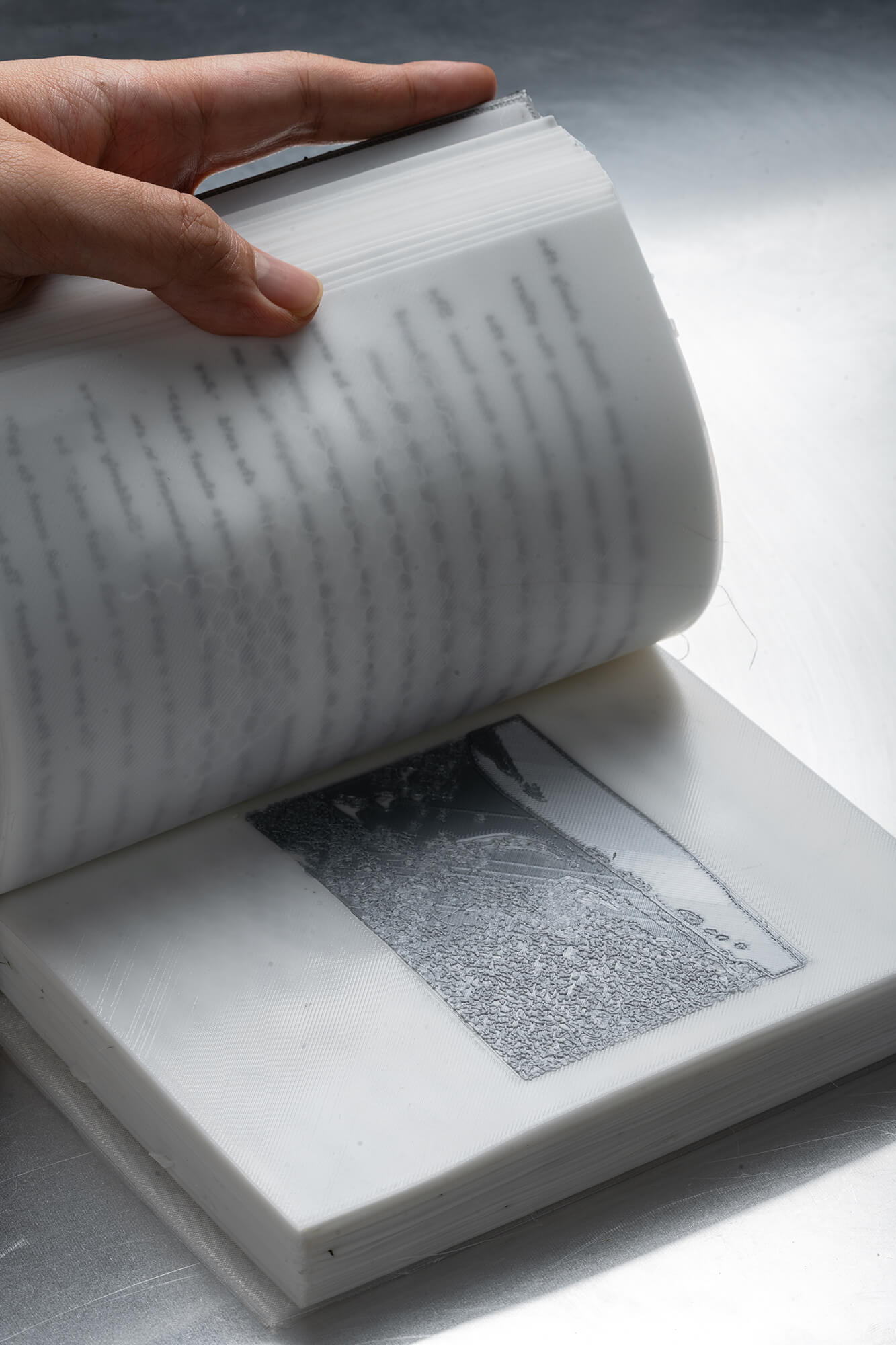
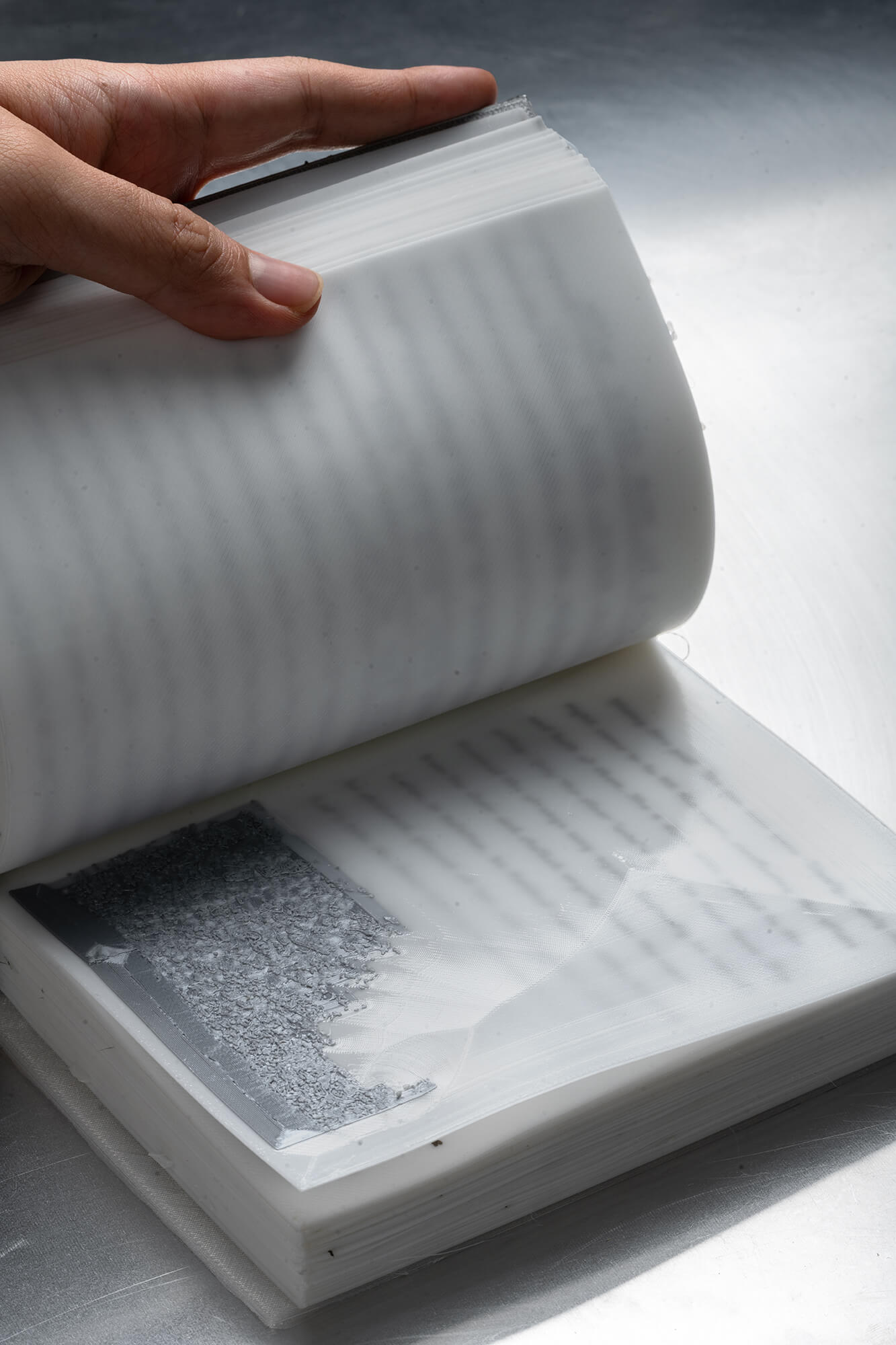
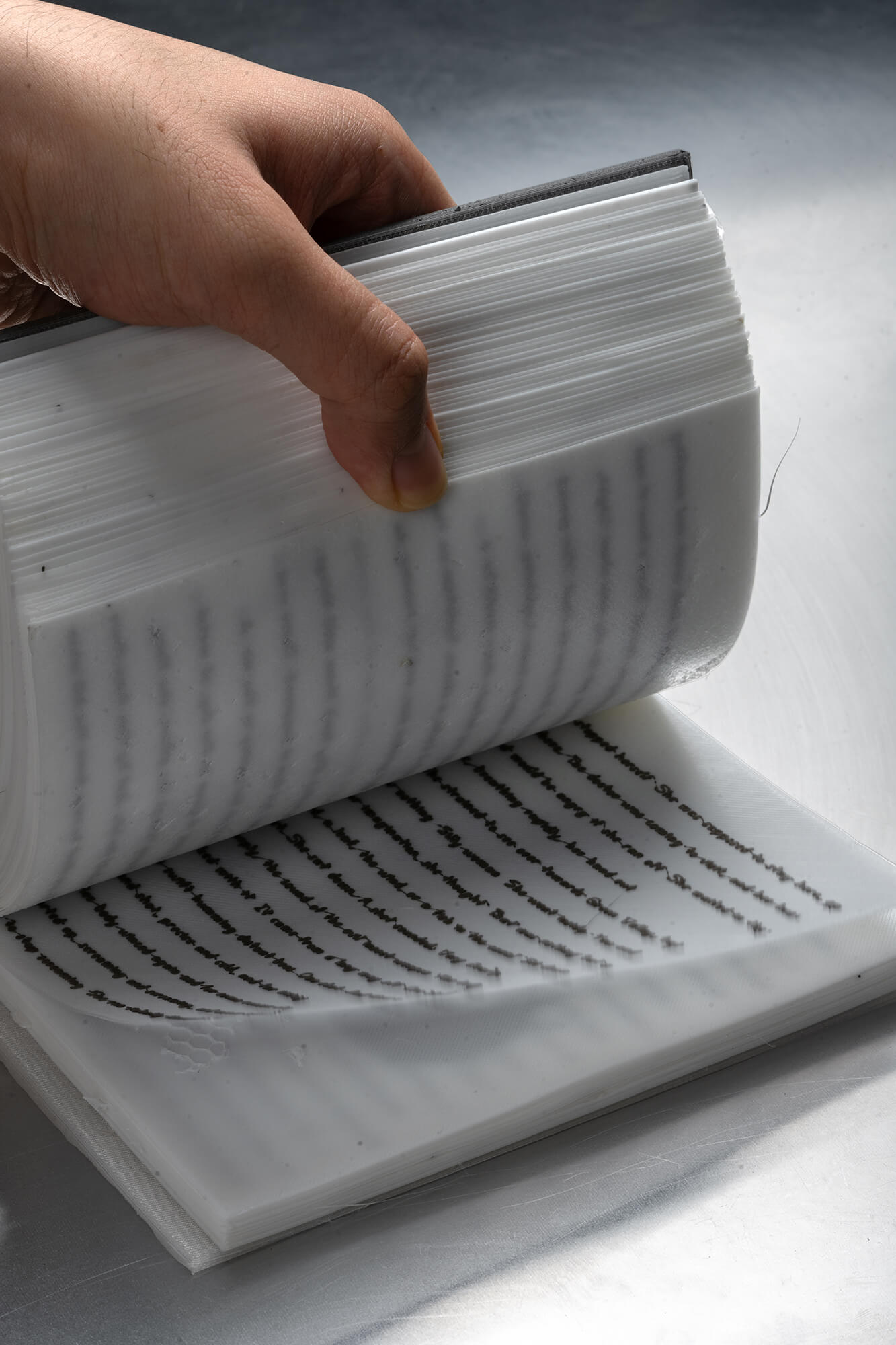
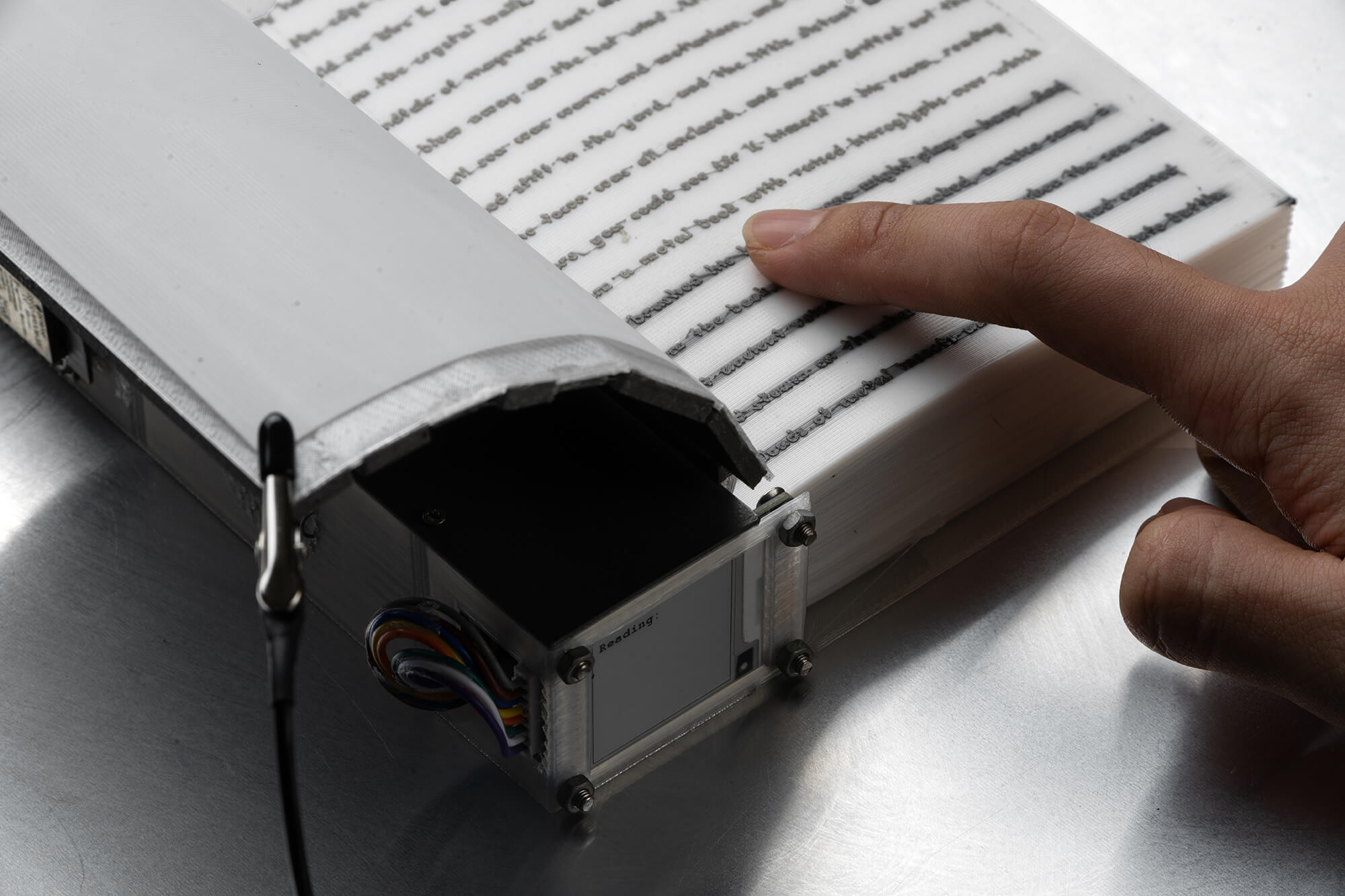
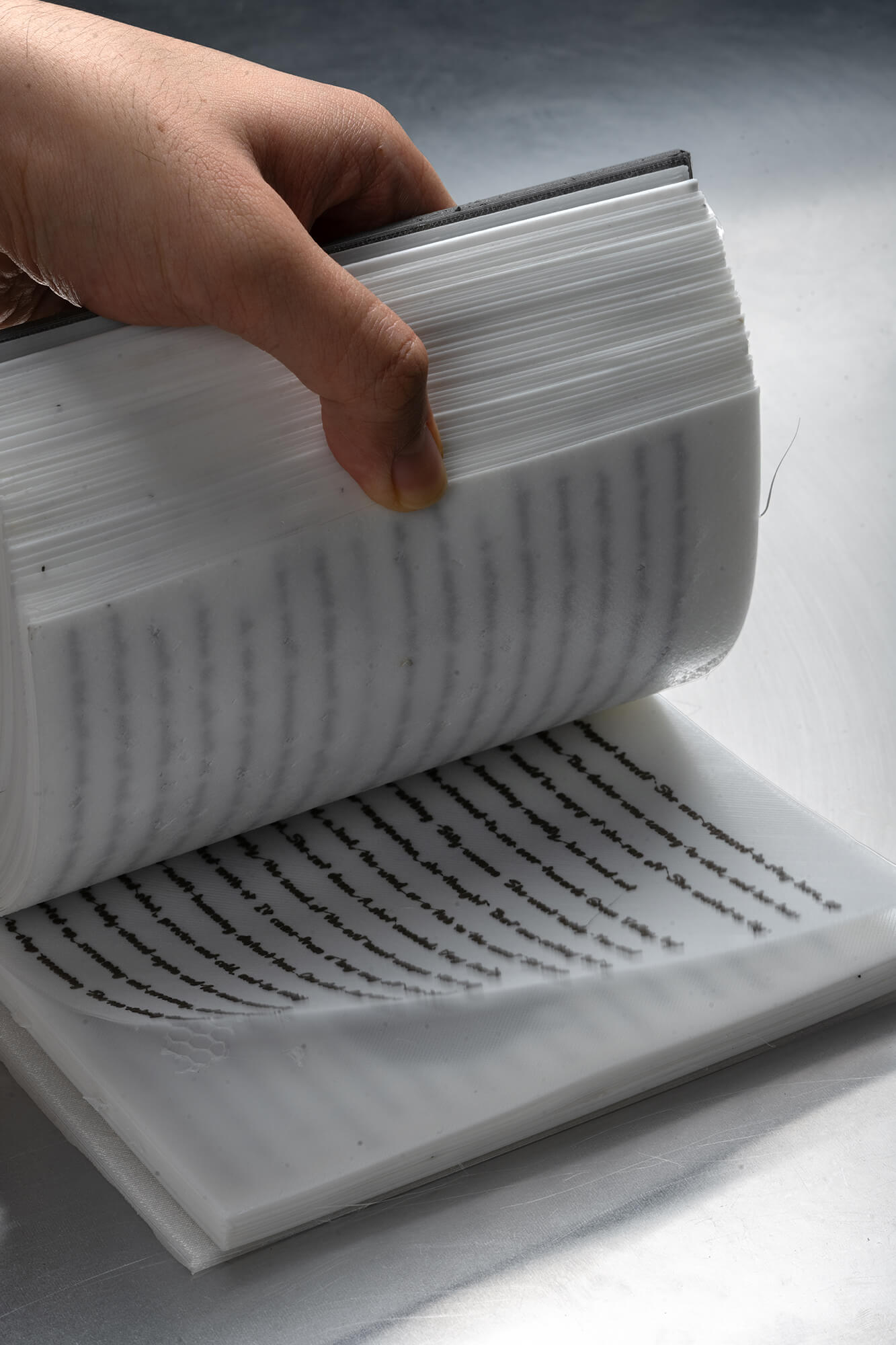
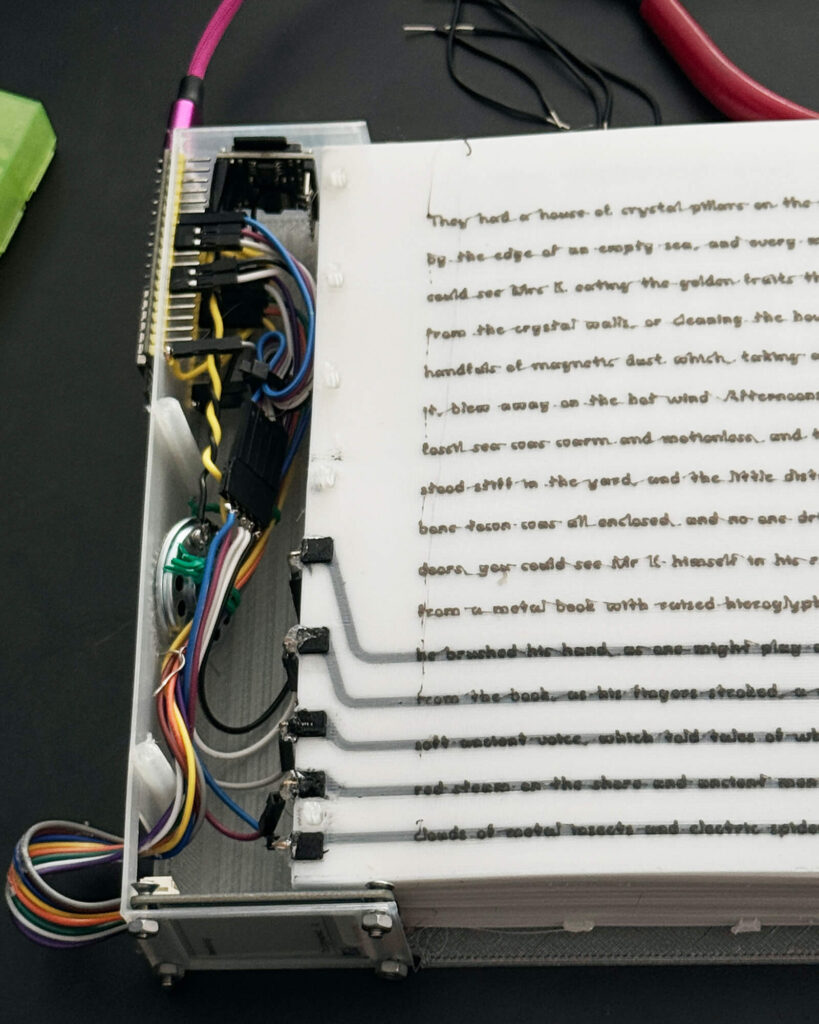
METALLY is a proof-of-concept 3D printed book containing printed circuit pages with conductive TPU traces (under few lines of text) connected to capacitive touch sensors. It also houses an integrated audio speaker module and electronic ink display within a 3D printed steel-infused PLA spine and cover.
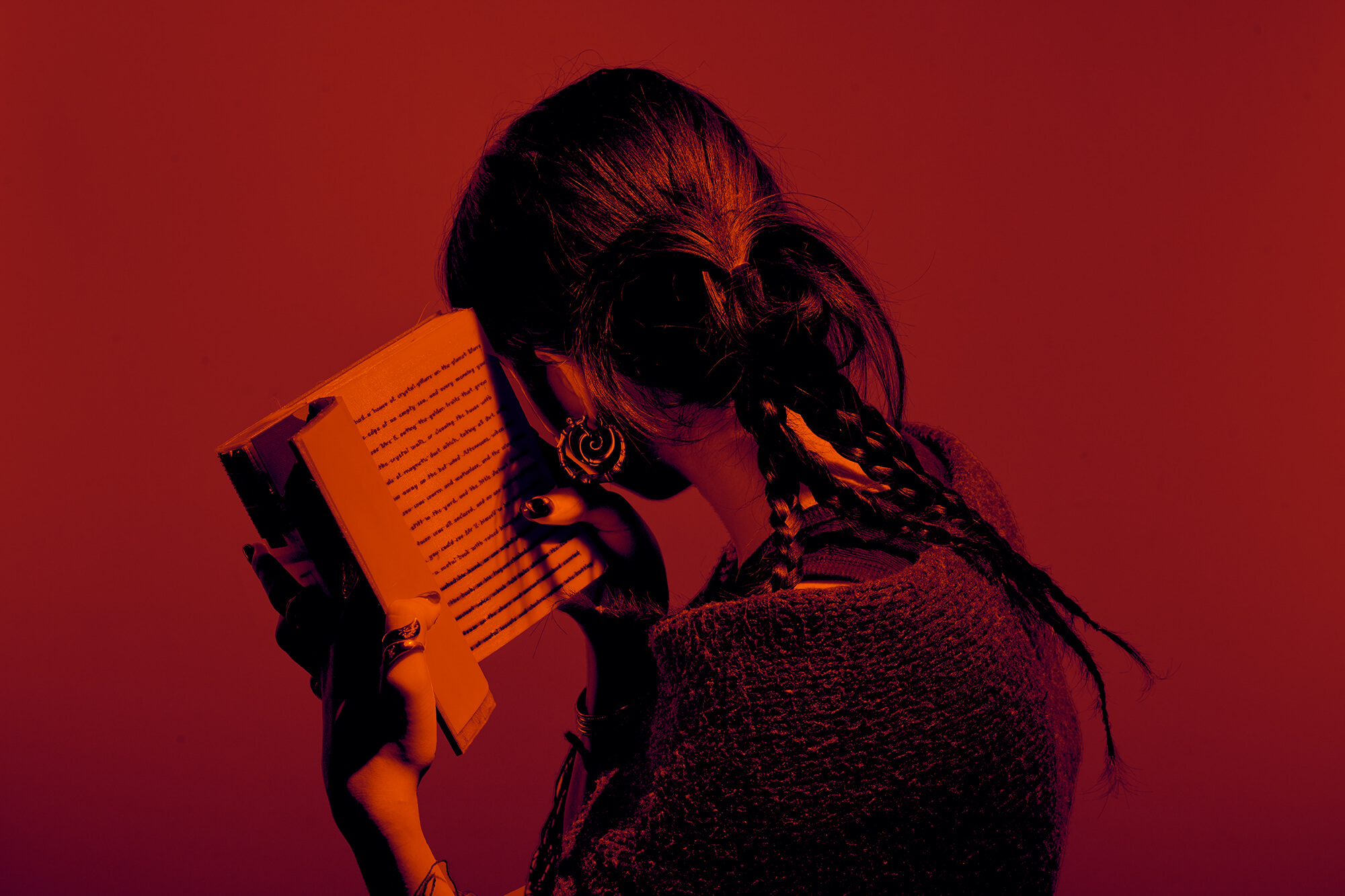
Inspired by one of Ray Bradbury’s short stories, “YLLA” (from his science-fiction fix-up classic, The Martian Chronicles), METALLY contains the entire text of the short story—particularly a description of a Martian interacting with a book object in detail:
“[Y]ou could see Mr K himself in his room, reading from a metal book with raised hieroglyphs over which he brushed his hand, as one might play a harp. And from the book, as his fingers stroked, a voice sang, a soft ancient voice, which told tales of when the sea was red steam on the shore and ancient men had carried clouds of metal insects and electric spiders into battle.”
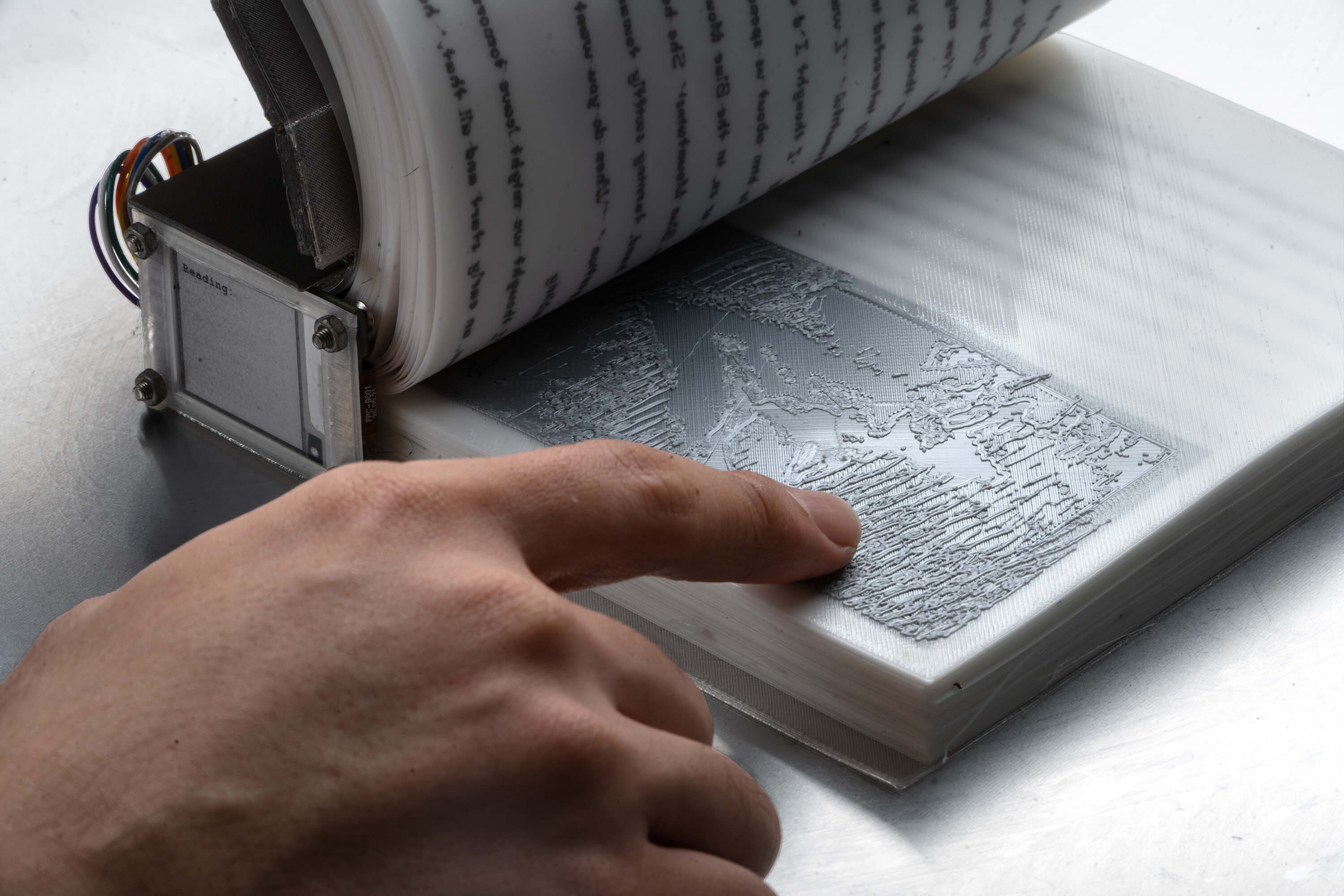
The book’s description of “raised hieroglyphs” bears an uncanny resemblance to the relief artefacts of 3D printed text and marks. Through this story, Bradbury envisioned a future where books could engage more than one of the five senses. Not only did he describe the printed text of this speculative book object as explicitly three-dimensional, he also alluded to other accessible dimensions of the page beyond the visual, allowing readers to derive auditory information through touch. The volumised press offers a unique opportunity to explore this concept by 3D printing with circuitry embedded in conductive material, coupled with microcontrollers and audio modules.
Through the volumetric press, Bradbury’s speculative “multi-dimensional” book-object is no longer science-fiction but a plausible reality. A counterfactual object pressed through the page.
Special thanks: Ashley, Ada (Feelers), Joanne and Kapilan (Jo+Kapi), Andreas Schlegel and University of the Arts Singapore