2025
Thermoplastic polyurethane, Polylactic Acid
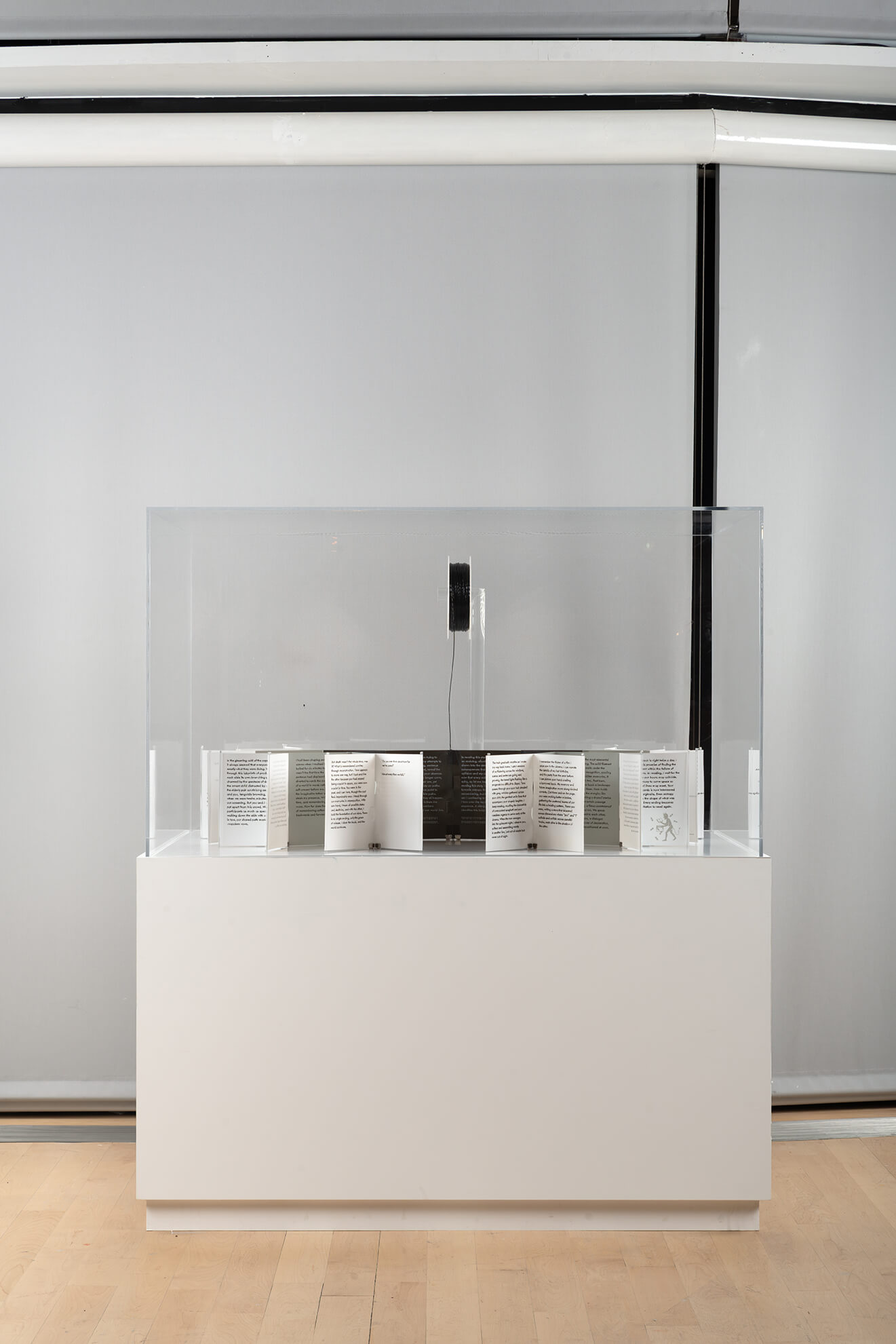
150 x 100 cm (Open, depth variable)
Commissioned by ArtScience Museum Singapore, in collaboration with writer Samantha Yap
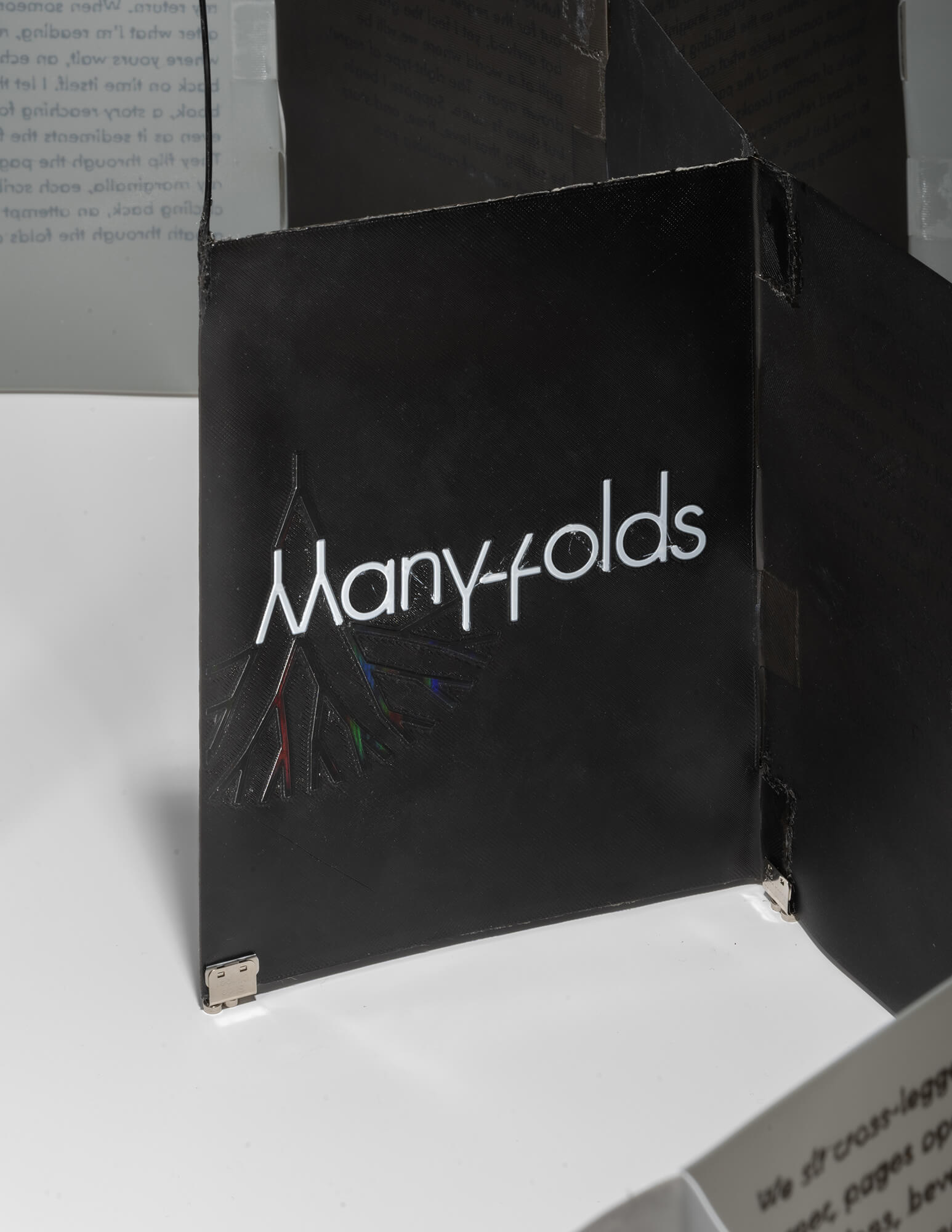
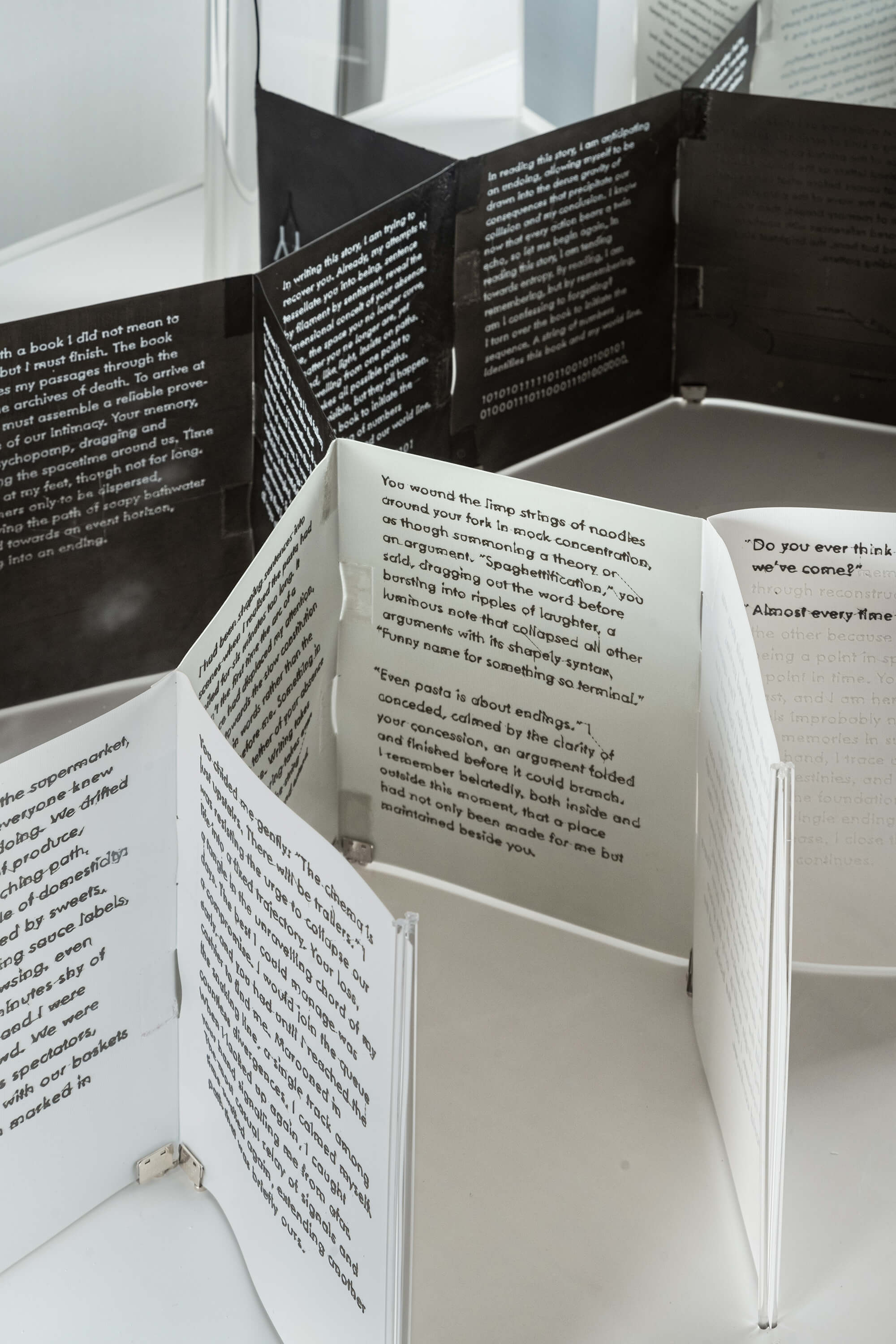
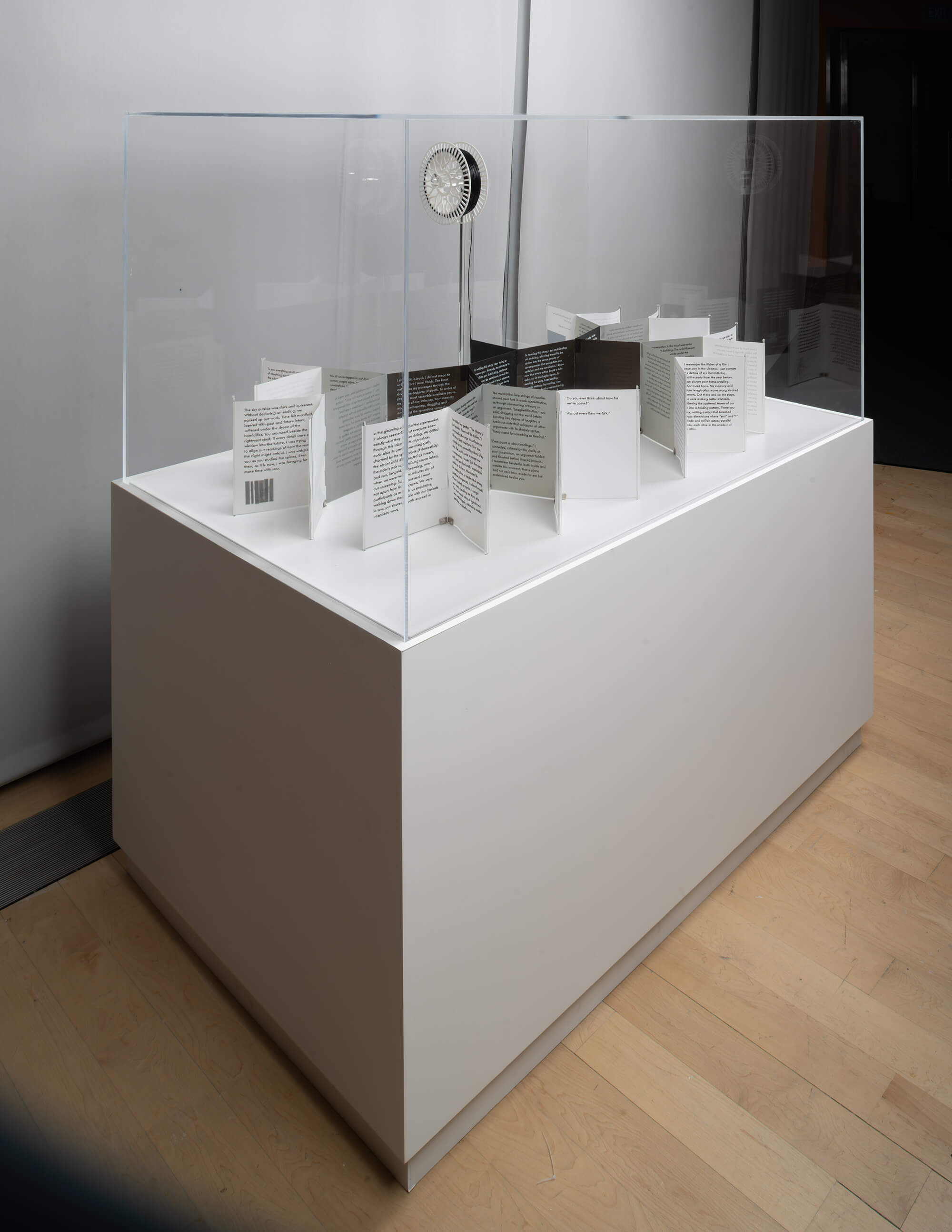
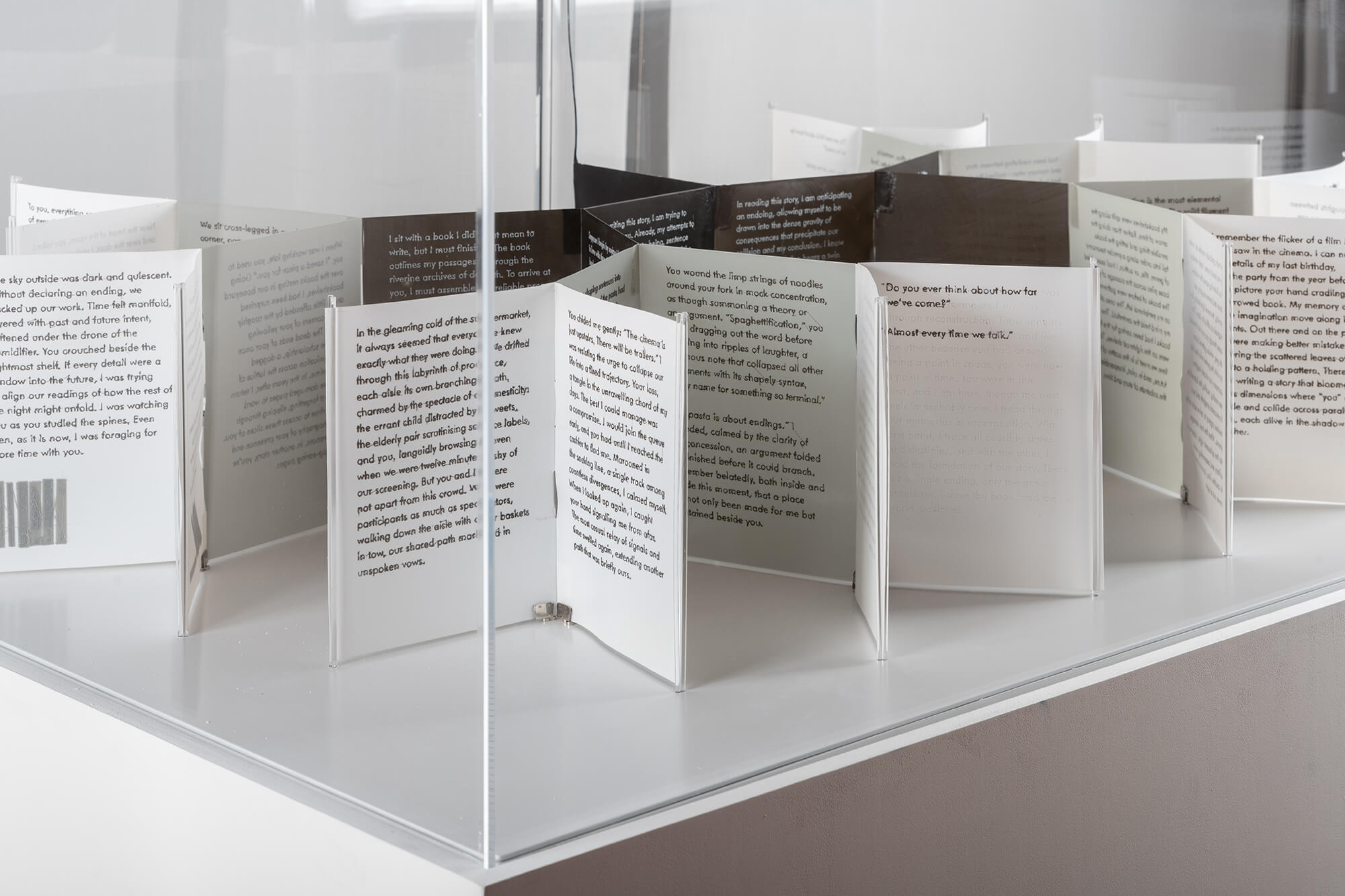
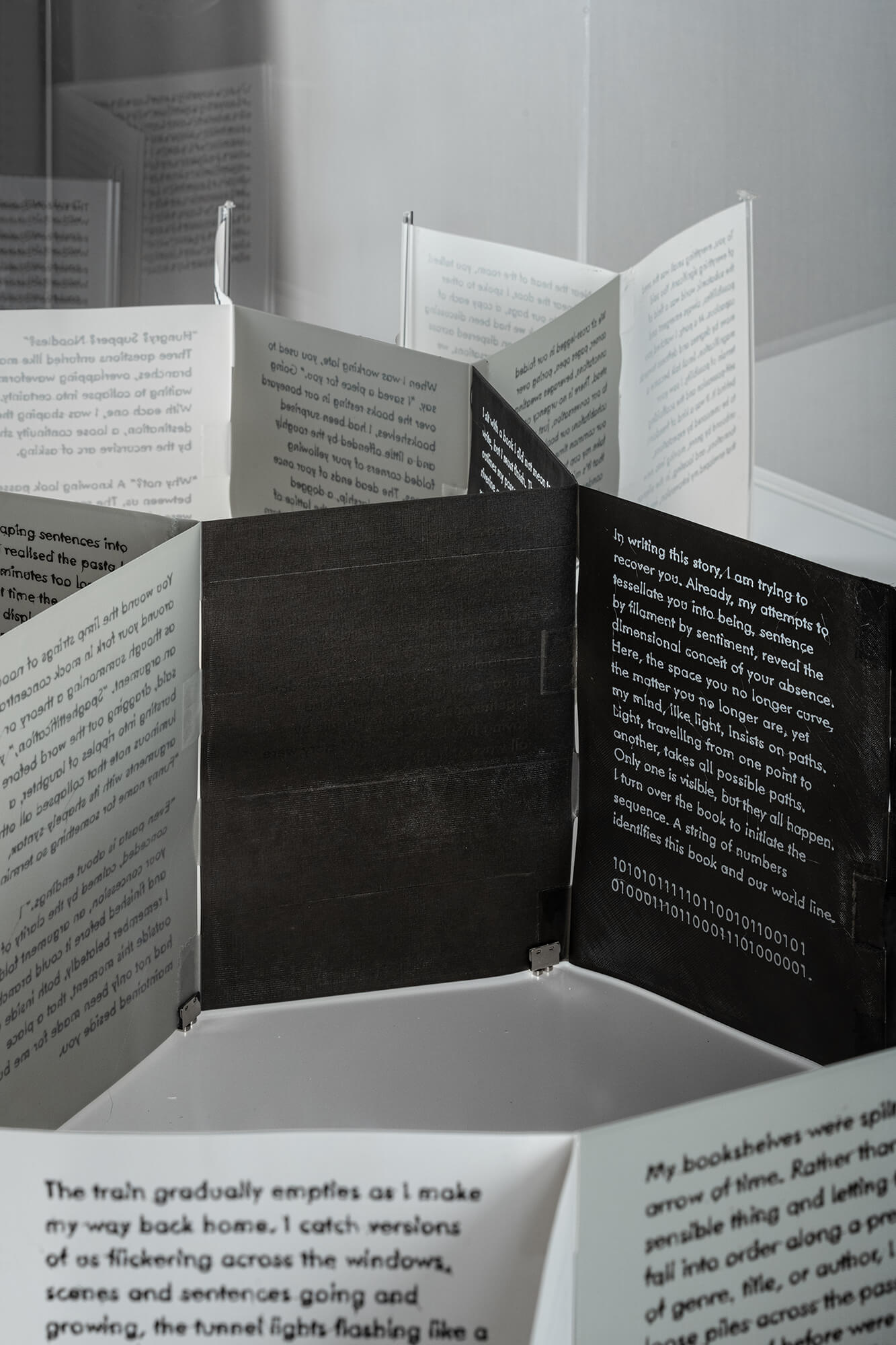
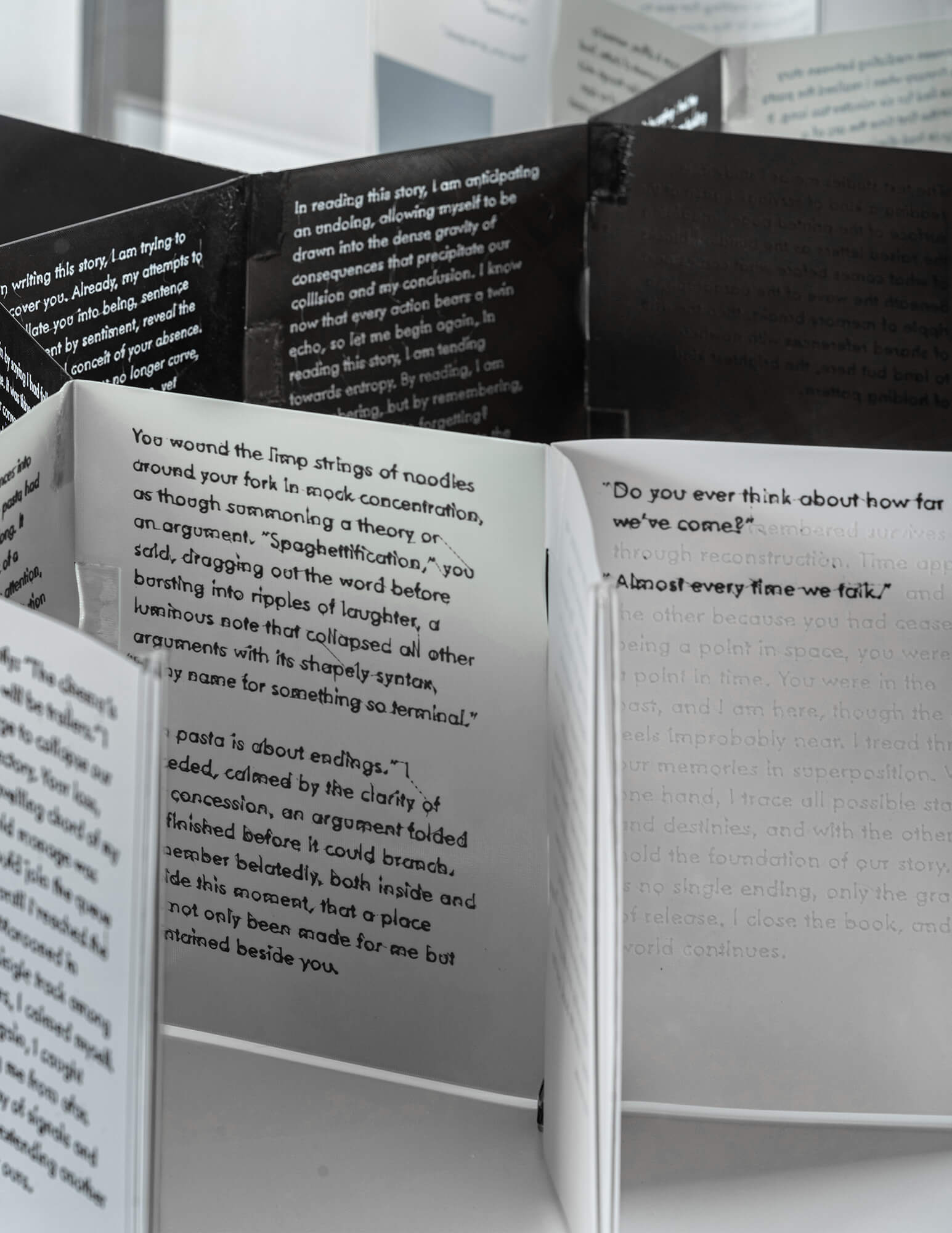
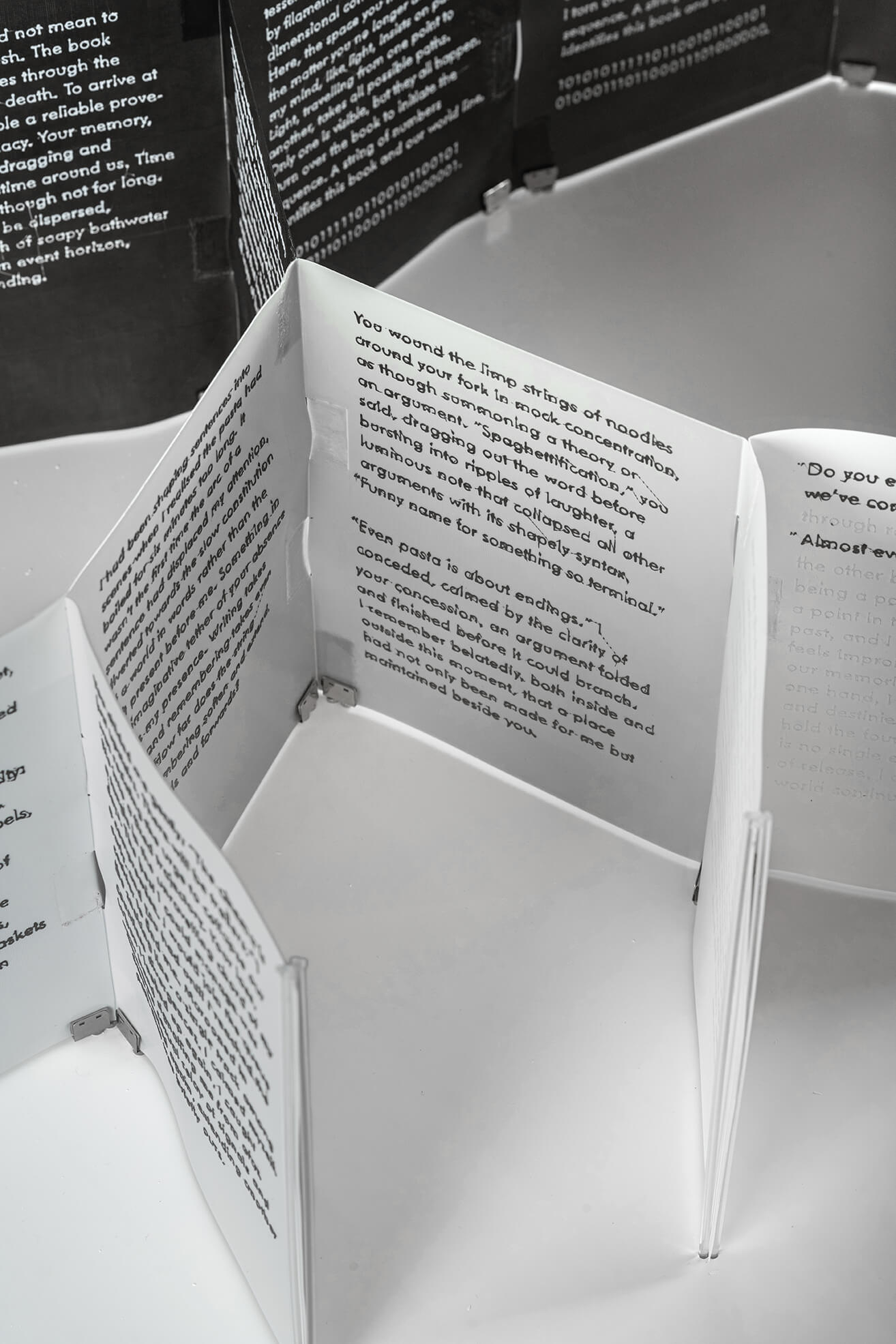
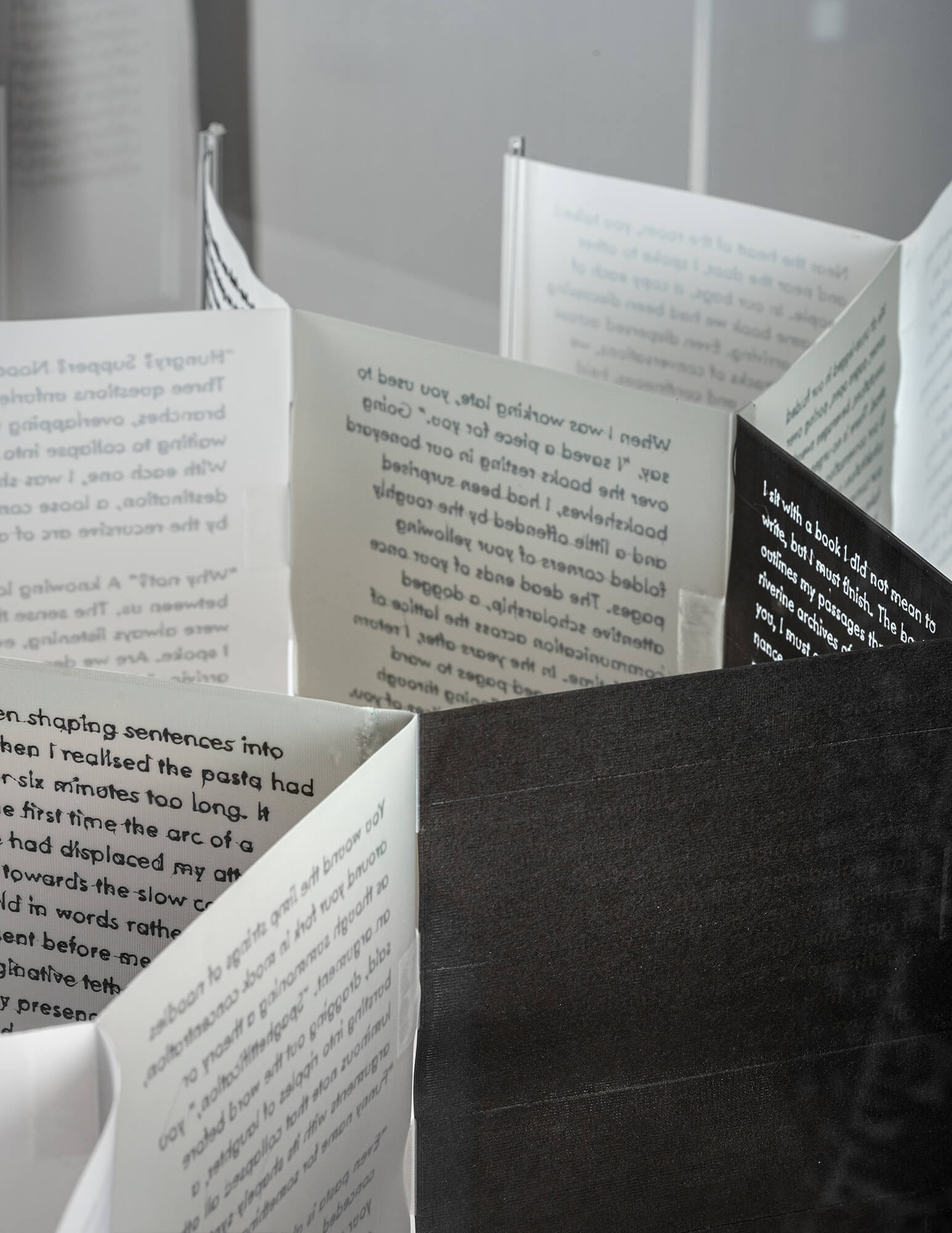
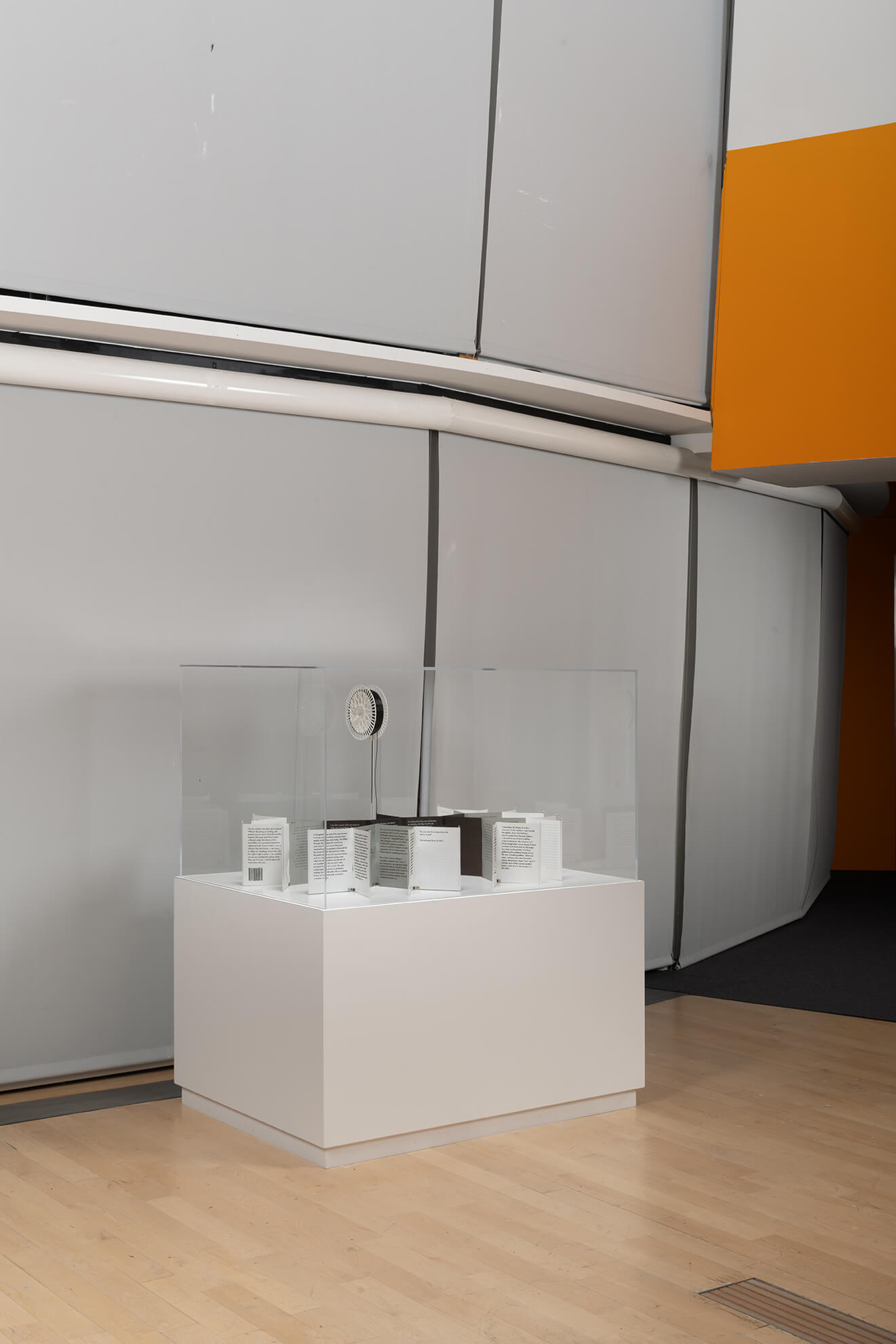
Many-Folds is a 3D printed book with branching prose that unspools across branching pages, unwinding narratives and worldlines from a single filament spool.
It gestures towards the Many-Worlds Interpretation (MWI), theorised by physicist Hugh Everett in 1957 and later popularised by Bryce DeWitt. The MWI commits to the strangeness of quantum mechanics, asserting the coexistence of parallel realities that arise from quantum interactions. Though unobservable, these branched worlds are understood to be as unequivocally existent as our lived reality.
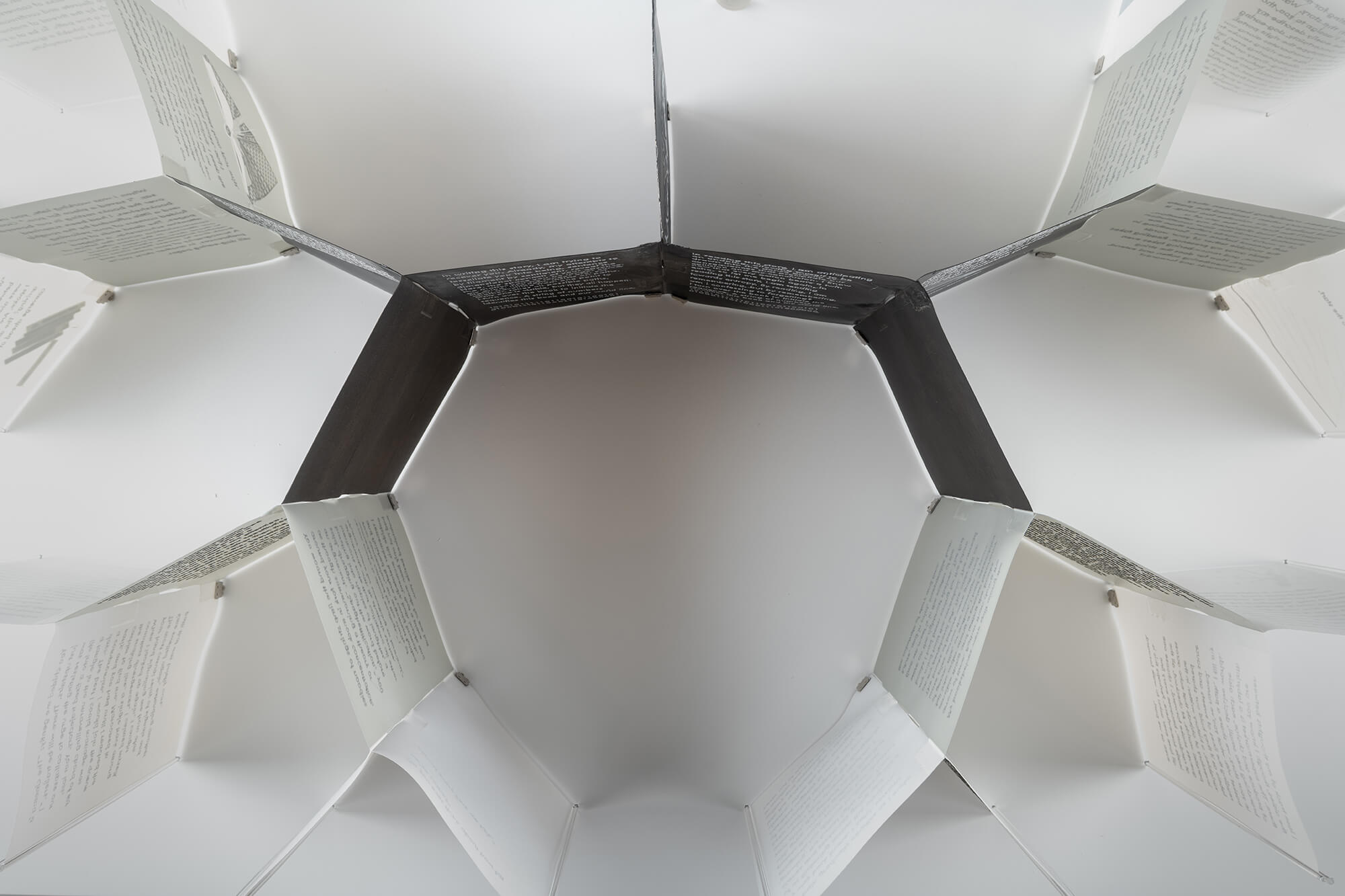
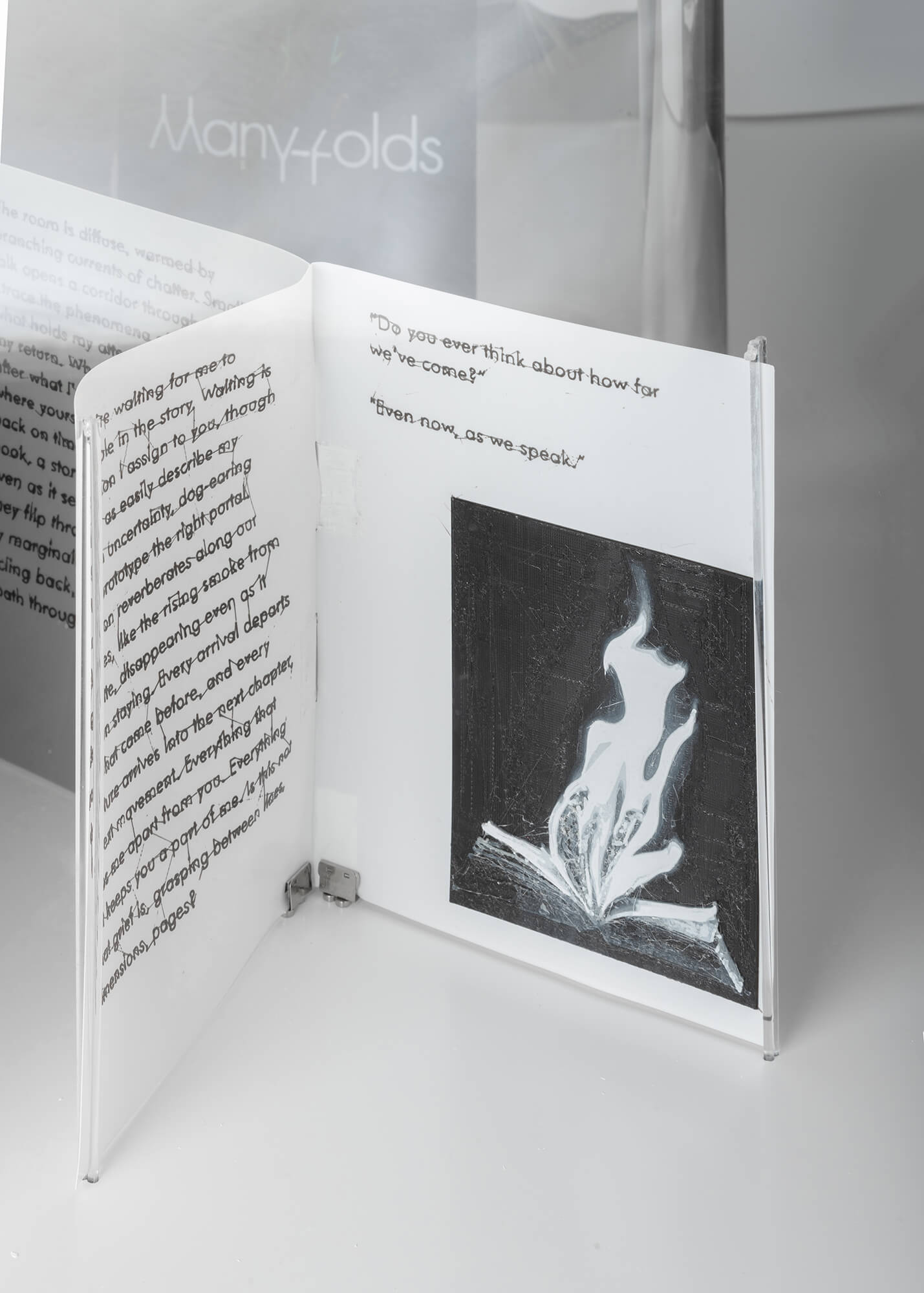
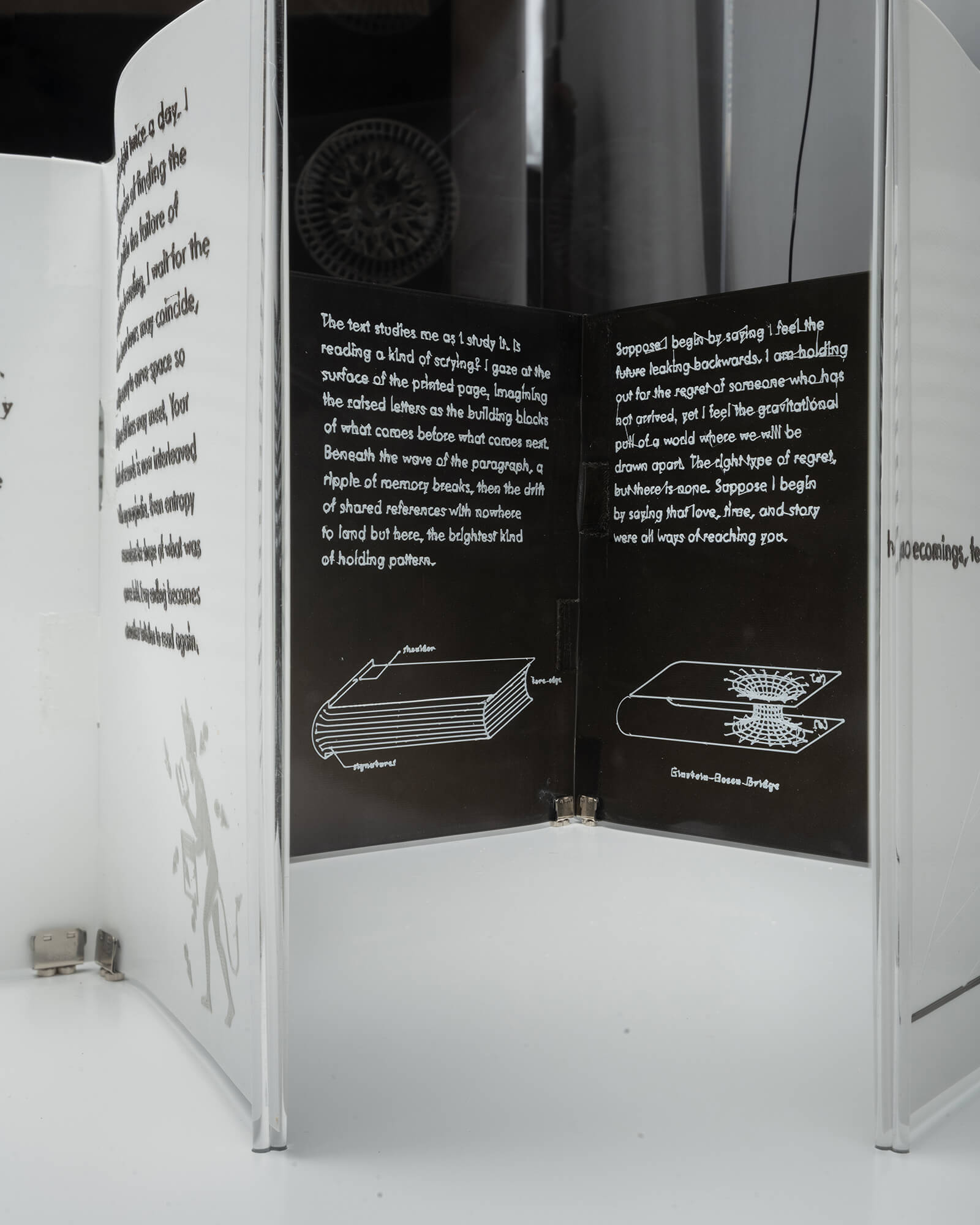
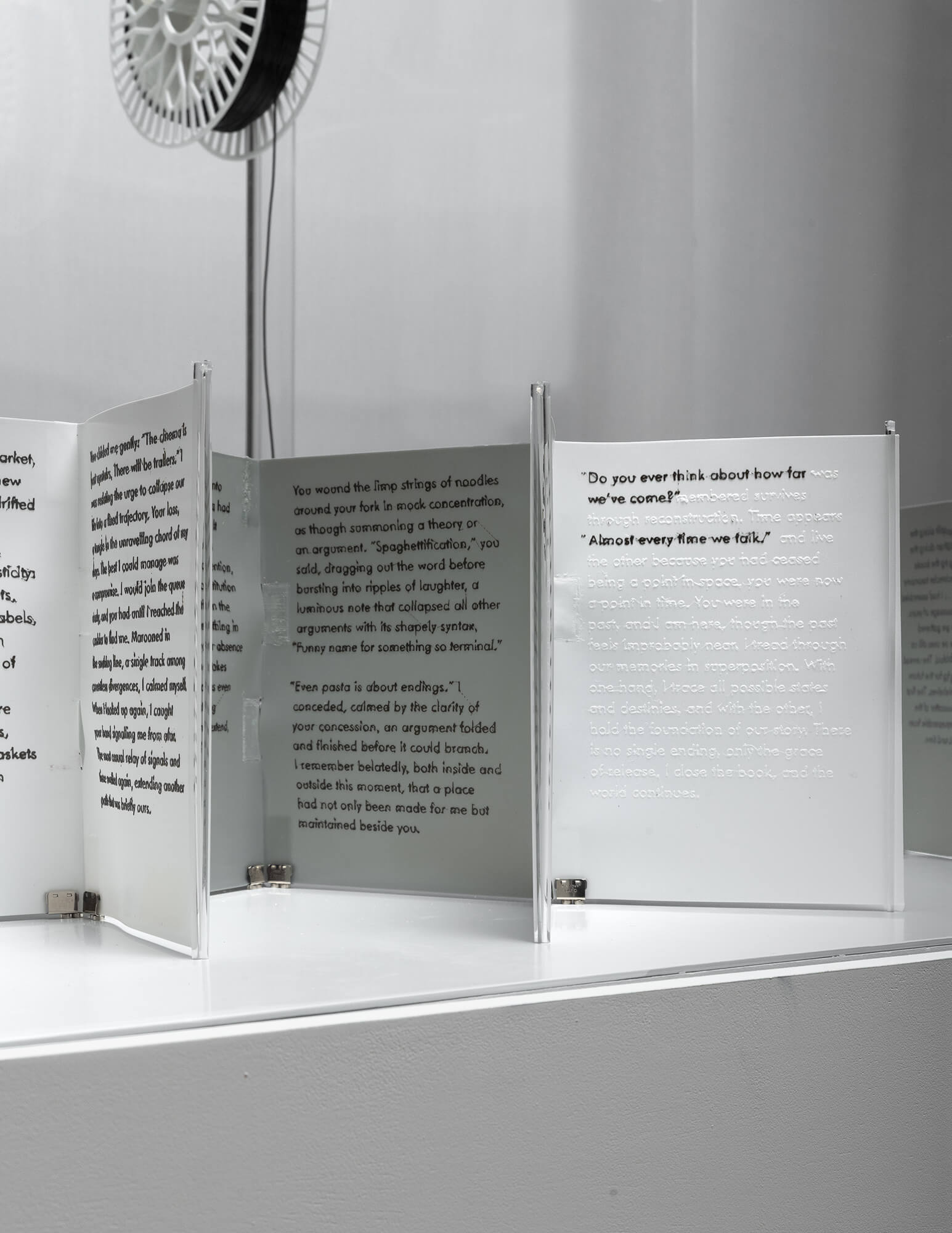
Drawing an affinity between the branching syntax of the MWI and the book form, Many-Folds unfolds through an arborescent structure that echoes the MWI’s branching schematic. As the world thins through subsequent bifurcations, each spread is also 3D printed progressively thinner. Diverging from a centrally bound spine, the book is assembled through a network of decentralised bindings—pages branch orthogonally with fore-edges bound to the folded edge of subsequent spreads through “double-slit” attachments. The end of each page begets iteration, functioning as spines for coextending pages.
In a conventional codex, pages are referred to as leaves, and the format itself was named after a caudex (trunk of a tree). Relatedly, the splitting of worlds postulated by the MWI is described as branching. This shared lexicon also situates the branching book—an “arborex” format, a portmanteau of “arborescent” and “codex”—as a native form in parallel worlds, each with its own reality and practices of book-making.
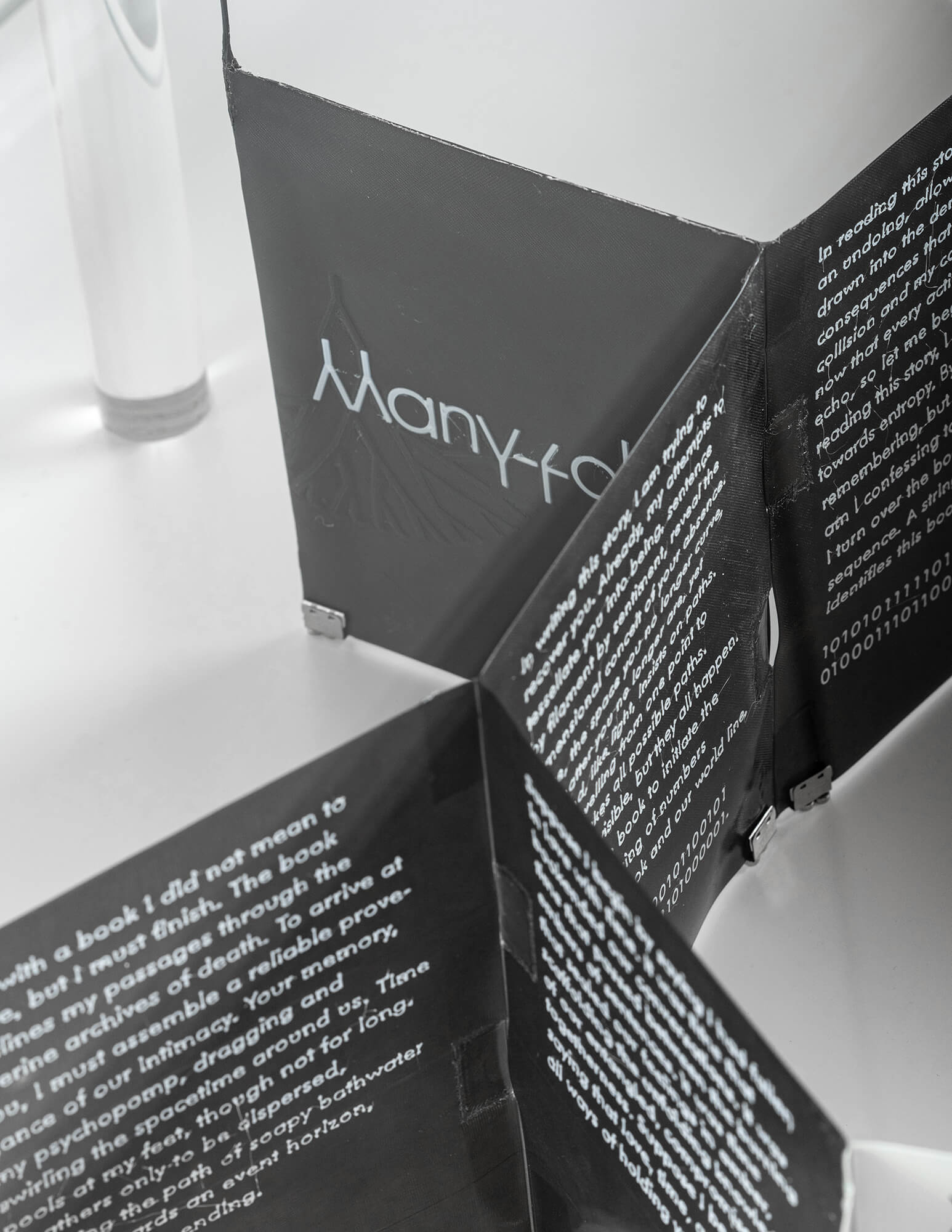
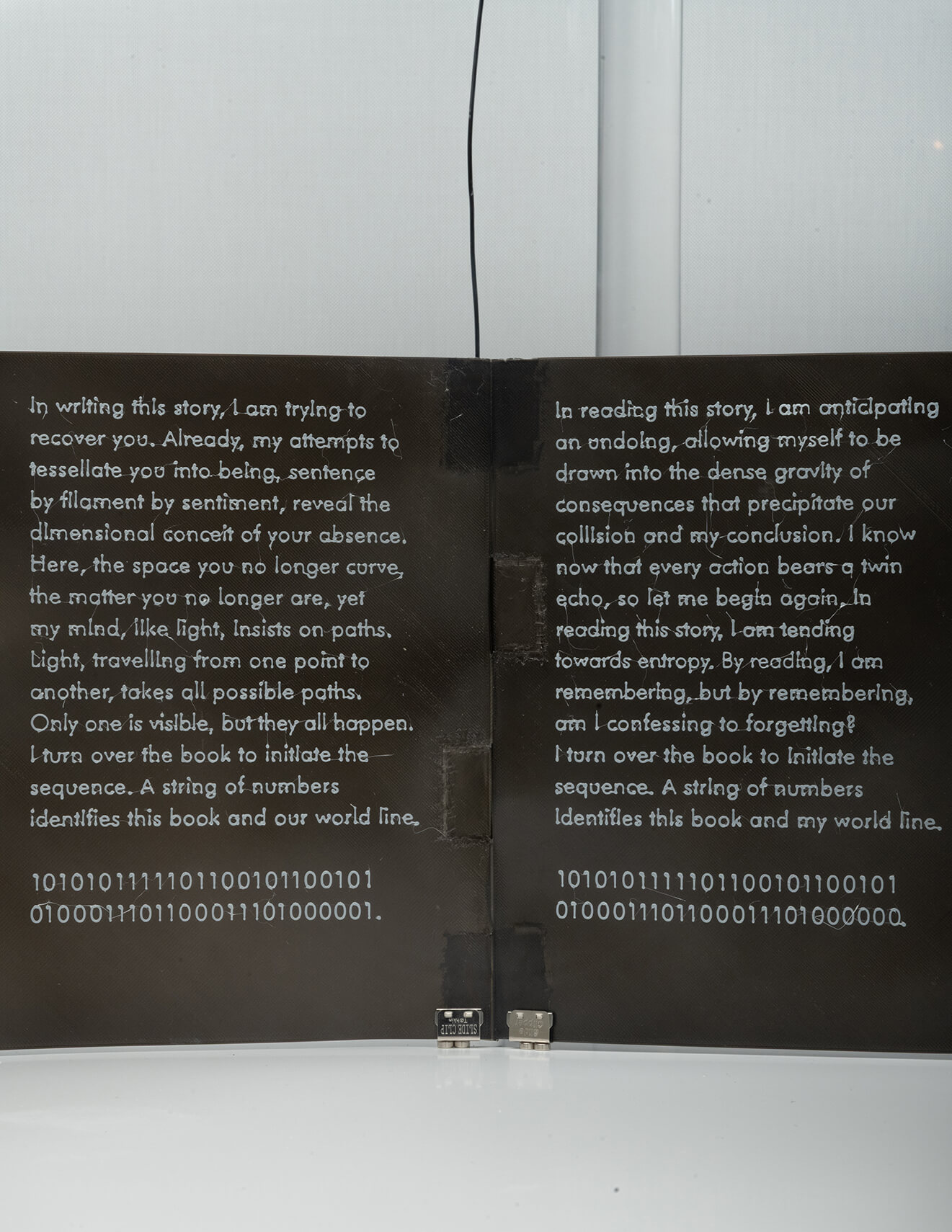
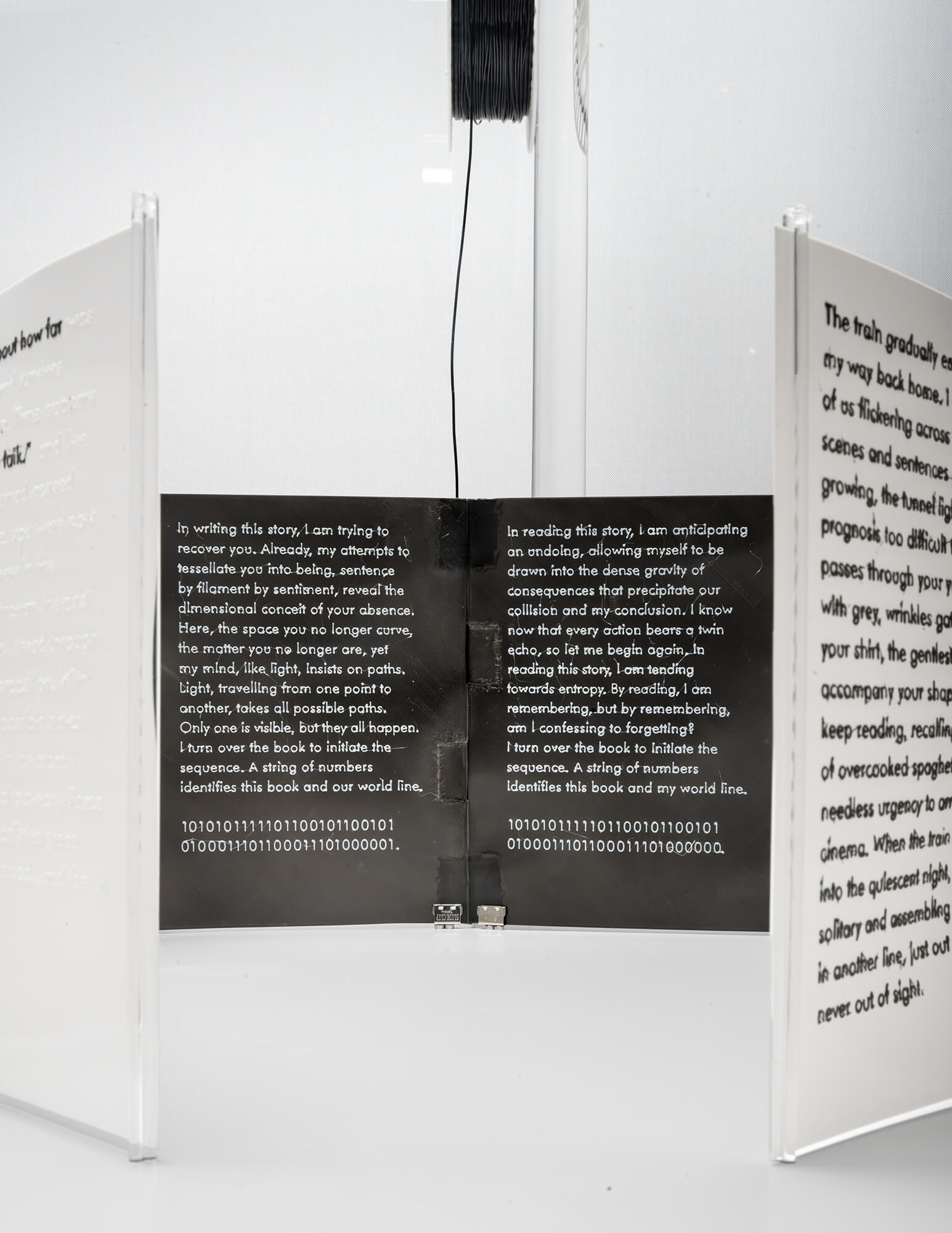
Many-Folds opens with a two-way divergence, presaged by a pair of numerical strings. From this originary split, the prose splinters into two strands of realities, then four, eight, and ultimately sixteen endings.
Both informed by and informing the book’s format, the narrative unfolds along branching paths. Across separate wordlines, memories branch and ripple like the limbs of a tree or the leaves of a book, ferrying us through an ambiguous spacetime, where past, present, and future collide. Recorded within these pages is a continuum of lived and inherited memories, carried by protagonists occupying different time signatures along divergent worldlines.
The numerical string (10101011111011001011001010100011101100011101000001) hat opens the book names an instance of this splitting, and it is not incidental. In 2019, theoretical physicist Sean M. Carroll, a proponent of the Many-Worlds Interpretation (MWI), embedded a 50-digit string of 1s and 0s generated by a Quantum Random Number Generator (QRNG) within his book, Something Deeply Hidden. This sequence implies the existence of other possible sequences, and with them, parallel universes bearing other textual variations of the same book.
Carroll’s QRNG string can be read as an Inter-world Specifying Book Number: an ISBN that locates a version of the book along a specific worldline, and a formative instance of multiversal publishing. Travelling from Carroll’s book into 𝘔𝘢𝘯𝘺-𝘍𝘰𝘭𝘥𝘴, this binary string becomes a shared coordinate, anchoring one documented worldline, marking our relative position among all possible universes.
Within MWI, the state of the universe (its wave function Ψ) evolves as a vector within an abstract mathematical space known as Hilbert space, a domain where all possible worlds coexist. This locus may be likened to the 3D printing filament spool containing every physically permissible configuration of objects. In the context of Many-Folds, all multiversal possibilities of the book, in principle, reside within a “Hilbert spool”.
—
Many-Folds weaves together scattered yet kindred coordinates within a 3D printed book. It interleaves the Many-Worlds interpretation of reality as manifold with modes of making, reading, and writing that are themselves multilinear—branching, recursive, and manifold.
Here, the book is approached as a responsive technology: recollective and prospective at once, capable of holding open multiple narrative portals. A reader may follow its serpentine paths or chart their own course. Either way, orientation yields to drift, and drift becomes destination.
Coined by Espen J. Aarseth, ergodic literature is derived from the Greek words ergon (“work”) and hodos (“path”), describing texts that solicit “non-trivial effort” to traverse. In such works, reading becomes movement along forking paths, where plot emerges belatedly, as a consequence rather than a guide.
The narrative of Many-Folds is bookended by “I” and “you”—“writer” and “reader”—colluding and colliding across parallel tracks, each extant in the substrate of the other. Every “I” writes to aggregate a “you”, and every “you” reads in search of return. Reading and writing are constitutive acts, tethering sentences into a provisional whole. The book’s permutative form relays a sentiment echoed in the arc of flames: that the experience of time is the experience of change. As the prose tells us, “all endings are homecomings, ferrying us to the start”.