In conventional publishing, ‘paper grain direction’ refers to the direction of pulp fibres within a sheet of paper. Grain direction plays a crucial role in paper resistance during page turns, affecting how a book opens. While grain information is usually provided by merchants, publishers and graphic designers often have limited agency over this material property. While this method needs to be tested more extensively with more scientific and engineering rigour, it holds the key to how we might approach thinking about agency over material properties in publishing and graphic design.
Fig. 1. Testing rig to test page behaviour through programmed patterns.
The volumetric press offers a unique opportunity through 3D printing for precise control not only over the direction of an equivalent to ‘grain’, but also over its laying pattern. While the concept of pulp fibres is not applicable in 3D printing, the 3D printed substrate is similarly affected by its filling pattern (Fig. 2). These patterns are typically used to adjust structural properties parametrically. In the context of the volumetric press, however, they hold the key to embedding material properties into the 3D printed page. Besides programming how the page curls, it is even possible to embed mechanical transformations, such as a self-dog-earring page corner (Fig. 1) when pinched in the bottom edge (think pinch-to-bookmark). Such agency over the material properties of book pages affords novel interactions, added accessibility, and creative dynamics between the reader and the book-object. Figure 1 shows a prototype printed with 2 layers (0.4mm thick), with a uniform first layer pattern and programmed second layer pattern (90° rectilinear and concentric patterns) following a curved “dog-ear” shape on the top right corner. This prototype was printed on 95A TPU on a Prusa XL.
Fig. 2. Simulated (based on approximated pattern scale and material settings) tests to reveal how the TPU substrate of different printing patterns reacts to a simulated load direction similar to fingers opening a book.
The TPU 3D printed page folds but does not crease. Unlike its paper counterpart, the plastic page inherits neither paper’s entropy nor memory. It does not remember damage as a folded sheet might. Only through programmed grains can the 3D printed book assume the paper book’s vulnerability.
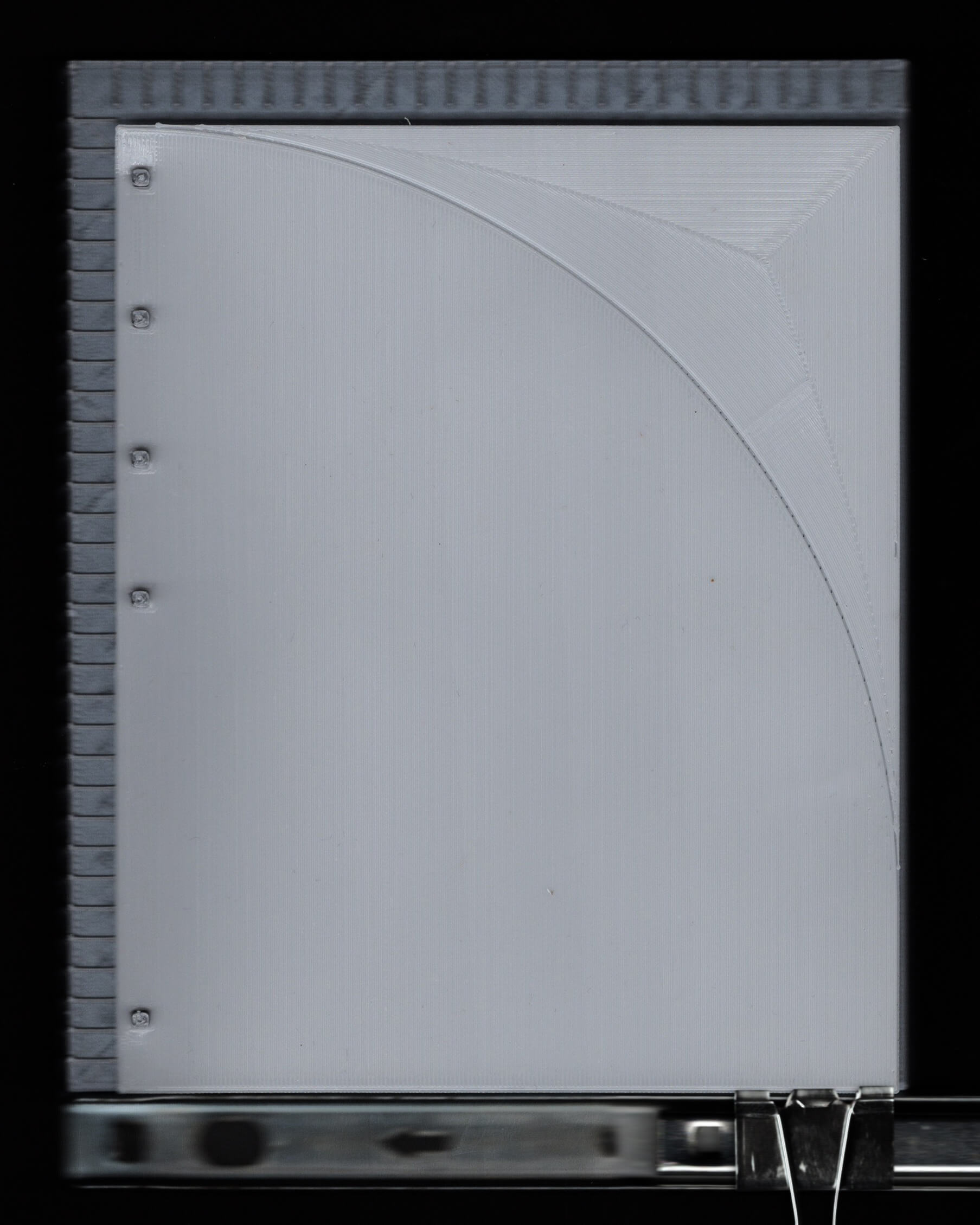
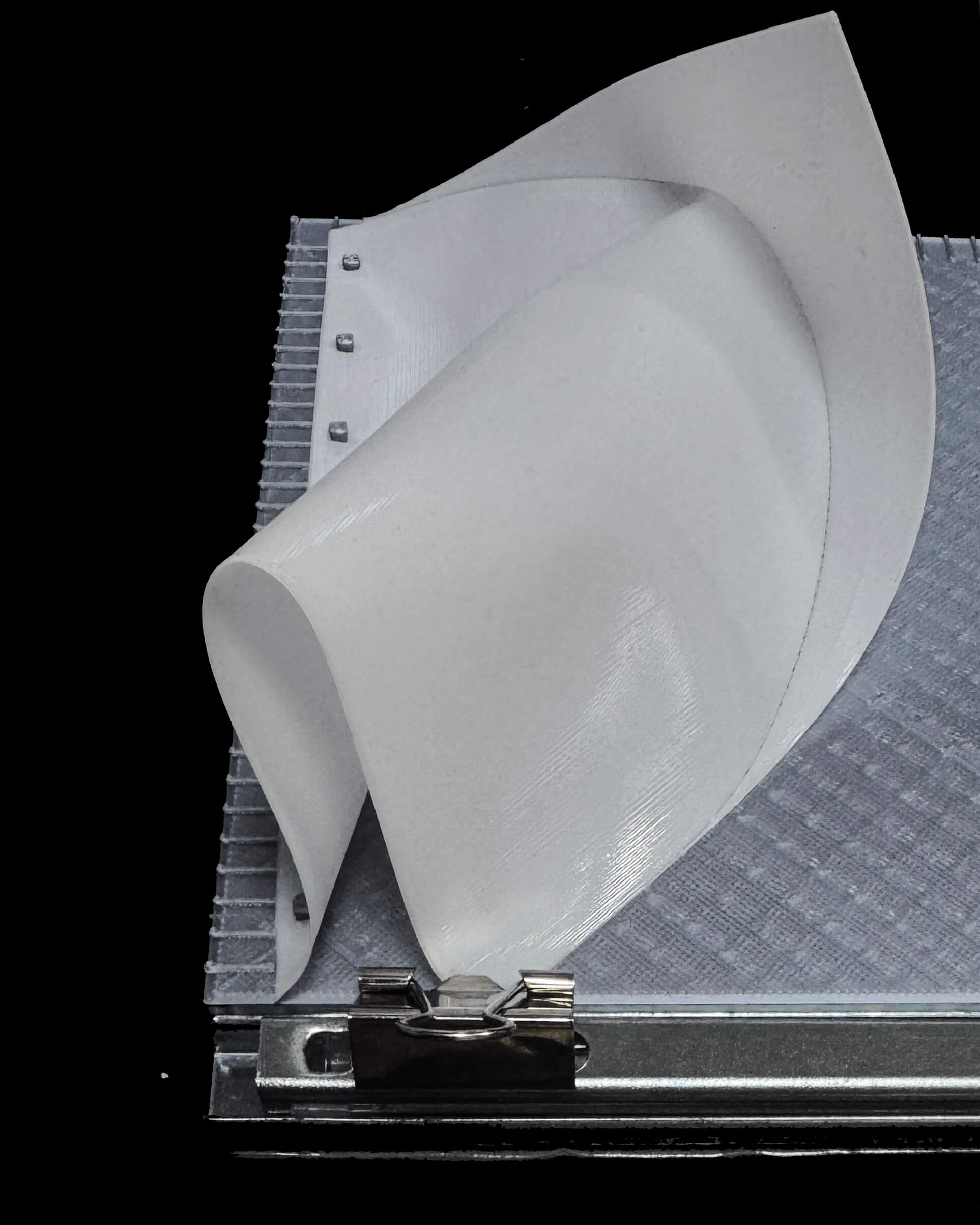
Fig. 3. Tests on the self-dog-earring programming in a 0.4mm (2-layer) 95A TPU.
While the origins of the dog-eared page are hard to pin down, the practice likely emerged once substrate materials became durable enough to withstand rougher handling. The dog-ear marks a significant milestone in the book technology: a bookmarking practice that allows the reader to leave their own (indelible) mark on the paper book. The volumetric press lays the page substrate line by line as if drawing patterns. Within the context of a publishing press, the act of bookmarking becomes an extension of the press’s mark-making.